Photo by Kay Bell
Happy Halloween! Time for ghosts, ghouls and, in many cases, taxable candy treats. Here’s a look at the various, and sometimes scary, ways states (and often other jurisdictions, too) tax different types of confections.
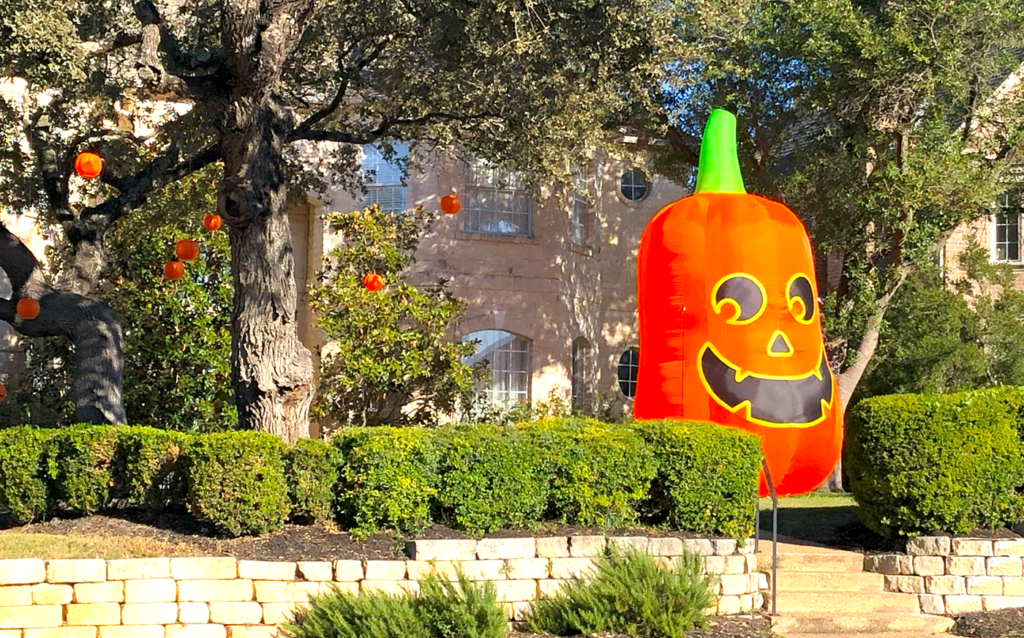
My neighbors love Halloween. Decorations, mostly inflatable jack-o-lanterns (a few, like the one pictured above, are more gourd than pumpkin shaped) and skeletons, went up in yards on Oct. 1.
And with the spooky day falling on a Saturday this year, we’re expecting more trick-or-treaters.
I don’t know what candy kiddos like, so I buy my favorite just in case we have leftovers. This year, I’m trying to better guestimate the amount since the treats are more expensive.
I’m not alone in noticing the higher cost of confections. Those inflated prices also could be a reason respondents to a recent survey said that they plan to spend far less on Halloween festivities than they did a year ago.
All Hallow’s Eve celebrants told online financial marketplace LendingTree that they expect to spend an average of $162 this year on Halloween. That includes costumes, decorations, and, of course, candy, which tops the holiday’s spending list.
The 2026 total amount, however, is almost 16 percent less than the average $192 spent on Halloween in 2025.
Even spookier news is that a quarter of those who plan to celebrate Oct. 31 told LendingTree that they probably will go into debt to enjoy a thriller of a time. Now that is scary!
.
Some states add sales tax: While most of the 45 states and Washington, D.C. that have sales tax exempt food products in whole or part.
The eight states that tax food are Alabama (2 percent), Hawaii (4 percent), Idaho (6 percent), Mississippi (5 percent), Missouri (1.225 percent), South Dakota (4.2 percent), Tennessee (4 percent), and Utah (1.75 percent).
Another dozen states exempt groceries from state tax, but allow local jurisdictions to tax food. They are Alaska (which has no statewide sales tax), Arkansas, Arizona, Colorado, Georgia, Illinois, Kansas, Louisiana, North Carolina, Oklahoma, South Carolina, and Virginia
But even in no-grocery-tax locales, sweets typically face different tax standards.
Various types of food taxes: The treats typically are viewed by lawmakers as nonessential food items. But such categorizations, as well as further tax recipes based on products and/or their ingredients make for a wide, and confusing, range of taxable confections.
For example, notes Kate Schubel in a recent Kiplinger article, there’s a tax difference between candy and chocolate. It comes into play in the 24 states (listed below) that are part of the Streamlined Sales Tax Agreement (SST).
| Arkansas | Michigan | North Dakota | Utah |
| Georgia | Minnesota | Ohio | Vermont |
| Indiana | Nebraska | Oklahoma | Washington |
| Iowa | Nevada | Rhode Island | West Virginia |
| Kansas | New Jersey | South Dakota | Wisconsin |
| Kentucky | North Carolina | Tennessee* | Wyoming |
*The Volunteer State is associate member, pending implementation of every uniform definition, rate structure, or administrative provision under the SST.
This pact, created in 1999 by the National Governors Association (NGA) and the National Conference of State Legislatures (NCLS), was designed to simplify, standardize, and modernize sales and use tax laws across participating U.S.
Such simplification is easier said than done. Take the SST’s definition of candy. It says it is “a preparation of sugar, honey, or other natural or artificial sweeteners in combination with chocolate, fruits, nuts, or other ingredients or flavorings in the form of bars, drops, or pieces.”
But wheat flour isn’t among the ingredients. That means, notes Schubel, “If your candy has wheat flour in it, it’s not candy according to the SST.”
Whether a state considers floured chocolate a candy depends upon if it follows SST.
So, depending on where you live, your grocery receipt might show one bag of Halloween candy as fully taxed, while another as tax-free.
Where you eat matters: And food, including candy, taxes may still be applied depending on where you consume it.
This is obvious in the taxes added to meals you eat in a restaurant. Taxes also apply, in most cases, to those nachos at the ball park. As if overpriced sports event edibles didn’t set you back enough!
Want even more food tax pars[ley]ing (sorry, not sorry) here? Schubel points out that “if you bought chocolate through a movie drive-in in Louisiana, you may still have to pay state tax, as you could consume the candy ‘on the premises’ in the cinema.”
Makes you (OK, me) want to sublimate my food tax frustration into eating a full bag of mini 3 Musketeers, my favorite candy bar on Halloween and the other 364 days, regardless of the tax.
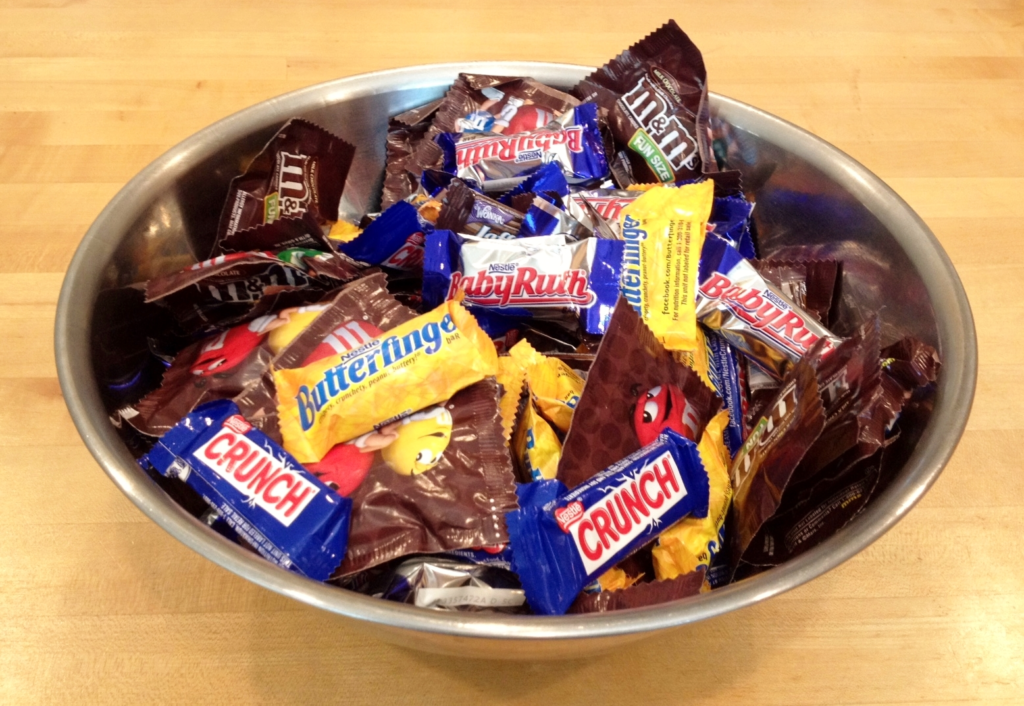
The only people getting off the tax hook this Oct. 31 and beyond are those in the five states that don’t have any statewide sales tax. They are Alaska, New Hampshire, Montana, Delaware, and Oregon.