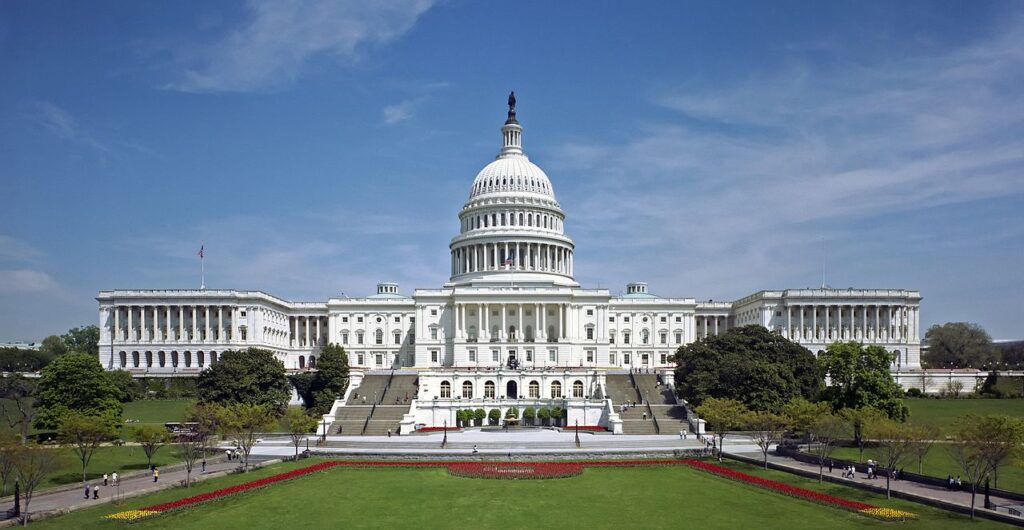
U.S. Capitol photo via Wikipedia Commons
When the Republicans pushed through their One Big Beautiful Bill Act in 2025, they were convinced that the tax provisions would help them in this year’s midterm elections.
They ensured that many of the individuals tax breaks were effective for the 2025 tax year so qualifying filers got the benefits during 2026. They rebranded those and other tax benefits as Working Families Tax Cuts.
And just six days before the last batch of voters headed to the polls on Nov. 3, the Internal Revenue Service issued a press release touting the “landmark” tax measures and how the tax agency “efficiently deliver[ed] new tax benefits to working families.”
It didn’t matter. Democrats retook both the U.S. House and Senate on Tuesday.
My native and current home state of Texas was among the key battlegrounds that flipped. Many Democratic candidates across the country were victors in districts that Donald Trump won by 10 points or more in 2024.
Some Congressional races are still being counted, but for now the AP reports that Democrats will have 54 Senate seats next session, picking up seven. On the House side, Dems have gained (so far) 28 seats, bringing their control of that chamber to 237 members. Some projections say as many as 250 seats in the lower chamber will be Democratic next year.
Democratic tax policy priorities
So what’s next for these new Democrats on Capitol Hill? Or, since you’re here reading the ol’ tax blog, what tax legislation can we expect once the House Ways and Means and Senate Finance Committees are under Democratic control?
Possibilities include a move to reinstate the Biden administration’s enhanced premium tax credit for those who get Affordable Care Act (aka Obamacare) medical coverage. Republicans let that tax subsidy lapse at the end of 2025, meaning voters spent this year paying higher health care coverage costs, or went without a policy.
Two favorite Democratic individual tax breaks, the Earned Income Tax Credit (EITC) and Child Tax Credit, also could get additional consideration. Some in the party would like to expand both tax credits.
There’s some interest in reviving the Work Opportunity Tax Credit (WOTC), which expired on Dec. 31, 2025. This law rewarded employers with tax breaks if they hired individuals from certain targeted groups who have historically faced employment barriers.
However, state workforce agencies, which administer the program, have been accepting and holding the WOTC applications in case Congress does restart the program and extend its benefits retroactively.
Some lawmakers also want to address energy credits, which under GOP control were phased out more quickly. Others want to overturn the OBBBA limit on gambling loss tax deduction claims.
And, of course, there is Democratic interest in clawing back some of the 2025 GOP tax reform bill’s benefits afforded high earners and multinational corporations.
Federal government shutdown looming
Some of these tax matters could come up even before Democrats take control on Capitol Hill next year. They might be part of the major fiscal matter that lame duck lawmakers must address by Dec. 11.
If the current lame duck Congress doesn’t act by that date, the federal government will again shut down.
When such drop-dead federal funding deadlines near, members often try to attach other measures into the bill that will keep the doors of Uncle Sam’s offices open.
Now, however, Congressional Democrats are looking forward to the possibilities of the power of the purse when more of their club are sworn in at noon Jan. 3, 2027.
Will the outgoing members of Congress play hardball to try to limit or stall GOP fiscal year 2027 funding efforts so that they can have more impact early next year?
That would be pretty audacious. Shutting down federal services during the holidays is never popular with voters. But emboldened Democrats who will see their ranks increase in less than two months might give it a shot.
We’ll have to wait to see if Democrats want to play chicken with their GOP colleagues. And with Trump, whose political power was bloodied but not knocked out by Tuesday’s election results.
Come 2027, we’ll see exactly what tax measures the Democratically-controlled Congress will push, and how the White House, without a GOP majority on Capitol Hill, will push back.
And in the end, remember that while Democrats will have some long-sought legislative power, the president always can veto bills that come to his desk.