As we speed toward Tax Day 2026, tax scammers are as busy as taxpayers.
That’s why the Internal Revenue Service has issued its annual warning about the top 12 tax scams to be on guard against as you file. Or as you wait for a refund.
The Dirty Dozen list, which has been around for more than two decades, is familiar to regular readers.
And this year’s version is familiar in that there are nine [dis]honorees that also were on the 2025 version. Three are new. Amazingly, no scams are related to One Big Beautiful Bill Act tax law changes. Yet.
New or repeat, the 12 scams share similar goals. By trying to get personal information from taxpayers, businesses, and the tax professional community, the schemes look to steal the victims’ money, peace of mind, and trust in the U.S. tax system.
So, without further ado since the crooks are working as you are reading, here are the scams, schemes, and con jobs on the latest IRS Dirty Dozen list.
1. IRS impersonation by email and text (phishing + smishing): The IRS impersonation scheme continues to live up to its title as the most pervasive scam ever. Here, scammers send emails, direct messages (DMs), and texts that appear to be from the IRS, often using alarming language, links and QR codes that direct taxpayers to fake agency websites.
Once at the fake site, the scam targets are told to “verify” accounts, enter personal information, or claim refunds. Never click on links or open attachments from unexpected messages, no matter how convincing the sender seems.
That is especially true when the phishing or smishing attempt appears to come from the IRS. These links may install malicious software, including ransomware, on a taxpayer’s personal device, potentially preventing access to their files or personal information.
Similarly, smishing con artists send text or smartphone SMS messages that use alarming language such as, “Your account has now been put on hold,” or “Unusual Activity Report,” with a bogus “Solutions” link to restore the recipient’s account. Or they take a more “positive” approach, texting promises of unexpected tax refunds.
Do report suspicious IRS-related emails, DMs, and texts. During fiscal year 2025, the IRS was alerted to more than 600 social media impersonators.
2. AI-enabled IRS impersonation by phone (robocalls, voice mimicry, spoofed caller ID) social media advice: The only surprise about the use of artificial intelligence (AI) in tax scams, which makes its debut this year on the Dirty Dozen list, is that it is just #2. That may happen next year, as phone scams continue to evolve thanks to AI.
The latest technologically enhanced tax scams include calls that use computer-generated tactics and spoofed caller ID to appear legitimate. The IRS reminds taxpayers that it generally contacts taxpayers by mail first. It also notes that IRS personnel do not leave urgent, threatening prerecorded messages, call to demand immediate payment, or threaten to arrest taxpayers unless they take immediate action.
Taxpayers should not rely on AI-generated responses to complex tax questions. They should verify any calculations or information provided by artificial intelligence.
3. Fake charities: Bogus charities are a perennial problem. The schemes can intensify whenever a crisis or natural disaster strikes, with crooks looking to exploit the generosity of people who want to help.
Charity scammers set up fake organizations to take advantage of the public’s goodwill. They also typically sweeten the tax scam pot by citing tax law that allows individuals to deduct, under certain circumstances, their charitable gifts. But instead of sending the donations to those in need, the crooks collect the cash, as well as the scam victims’ personal information. That data then can be used to further exploit the victims through identity theft.
Do not give in to pressure to give money or goods to a charity when you get an unsolicited phone call. A legitimate charity will give donors time to do due diligence and make gifts when they are ready. Also note that the deduction option is available only when gifts are made to a qualified tax-exempt organization recognized by the IRS. If the purported charity is not on the list, it’s probably a scam.
4. Misleading tax advice on social media: Social media continues to dominate many of our lives. Tax crooks know this, and in many cases post incorrect tax information that can mislead honest taxpayers, potentially leading to identity theft and tax problems.
Viral tax hacks can push taxpayers to file returns with false information or claim credits for which they don’t qualify. This leads to refund delays, audits, penalties, or worse. The IRS continues to warn that social media-driven misinformation and disinformation remain a major driver of tax scams. The IRS reminds taxpayers who knowingly file fraudulent tax returns that they could potentially face significant civil and criminal penalties.
The IRS and the Coalition Against Scam and Scheme Threats (CASST) warn taxpayers not to fall for these scams. They can be very costly. Instead, follow trusted advice from the IRS, tax professionals, and other reputable sources.
5. Identity theft involving IRS Individual Online Account access: Swindlers can pose as a “helpful” third party and offer to assist taxpayers looking to create an Individual Online Account at IRS.gov. Of course to do this, the scammers need your personal information.
The IRS encourages taxpayers to create their online account themselves. You don’t need outside help to create it. The step-by-step process is not that hard, and the IRS page walks you through the account creation/sign-in process.
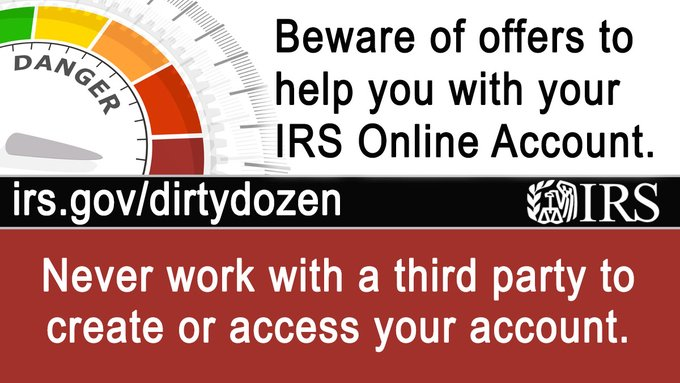
Once created, you can use the account to access your up-to-date tax information. This includes payment history, current balance, copies of select IRS notices, and more. That is not information you want a tax crook and/or identity thief to have, so ignore iffy offers of help.
6. Abusive undistributed long-term capital gains claims: The IRS has seen an increase in the abuse of Form 2439. This real IRS form allows shareholders of certain investment funds or real estate trusts to claim a refundable credit for taxes paid on undistributed capital gains. The added activity was enough for it to join the Dirty Dozen this year.
Identified schemes involve overstated or fabricated claims, including claims on Form 2439 tied to organizations that are not legitimate investment funds or real estate trusts. The IRS has also seen fake claims falsely linked to real, well-known organizations.
Again, falling for this scheme can cost the scammed filer in many ways. Improper claims may result in refund delays, audits, penalties, or enforcement action.
7. Bogus self-employment tax credit promotion: The IRS continues to see bad advice, including via social media (see #4), about a non-existent Self-Employment Tax Credit that’s misleading taxpayers into filing false claims.
In this scam, promoters encourage inaccurate filings that generate improper refunds. Many taxpayers do not qualify for these credits, and the IRS is closely reviewing claims coming in under this provision.
If you do file a questionable self-employment tax credit, the IRS notes that you do so at your own risk. Instead, it’s safer to rely on trusted sources and qualified tax professionals, not social media promotions, when determining eligibility for credits.
8. Ghost tax return preparers: A ghost preparer is not some spectral tax entity. It is a tax preparers who completes a client’s return, but refuses to sign it and/or refuses to include a Preparer Tax Identification Number (PTIN). This too often is the case where a preparer’s fee is based on the size of the refund.
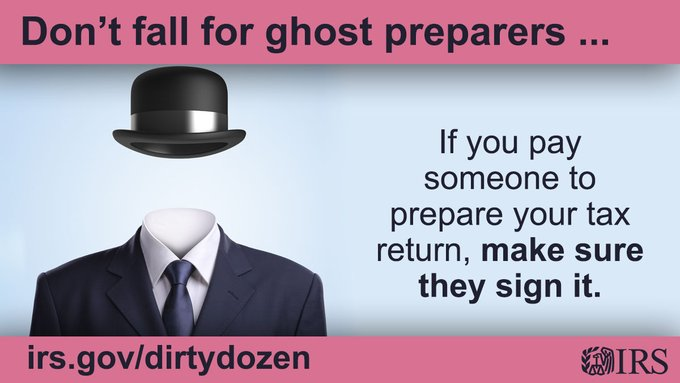
Avoid these ghost preparers, who refuse to follow tax law, such as the above-noted signing of the 1040 or adding their PTIN. Instead, use a trusted tax professional for help.
As for your signature, never put your John Hancock, by pen or electronically, on a tax return that is blank or incomplete.
9. Non-cash charitable contribution schemes: Sometimes it seems like tax scammers are in a competition. That could be the case for this new to the Dirty Dozen scheme, which is a cousin to the fake charities warned about in scam #3.
Here, the donations are more complicated. Tax crooks use inflated appraisals of donated property, such as syndicated conservation easements or art. Promoters often promise to eliminate or substantially reduce tax liability.
The IRS warns taxpayers not to file returns with made-up information and reminds taxpayers that it can hold refunds while verifying claims.
10. Overstated withholding schemes (fabricated wage/withholding data): This scheme popped up last year on social media, with scammers encouraging taxpayers to inflate withholding amounts, sometimes described as “other withholding.” This manufactures a larger refund by reporting zero or little income on incorrect forms.
There are multiple variations of the overstated withholding credit scheme, including those involving Forms W-2 and W-2G; Forms 1099-R, 1099-NEC, 1099-DIV, 1099-OID, and 1099-B, as well as the Alaska Permanent Fund Dividend, Schedule K-1 with Withholding Reported, and Unspecified Source of Withholding Credit Claimed.
When the IRS cannot verify the wages, income or withholding credits entered on the tax return via other third-party reporting documents it receives, the filer’s tax refund will be held pending further review. The agency’s ultimate findings could lead to penalties and enforcement action against the taxpayer.
11. Spear phishing and malware campaigns targeting tax professionals: Phishing is a term given to emails or text messages designed to get users to provide personal information. Spear phishing is a phishing attempt tailored to a specific organization or business. This new client spear fishing scam targets tax professionals, and first made the Dirty Dozen list last year.
Typically, cybercriminals pose as potential clients to trick tax preparers and other businesses into responding to the scam emails. Once the target responds, the scammer sends a malicious attachment or URL that can compromise the victim’s computer systems, allowing the attacker to access sensitive client information.
If crooks can con one tax preparer, the potential is enormous as it leads not only to the tax pro’s personal and professional information, but also a trove of client data. The identity thief then can file numerous fraudulent tax returns using the stolen information, compromising the tax pro and individual clients.
The IRS and its Security Summit partners urge preparers to remain vigilant and to strengthen their security practices. Look out for any suspicious requests or unusual behavior before sharing any sensitive information or responding to an email. Warning signs may include unexpected requests for sensitive information, mismatched or unfamiliar sender addresses, urgent payment demands, or links directing users to websites that do not clearly originate from IRS.gov.
12. Aggressive or misleading Offer in Compromise marketing (OIC mills): The Offers in Compromise (OIC) program is an important program that helps eligible people settle their federal tax debts when they are unable to pay in full. But OIC mills can aggressively promote this tax debt option in misleading ways to people who clearly don’t meet the qualifications, frequently costing taxpayers thousands of dollars.
These OIC mills often over-promise results and charge high fees to taxpayers who don’t qualify. You can check your OIC eligibility yourself, for free, by using the IRS’ online Offer in Compromise Pre-Qualifier tool.
IRS + taxpayer work to stop scams: The bottom line in every Dirty Dozen list is to be skeptical of tax promises, especially unsolicited ones. Tax-saving tricks or ways to increase your refund that seem too good to be true usually are an indication that the pitch is fake.
While tax scams have continued and evolved, so have the efforts to stop them by the IRS. And in announcing this year Dirty Dozen list — and declaring today, March 5, as Slam the Scam Day — IRS Chief Executive Officer Frank J. Bisignano reminded taxpayers that they can help in Uncle Sam’s efforts.
In addition to remaining vigilant and watching out for scams as thieves continuously adjust the schemes, taxpayers have a new way to report scams and fraudulent schemes. This year, along with the Coalition Against Scam and Scheme Threats (CASST), the IRS implemented a new consolidated IRS.gov fraud-reporting page where individuals can report suspicious tax activity.
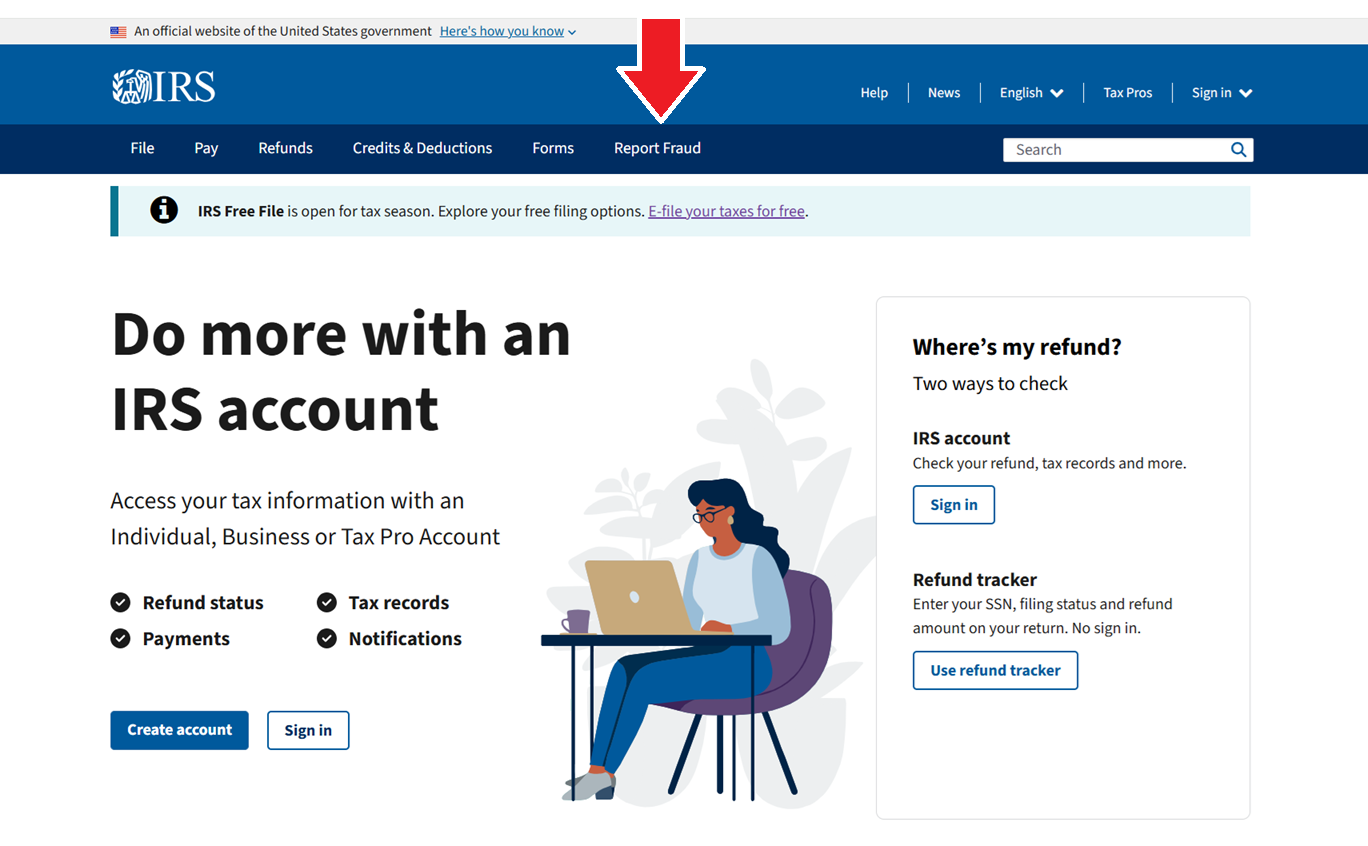
The Submit a Tip online option on the new anti-fraud IRS.gov page helps the agency react more quickly to schemes, new and old, and stop the abusive activity sooner. In the meantime, keep your eyes open, and don’t fall victim to any Dirty Dozen scam, during filing season or beyond.
Advertisements
🌟 Search Amazon Tax Products 🌟
The text link above is an affiliate ad. If you click through and then buy a product, I receive a commission.