

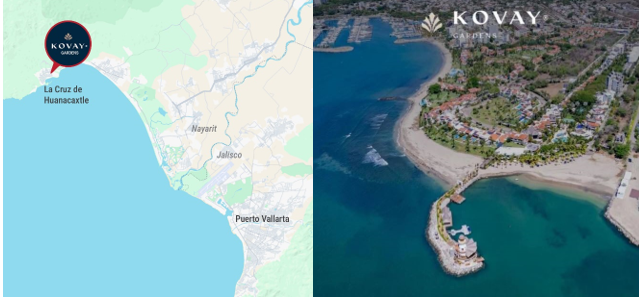
Image courtesy U.S. Treasury
A friend who lives in Jalisco tells me she and her neighbors are being cautious, but the situation in the interior part of that Mexican state is not bad. I’m obviously glad, especially since violence erupted in other parts of Jalisco after Mexican government forces on Feb. 22 killed El Mencho, leader of one of that nation’s most powerful drug cartels.
Some of Mexico’s more popular tourist spots became the target of revenge-seeking cartel members in the immediate aftermath of the anti-cartel operation. But things look to be returning to normal across the full state.
The U.S. Embassy and its consulates in Mexico still are warning visitors to exercise increased caution. But official U.S. diplomatic facilities have lifted restrictions on personnel and are operating normally.
The targeting of El Mencho, officially known as Nemesio Rubén Oseguera Cervantes in an effort to destabilized his Jalisco New Generation Cartel, is the most extreme action taken so far as Mexico cracks down on drug cartels.
But anti-cartel efforts are continuing north of the border, too. Specifically, the U.S. Treasury is battling cartels using financial weapons.
U.S. sanctions on El Mencho’s cartel: On Feb. 19, Treasury’s Office of Foreign Assets Control (OFAC) on announced the sanctioning of a timeshare fraud network led by the terrorist Cartel de Jalisco Nueva Generacion (CJNG). Yes, the same cartel that El Mencho led.
It is OFAC’s most-recent move against CJNG. Back in August 2025, U.S. officials sanctioned four Mexican individuals and 13 Mexican companies linked to timeshare fraud. Treasury and its investigative partners allege that these vacation properties are one way terrorists raise money to pay for their crimes.
This month’s sanctions targeted Kovay Gardens, a Mexican timeshare resort, as well as five Mexican individuals and 17 Mexican companies associated with the network. OFAC noted that many of these individuals and entities are based in or near the popular Puerto Vallarta tourist destination, which served as a strategic stronghold for CJNG.
The Kovay Gardens property, according to Treasury investigators, allegedly generated significant cartel proceeds by defrauding Americans. In many cases, older Americans lost substantial life savings when they fell victim to the schemes.
In announcing the sanctions, Treasury and OFAC also provided a visual, shown below, of what U.S. officials allege is the CJNG Timeshare Fraud Network.
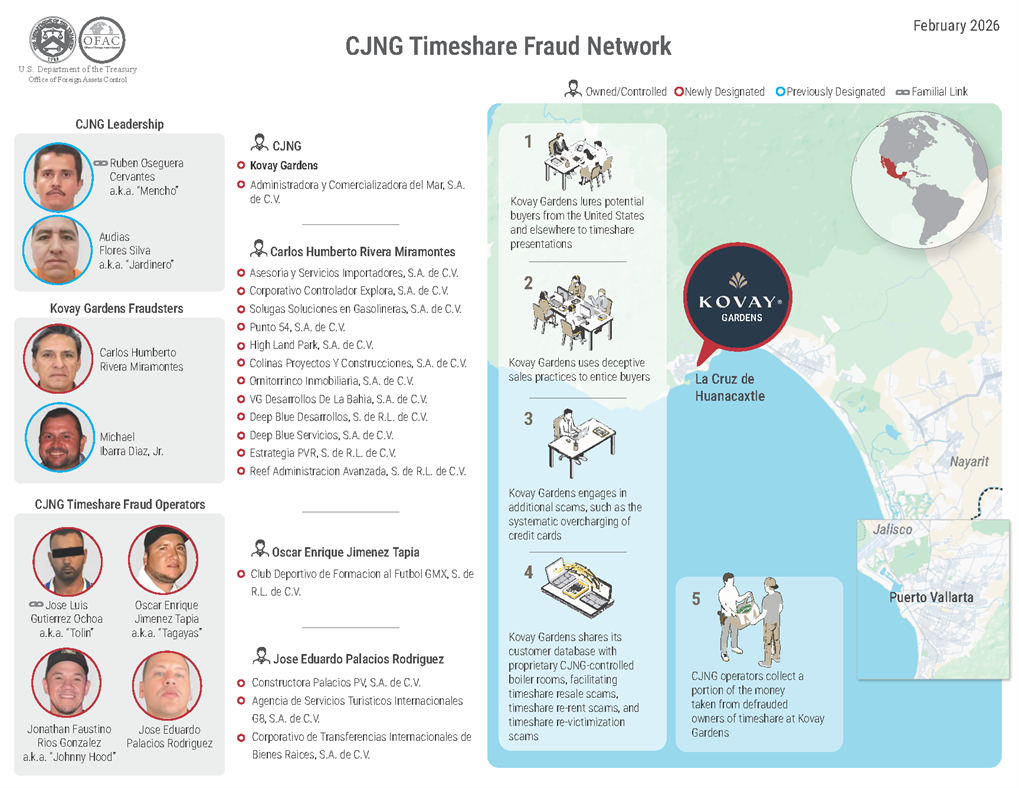
Common timeshare scam theme: Treasury says cartels generally obtain information about U.S. owners of timeshares in Mexico from complicit insiders at timeshare resorts.
After getting this info, cartels, through their call centers, contact victims by phone or email and claim to be U.S.-based third-party timeshare brokers, attorneys, or sales representatives in the timeshare, travel, real estate, or financial services industries.
The fraud may include timeshare exit scams (also known as timeshare resale scams), timeshare re-rent scams, and timeshare investment scams. However they are characterized, they all share a common theme.
All the victims are asked to pay advance “fees” and “taxes” before receiving money supposedly owed to them. This money never comes, and the victims are continuously told to pay additional amounts to finalize the transactions.
Victims are typically told to send the money via international wire transfers to accounts held at Mexican banks and brokerage houses.
Costly scams: On average, Treasury’s Financial Crimes Enforcement Network (FinCEN) receives approximately 40 Suspicious Activity Reports each month associated with possible timeshare fraud. Each reports an average of $383,000 and a median of $42,000 in suspicious activity.
This activity primarily consists of U.S.-based individuals sending funds to suspected scammers in Mexico who potentially work for Mexico-based transnational criminal organizations.
Other data collected by the Federal Bureau of Investigation shows that approximately 6,000 U.S. victims reported losing nearly $300 million between 2019 and 2023 to timeshare fraud schemes in Mexico.
In 2024 alone, the FBI’s Internet Crime Complaint Center (IC3) received nearly 900 complaints concerning timeshare fraud schemes in Mexico, with reported losses of over $50 million.
However, say law enforcement officials, these figures likely underestimate total losses, as the FBI believes the vast majority of victims do not report the scam due to embarrassment, among other reasons.
Timeshare fraud red flags: Current owners of timeshares in Mexico should take an old adage to heart. If an unsolicited purchase or rental offer seems too good to be true, it probably is.
Those considering a Mexican timeshare purchase should conduct appropriate due diligence.
Also beware of potential re-victimization scams.
In some cases, scammers may impersonate law firms, claiming that they can initiate proceedings on behalf of the victims to recover lost funds for an upfront fee. In other instances, scammers impersonate government officials, claiming that victims have engaged in suspicious transactions and demanding fines to release their funds or face the risk of imprisonment.
Timeshare victim resources: If you do fall prey to a timeshare scam, check out the FBI’s online timeshare fraud resource page. The FBI’s New York Field Office also has posted a public service announcement video featuring a victim of timeshare fraud.
Victims of timeshare fraud are encouraged to file a complaint with the FBI’s IC3.
Older victims also should call the U.S. Department of Justice’s National Elder Fraud Hotline toll-free at 833-FRAUD-11. If you prefer just numbers, that’s (833) 372-8311.
Tax Felon Friday: Treasury’s Mexican cartel timeshare sanctions that were issued so close to the takedown of El Mencho obviously earn this week’s Tax Felon Friday spotlight.
At the ol’ blog’s special Tax Felon Friday page, you can catch up on all sorts of tax miscreants. They range from those just charged and/or indicted to those convicted and/or confessed and sentenced.
And if you want more tax crime posts, notably those that were published long before I gave them a special end-of-week feature, you can peruse, what else, the tax crimes category.
You’ll find this post at the top of that collection right now, so just scroll down for more.

