

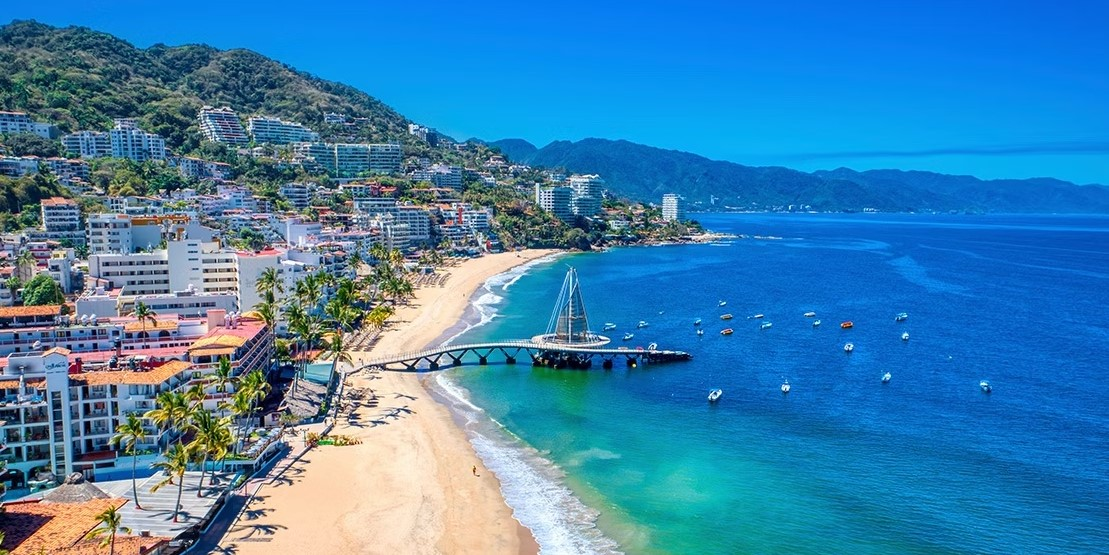
Puerto Vallarta, Mexico, is a major tourist destination. Owners of timeshares in the coastal resort also are the target of scams that benefit a cartel.
Today I learned that timeshares are still a thing.
I also learned that these vacation properties apparently are one way terrorists raise money to pay for their crimes.
My real estate/international crime lesson came from today’s Treasury Department announcement that its Office of Foreign Assets Control (OFAC) has sanctioned four Mexican individuals and 13 Mexican companies linked to timeshare fraud led by the Cartel de Jalisco Nueva Generacion (CJNG).
These individuals and companies are based in or near Puerto Vallarta, Mexico. Treasury says that the popular tourist destination in the Mexican state of Jalisco, on the country’s Pacific coast, also is a strategic stronghold for CJNG, a U.S.-designated Foreign Terrorist Organization (FTO).
Cooperating investigators in the United States and Mexico say they found that CJNG increasingly supplements its drug trafficking proceeds with alternative revenue streams such as timeshare fraud and fuel theft.
Treasury said that this latest action is the fifth time OFAC has sanctioned those linked, directly or indirectly, to CJNG’s timeshare fraud activities. Along with the earlier ones in 2023 and 2024, OFAC has now acted against more than 70 the number of individuals involved in these activities.
Timeshare paradise lost: Treasury officials said that the Puerto Vallarta-based cartels have been targeting U.S. owners of timeshares through call centers in Mexico that are staffed by telemarketers fluent in English since 2012.
The complex timeshare fraud scams often target older Americans. The scams can last years, according to Treasury, with many victims facing the loss of their life savings.
The cartels generally obtain information about U.S. owners of timeshares in Mexico from complicit insiders at timeshare resorts. After obtaining information on timeshare owners, the cartels, through their call centers, contact victims by phone or email and claim to be U.S.-based third-party timeshare brokers, attorneys, or sales representatives in the timeshare, travel, real estate, or financial services industries.
Examples of the fraud, according to the Treasury Department, include timeshare exit scams, also known as timeshare resale scams; timeshare re-rent scams; and timeshare investment scams. But they all share a common theme. The victims are asked to pay advance fees and taxes before they can get the money supposedly owed to them.
However, the victims’ money never arrives, according to investigators. Instead, the victims are continuously told that in order to finalize the transaction, they must pay additional fees and taxes via international wire transfers to accounts held at Mexican banks and brokerage houses.
Treasury also noted that after the initial timeshare scams, some victims are targeted again by scammers impersonating law firms. The fake attorneys claim they can initiate proceedings on behalf of the victims to recover lost funds for an upfront fee.
In other instances, scammers impersonate government officials, including Treasury’s OFAC. These scammers tell victims that they have engaged in suspicious transactions, and to avoid imprisonment they must pay fines to release their funds.
Dollars lost to timeshare scammers: Last year, Treasury’s Financial Crimes Enforcement Network (FinCEN), OFAC, and the FBI issued a joint Notice on timeshare fraud associated with Mexico-based transnational criminal organizations (TCOs).
In the six-month period following that July 16, 2024, notice, FinCEN received more than 250 Suspicious Activity Reports, and filers reported approximately 1,300 transactions totaling $23.1 million, sent primarily from U.S.-based individuals to counterparties in Mexico.
Based on FinCEN’s analysis, U.S. fraud victims sent an average of $28,912 and a median amount of $10,000 per transaction to the suspected scammers potentially working for Mexico-based TCOs.
Additional FBI data shows that approximately 6,000 U.S. victims reported losing nearly $300 million between 2019 and 2023 to timeshare fraud schemes in Mexico. In 2024 alone, FBI’s Internet Crime Complaint Center (IC3) received nearly 900 complaints concerning timeshare fraud schemes in Mexico with reported losses of over $50 million.
Those losses, however, are likely underestimated. The FBI believes the vast majority of victims do not report the scam due to embarrassment, among other reasons.
Timeshare buyer and/or seller beware: You can read more about the individuals and some of the companies sanctioned in Treasury’s announcement.
As for the schemes that triggered the investigations and sanctions, the FBI’s website has a timeshare fraud resource page. The law enforcement agency’s New York Field Office also has posted a public service announcement video featuring a victim of timeshare fraud.
Finally, as with all types of financial fraud, the best protection is to avoid becoming a victim.
If you’re considering buying a timeshare, in Mexico or anywhere, conduct appropriate due diligence.
If you already own a timeshare, in Mexico or anywhere, beware if you get an unsolicited purchase or rental offer.
And remember the adage that applies to real estate, taxes, and just about everything. If something seems too good to be true, it probably is.
You also might find these items of interest:
- Tax scammers use AI to up their criminal schemes
- Where mansion tax money goes in the 17 locales collecting it
- Renting your home for a short time could provide tax-free income
Advertisements
🌟 Search Amazon Tax Products 🌟
The text link above is an affiliate ad. If you click through and then buy a product, I receive a commission.
