

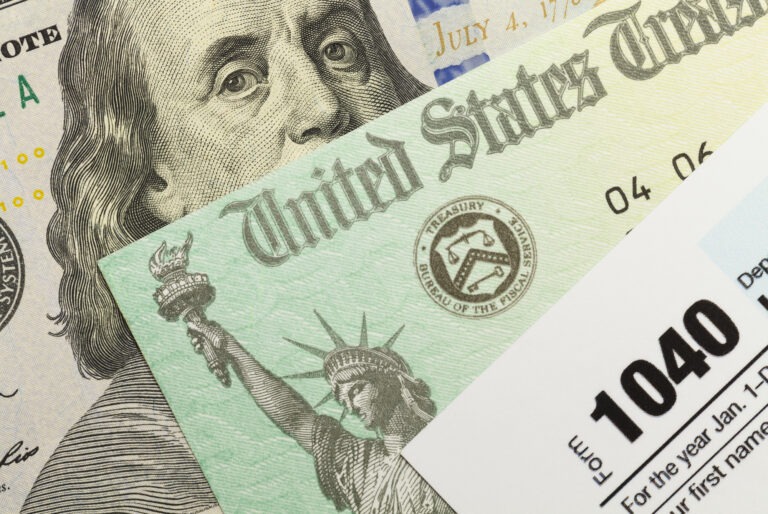
If you’re still waiting for your 2025 state tax refund, perhaps it’s time to adjust your payroll withholding so you get the cash throughout the year. That’s a good option with your federal taxes, too.
The Internal Revenue Service says if you file electronically, you should get your tax refund within 21 days. If you’re still old-school, the refund amount shown on the paper 1040 you snail mail could take up to eight weeks to arrive.
But what about state tax refunds?
Wage earning individuals in 41 states and the District of Columbia also must send their state tax departments the proper paperwork — electronically is preferred at this level, too — to get refunds on state taxes they paid via estimated taxes or had withheld.
Slow refunds in some states: Unfortunately, there’s discouraging news for some state taxpayers expecting refunds.
State-level checks are moving at a snail’s pace in several parts of the country, reports Kiplinger staffer Kate Schubel.
In fact, she notes that five states are having particular problems in issuing tax refunds to their residents.
Her article, “2026 Tax Refund Delays: 5 States Where Your Money Is Stuck,” gets this weekend’s Sunday Shout Out. Its naming of five states also makes 5 the By the Numbers figure (the first of the year, and yes, I’m still blaming the transfer of the blog to a new host for the lateness of the resumption of this feature) this weekend.
As is the normal process here at the ol’ tax blog, I’ll let you peruse the featured shout out at your leisure. But before you bounce over to the Kiplinger site, here are some highlights.
Where and why state refunds are lagging: The jurisdictions that are slow issuing refunds are Idaho, New York, Oregon, South Carolina, and Washington, D.C.
The reasons for the delays vary in each place. But some common problems include —
- Lateness by the IRS in supplying the states with information on the One Big Beautiful Bill Act (OBBBA) changes for 2025 needed to update forms,
- State budget issues that have limited the staff the tax departments need to process the more-local returns, and
- The always challenging issue of tax department system updates and upgrades. Again, this filing season it’s because of last year’s new federal tax laws and how some states are dealing with the changes.
Patience, and withholding revisions: So, what can state taxpayers do?
Basically, the same thing recommended to frustrated federal filers awaiting refunds. Be patient.
You also can stay in touch with your state tax office for updates. You’ll find those websites in this state tax department directory.
Finally, you can take action now to avoid possible refund delays, both at the federal and state levels, in future tax filing seasons.
Yes, I’m talking about adjusting your tax withholding so that the amount taken out of your paychecks is closer to your eventual tax bill.
I know the OBBBA changes messed that up this filing season. Republicans in charge of Capitol Hill and the various federal agencies didn’t let the IRS make changes to take into account how the retroactive new laws would affect filers’ returns this season.
The reason for that decision? GOP members of Congress wanted people (i.e., voters) to get big tax refunds this year in advance of the fall’s midterm elections.
But in 2026, the withholding process should return to normal.
Use IRS.gov, state tools: On the federal level, take advantage of the IRS’ online Tax Withholding Estimator and take the steps, notably giving your payroll administrator a new Form W-4, to revise the amount taken from each paycheck.
That way, instead of waiting (and possibly waiting and waiting) for Uncle Sam and/or your state’s tax collector to send you your money next tax filing season, you’ll have access to it through this year.
You can read more on this process, and my arguments to counter those folks who use over-withholding as a forced, no-interest-earned savings account at the Bank of Uncle Sam, in my post “How to get your tax withholding just right.”
The revised withholding process is essentially the same at the state level (as far as I can remember from my Maryland taxpaying days). Check with your state’s tax officials and your employer about making paycheck changes at that level.
The sooner you update your federal and state withholdings, the sooner you’ll be getting more in your paychecks.
Ideally, you can save some of your new excess income. But if you need the money to pay inflation-increased bills, you can use it for that.

