

Photo by Michael Fousert on Unsplash
…
The electric vehicle (EV) federal tax credit ends on Sept. 30.
Without the tax incentive to encourage EV purchases, the electric vehicle industry obviously will take hit.
So will auto buyers who insist on sticking with more environmentally friendly private transportation.
And if past purchases and EV tax credit claims are an indicator, drivers in two staunchly red states will feel the loss of the tax break.
EVs popular in populous states: California, not surprisingly, has the most registered electric vehicles by a large margin. The latest U.S. Department of Energy data shows 1,256,646 EVs on the official rolls.
The Golden State has long been the leader on environmental matters. It’s hefty gasoline tax also no doubt convinces a lot of drivers to switch to alternative fuel autos.
But two other states with Trump administration supporting leadership and overall voting populations that lean conservative come in second and third.
Florida had 254,878 EVs, with Texas accounting for 230,125.
And recent research by the online lending marketplace LendingTree found that drivers in these three states will lose the most from the end of the EV tax credit.
Almost $4 billion claimed in EV credits: EV inclined drivers in those three states obviously will face difficult decisions about whether to buy without a tax break.
Overall, after analyzing Internal Revenue Service data on individual income tax returns filed and Clean Vehicle Credits claimed, LendingTree found that in tax year 2023, Americans filed 487,990 returns claiming the EV tax credit. Those claims totaled $3.3 billion.
Another 28,180 returns included claims for the pre-owned EV credit. Those used car credits totaled $95.6 million.
The maximum possible EV tax credit for a new vehicle is $7,500. The average credit claimed on the returns LendingTree examined was $6,709. For used EVs, which could get a possible $4,000 maximum tax break, the average credit claimed was $3,392.
Potential costs for CA, TX, and FL drivers: California would be hardest hit by the expiration of the new EV tax credit, as it leads in total claims and national share.
Californians submitted 157,360 claims for the new EV tax credit in tax year 2023, or 32.2 percent of the tax break claims, according to the LendingTree findings. California also led in used EV tax credit claims, accounting for 23.2 percent of the overall filings for the pre-owned auto tax benefit.
Over a year, Californians could miss out on an estimated $1.1 billion in EV tax credits when the federal incentive ends, according to the study. That includes credits for new and used electric vehicles.
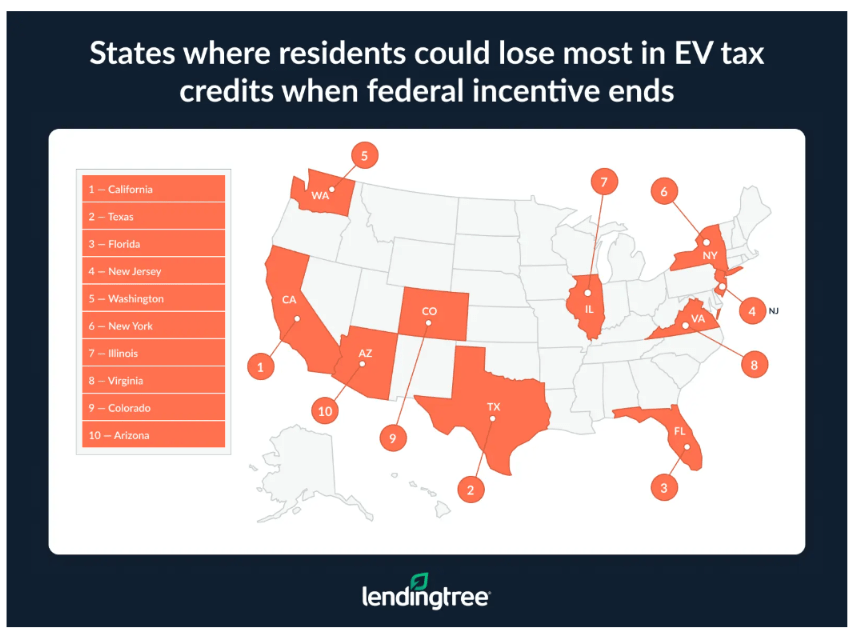
Texans filed 38,870 EV tax credit claims. That produced $272.7 million in savings for those drivers.
Florida claims came to 30,090. Those filings accounted for $201.4 million in tax savings on EV purchases.
Matt Schulz, LendingTree chief consumer finance analyst, says those credits are big, especially when you consider how expensive vehicles are today.
“That these credits could often be taken at the point of sale makes them even more significant,” says Schulz. “It’s one thing to have to wait until the following spring to get a rebate with your tax refund. It’s something else to be able to knock thousands of dollars off the price of a vehicle from the start. I have no doubt that those credits inspired people who may not otherwise have considered an electric vehicle to at least think about them.”
You also might find these items of interest:
- IRS tweaks EV tax credit’s Sept. 30 ending date
- Your new car’s loan interest might be tax deductible
- Claim these clean energy tax credits before OBBB ends them
Claim these clean energy tax credits before OBBB ends them – Don’t Mess With Taxes

