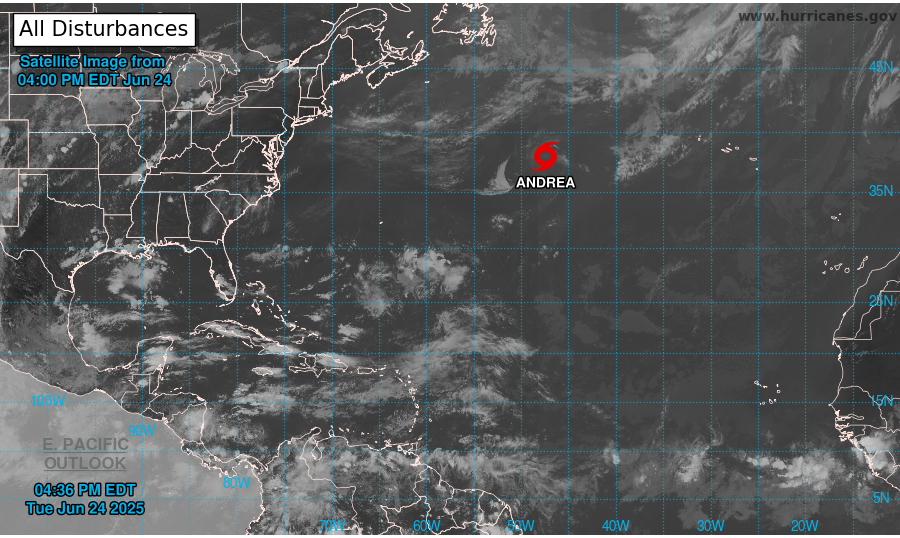
 The National Hurricane Center’s image of Tropical Storm Andrea. The first named system of the 2025 Atlantic hurricane season formed in the central Atlantic Ocean, meaning it’s not a threat to make landfall.
June 1, 2026 note: This post was published almost a year ago with a slightly different headline (Resources to deal with disasters, as 2025 hurricane season gets its first named storm), but its information is still valid. You can read the most recent version of hurricane preparation, both physical and financial/tax moves to make in advance of storms, in Hurricane 2026 preparation and tax tips. And stay tuned to the ol’ blog’s throughout the coming Atlantic/Gulf of Mexico tropical storm season for reminders and warnings.
The good news is that the storm, which is the latest first named system since Hurricane Arthur’s arrival in 2014, is not a threat to any land.
Even better news is that Tropical Storm Andrea is not expected to become a hurricane. Forecasters say the storm should weaken later tonight, and dissipate by tomorrow, June 25, evening.
The reason for the expected decrease in Andrea’s strength is her location in the central Atlantic, between Bermuda and the Azores Islands. That’s the farthest northeast of any named June storm on record.
In fact, Andrea is the type of weak and short-lived storm that might not have been named in the days before satellite imagery was available in the Atlantic, notes Dr. Jeff Masters, a hurricane scientist who formerly worked with the National Oceanic and Atmospheric Administration (NOAA) Hurricane Hunters and who now is with Yale Climate Connections.
Time to prepare: While Tropical Storm Andrea isn’t likely to pose any serious problems, the system is a good reminder to get ready for the rest of the Atlantic, and Gulf of Mexico, hurricane season. It’s predicted, once again, to be an active one.
Such preparations are obviously critical for individuals and businesses in coastal areas. But storm systems don’t stop when they come ashore. As they move inland, flooding and spin-off tornadoes can cause even more damage, sometimes worse the storm’s initial landfall.
You can find preparation tips in my post earlier this year Hurricane season 2025 starts June 1. Get ready now. It includes ways to ensure that family members who are older or have special needs are protected, as are your pets.
You’ll also want to make sure you have ways to stay informed about impending tropical systems and other types of disasters.
And now is the time to take inventory of your property and personal possessions. This will help with any insurance claims or, if the catastrophe is declared a major disaster, support your claim of uninsured losses as a tax deduction.
Government help with disasters: Several of Uncle Sam’s agencies also can provide preparation and post-storm help.
The National Weather Service (NWS) has a Hurricane Safety Tips and Resources web page. Among its offerings are planning for a hurricane and steps to take after one strikes. The NWS also has a separate page with links to safety tips for myriad natural disaster threats.
The Federal Emergency Management Agency (FEMA) issues major disaster declarations, which determine the type of help available to those in areas hit hard by storms. FEMA’s Be In The Know program has more on identifying specific hazards for your area; knowing evacuation plans; building a go-bag with the essentials you might need when you must evacuate; and locating reliable information sources (including FEMA alerts) to help you make informed decisions before, during, and after a disaster.
Benefits.gov provides an online Disaster Recovery Center (DRC) locator, where disaster victims can find a facility or mobile office that has information about FEMA or other disaster assistance programs.
Ready.gov’s hurricane page has tips on preparing for a tropical system, staying safe during a storm, returning home, and more. The menu on the left side of the page has similar information for other types of disasters.
DisasterAssistance.gov provides help for those seeking FEMA disaster assistance, as well as information on other resources to help you recover. The site tracks disasters, assistance application deadlines, and has an interactive tool to help you find recovery resources in your community.
The Centers for Disease Control (CDC) has a hurricane page, as well as one with a general overview of health issues and natural disasters.
The Occupational Safety and Health Administration (OSHA) web page on Hurricane Preparedness and Response, with a focus on what employers need to consider.
The Small Business Administration (SBA) has funding options to help businesses and individuals recover after a declared disaster.
And, of course, there is the Internal Revenue Service’s online collection of disaster and emergency tax relief resources for individual and business taxpayers.
Again, you have time to get ready, but don’t waste it. While the annual Atlantic and Gulf of Mexico hurricane season typically doesn’t heat up until August and September, you don’t want to scrambling whenever a storm might threaten.
You also might find these items of interest:
- Using tax-favored retirement funds after a disaster
- Disaster developments: TX, OK, MO & MS get tax relief, as Trump plans FEMA phaseout
- Storm Warnings: A collection of special pages with advice on preparing for, recovering from, and helping those affected by disasters
Advertisements
🌟 Search Amazon Tax Products 🌟
The text link above is an affiliate ad. If you click through and then buy a product, I receive a commission.