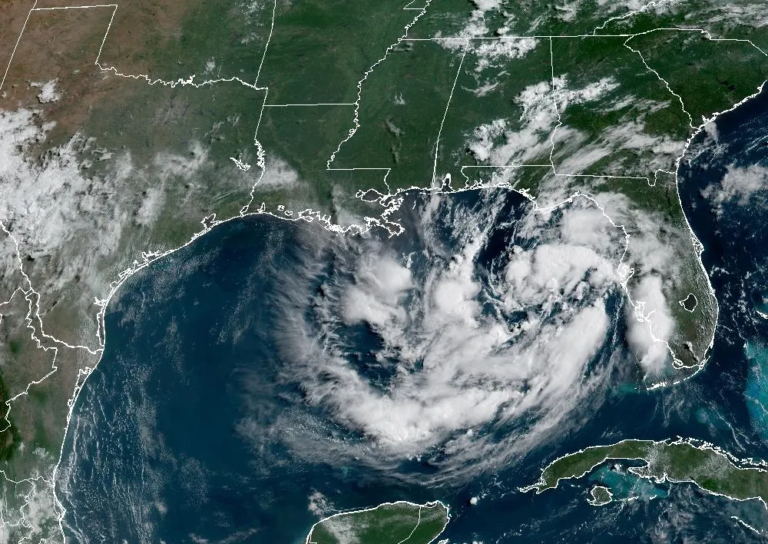
National Oceanic and Atmospheric Administration (NOAA) Geostationary Operational Environmental Satellite (GOES)
satellite image of tropical depression on July 19, 2026.
…
Updated 7:30 p.m. 7/20/26: The quiet-so-far 2026 hurricane season looks to be ramping up a bit. Gulf of Mexico residents need to prepare now — physically, financially and for potential tax implications — for Tropical Storm Bertha, whose winds increased enough for her to get her name at 7 p.m. CDT Monday, July 20. She’s expected to make landfall later this week.
…
It’s time to think about tropical storm prep again with the potential second named system of the 2026 Atlantic/Gulf of Mexico hurricane season brewing.
The system, dubbed Tropical Depression Two by the National Hurricane Center (NHC), started over the weekend as a meandering mass off Florida’s west coast. It developed enough by 7 p.m. CDT Monday, July 20, to officially be named Tropical Storm Bertha. Let’s hope she doesn’t turn out to be that big!
But Bertha is active enough that Uncle Sam’s meteorologists have issued a Tropical Storm Watch for much of the Sunshine State’s mid-to-western panhandle on Sunday, July 19. “Additional watches will likely be required over the next day or two,” noted the NHC in an advisory earlier this afternoon.
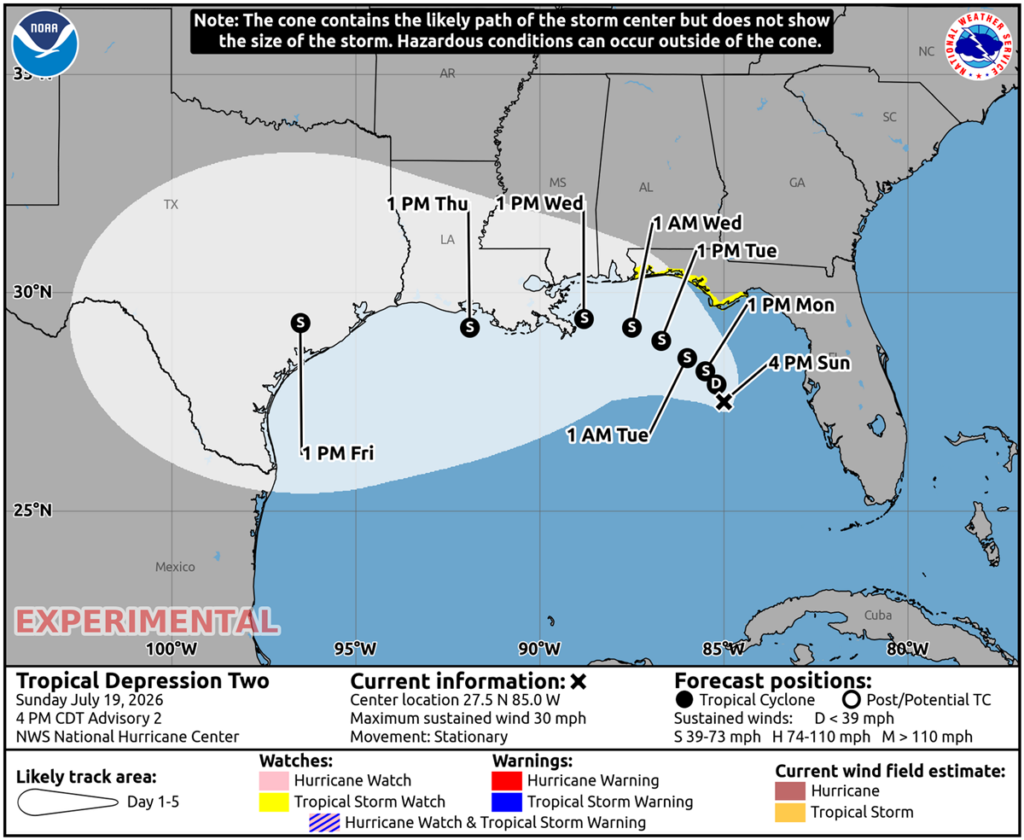
We all know that predictive cones issued for possible storm landfalls this far out often change. But the experimental five-day visualization below from the National Oceanic and Atmospheric Administration (NOAA) and National Weather Service (NWS) indicates that Mississippi, Louisiana and Texas residents need to start getting ready.
Now. Just in case.
You’ll find lots of storm preparation advice in my Hurricane season 2026 preparation and tax tips post published on the June 1 start of the annual tropical season.
You can click over there for the full info, but here are some key physical, financial, and tax prep tips.
Get food, water, and utility backup items: Hurricanes, and even ostensibly less severe tropical storms, can mean the end of modern conveniences like electricity and all that relies on it. You’ll need shelf-stable food and especially plenty of potable water on hand.
Disaster planners say the basic H2O storage should be one gallon of water per person per day, for drinking and sanitation. But you don’t necessarily have to buy all the water you might need.
Start now filling empty plastic containers (we use old milk jugs) with water you can use for necessary personal hygiene needs. Moist towelettes and garbage bags also will help with sanitation.
As for food, stock up on canned meat, protein bars, dry cereal, dry milk you can mix with water, energy drinks.
Start freezing ice cubes or reusable ice packets now so you’ll be able to salvage some of your refrigerated and frozen food if you lose power.
As for no power, have battery operated lighting options ready. And extra batteries. Matches and candles are a back-up if power is a longer time.
Definitely buy or create your own first aid kit. And make sure you have enough prescription medications to get you through at least a couple of weeks.
Packing clean clothes in a waterproof container. Don’t forget sneakers or other closed-toe footwear. Flip flops are great for hot summer days, but not when you have to wade through debris-filled ponds and puddles left by heavy tropical rains.
Finally, fill up your car’s tank well before any storm warnings are issued. Lines at gas stations are not fun when a storm is bearing down. And it’s likely some stations will run out of fuel.
Financial and tax storm prep components: In addition to stormproof containers for food, medicine and clothing, you’ll need one to hold the following:
- A pre-storm inventory of your property, just in case you need the information to file an insurance claim;
- Medical records of everyone in the family;
- Other important financial documents, such as bank and other financial account numbers;
- Latest filed tax return and material needed to file your current taxes, just in case you need to make a storm loss claim;
- A credit card with enough available credit to cover any post-storm needs;
- Cash in case power outages make using a credit card or accessing an ATM impossible.
Preemptively collecting your personal and financial documents is much easier than trying to reconstruct them after a disaster.
If you prefer, you can put most of this information in a digital format that takes up much less space to store. But if you don’t have power, you might not be able to easily access it.
So, paper copies, for example of your insurance policy and contact information, are good to have literally on hand, too.
Other special circumstances: If you own a business, you need to make sure it is secured, physically and financially, for any approaching storm, too. You’ll find some advice in this regard in my separate post noting 6 hurricane prep tips for businesses.
Other special preparation situations include steps to help older loved ones or people with special needs make it through a disaster.
And don’t forget about your furry family members. These 7 tips to ensure your pets’ safety during a disaster cover the items you need to have on hand and/or the alternative plans you need to make to ensure you and your animals make it safely through any storm.
Finally, stay informed. And if weather and government officials say you need to evacuate, do so.
If you refuse to leave, you’re putting not only your and your family’s lives in danger, but also the lives of first responders. Don’t do that.
Grab your storm prep kits and go.
…
Advertisements
🌟 Search Amazon Tax Products 🌟
The text link above is an affiliate ad. If you click through and then buy a product, I receive a commission.