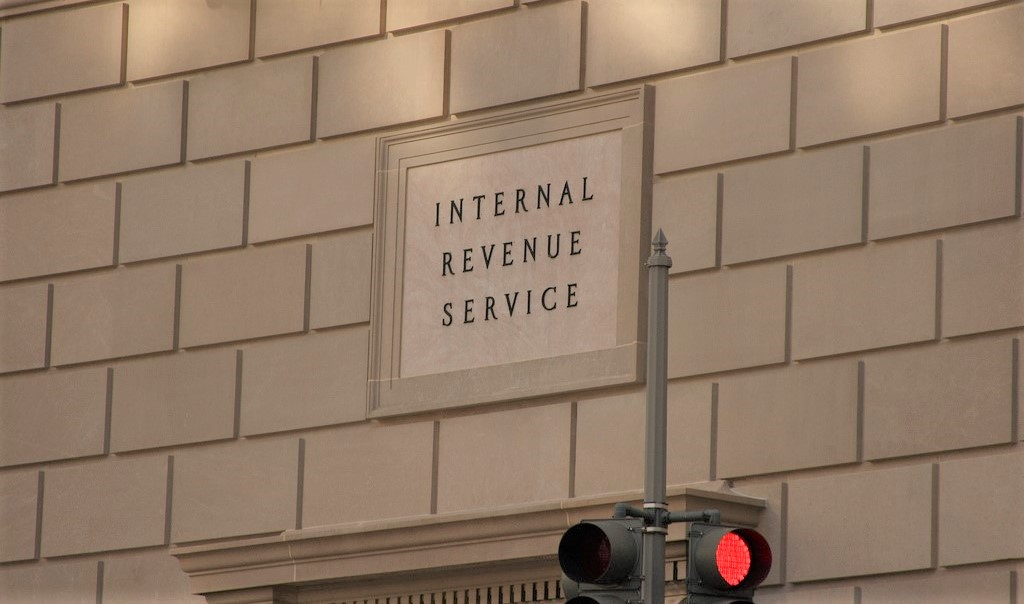
DOGE and Congressional efforts appear to be putting up a stop signal for many of the IRS’ goals. (Photo by Kari Bluff Nesler via Flickr)
…
The Department of Government Efficiency (DOGE), the quasi-governmental group created by billionaire Elon Musk, contends it has so far found $100 billion in fraud and waste across multiple federal agencies.
Even if that’s true, which scrutiny from other organizations questions, the way DOGE, with the White House’s approval, is slashing Uncle Sam’s operations could end up costing more than the purported savings.
“Just one move — the plan to shrink the Internal Revenue Service’s staff by up to 50 percent — would, very conservatively, lead to a $400 billion increase in uncollected taxes over the next decade. It could easily mean more than $2 trillion in losses.”
That assessment of how the firings could easily backfire is from a Washington Post column by Natasha Sarin, a professor of law at Yale Law School with a secondary appointment at the Yale School of Management in the Finance Department.
Sarin’s calculations are based on a recent study by The Budget Lab at Yale, a non-partisan policy research center at the university created to provide in-depth analysis of how federal policy proposals might affect the American economy.
Counterintuitive cuts: In The Revenue and Distributional Effects of IRS Funding, a report updated and released last week, the Yale researchers estimate that the $80 billion added IRS funding in the Inflation Reduction Act would have led to a net revenue increase of $637 billion over the full 10-year budget window.
However, if the IRS shrinks by 50 percent, or a workforce decrease of about 50,000 people, The Budget Lab estimates that the significant reduction in IRS staffing and resulting capacity to collect revenues would result in $395 billion ($350 billion net) forgone revenue over the 10-year budget window.
“If the lack of IRS resources leads to a substantial increase in noncompliance, net forgone revenue could rise by $2.4 trillion over 10-years,” according to the Yale report.
That decade loss of $2.4 trillion in federal revenue is this weekend’s By the Numbers figure.
Cuts contribute to other concerns: Politicians, particularly Republicans, have long tried to eviscerate the IRS. DOGE may finally do it for them.
But the costs could be more than strictly financial.
The IRS’ ability to enforce tax laws and collect money that is legally owed also acts as a deterrent to would-be tax cheats. A seriously weakened IRS could change that, making even more Americans willing to break the law to reduce their tax liability.
Or, as the Yale report notes, “When taxpayers know there’s a higher chance of audit, voluntary compliance tends to improve.”
“Assume that a depleted IRS would lead taxpayers to evade more,” adds Sarin in her newspaper column. “If high-compliance taxpayers became medium-compliance taxpayers, and medium-compliance taxpayers became low-compliance taxpayers, losses could easily total well above $2 trillion, or about a 25 percent increase in unpaid taxes.”
Plus, we change the very nature of our populace. In this one are area, we will become a country of less truthful residents. And if we successfully cheat on taxes, then it will be that must easier for those so inclined to also cut corners in other aspects of life.
Tax fairness likely to suffer: Then there’s the equity component.
Not to drop into demagoguery, but half of the country constantly cries out for a nostalgic American past. But that’s not a likely possibility if we abet a mechanism that undercuts the World War II credo of truth, justice, and the American way.
The truth part obvious is stricken when taxpayers lie about their income on tax returns.
The justice, or fairness, component of that rallying cry would suffer since a decimated IRS’ ability to enforce tax laws would not fall evenly on all taxpayers. Or, as The Budget Lab puts it, “Noncompliance is also not evenly distributed across the income distribution.”
Most lower- and middle-income U.S. taxpayers’ income is from wages and salaries, which makes their tax reporting compliance is essentially 100 percent. Their income and other taxes are automatically withheld by employers, who also report those amounts to the IRS on W-2 forms.
Meanwhile, the country’s highest earners, who have the largest tax obligations, tend to accrue those greater income amounts in more opaque ways, notes the report, making their rates of noncompliance higher.
One study estimates that the top 1 percent of earners are responsible for nearly 30 percent of unpaid taxes. The Budget Lab calculations using the latest Tax Gap estimate of $700 billion a year — that’s the amount of tax legally owed, but not collected — estimate that the top earners account for about $205 billion of the uncollected gap funds.
The bottom two lower-earning sectors, on the other hand, are responsible for less than 5 percent of the Tax Gap, or just more than $20 billion annually.
American way for the rich: So with truth and justice missing, the American way for our tax system would be to reward richer taxpayers who can afford to pay advisors to find, create, and argue with the IRS about tax reduction tactics.
Much of the added the Inflation Reduction Act funds were to go to adding specially trained IRS personnel who could better investigate the more complex returns and techniques used by wealthier individual filers and corporations to lower their tax liabilities.
The focus on wealthier taxpayers questionable filings would, argued the recently-resigned IRS Commissioner Danny Werfel, help “restore trust and increase fairness in the IRS and the tax system.”
But staff reductions by DOGE, along with other personnel and appropriations cuts still favored by the GOP-controlled Congress, mean that taxpayers who are able to work around the tax laws’ edges, and yes, sometimes do so illegally, will continue to pay less.
That leaves the majority of lower-earning taxpayers as easy enforcement targets for the IRS.
Despite DOGE’s triumphant declarations, they don’t appear to be supporting the type of turnaround at the IRS that will make the agency or the country great, again or ever.
You also might find these items of interest:
- DOGE access to IRS concerns taxpayers
- IRS funding again leads IRSAC’s annual report
- IRS to crack down on personal travel via corporate jets
Advertisements
🌟 Search Amazon Tax Products 🌟
The text link above is an affiliate ad. If you click through and then buy a product, I receive a commission.