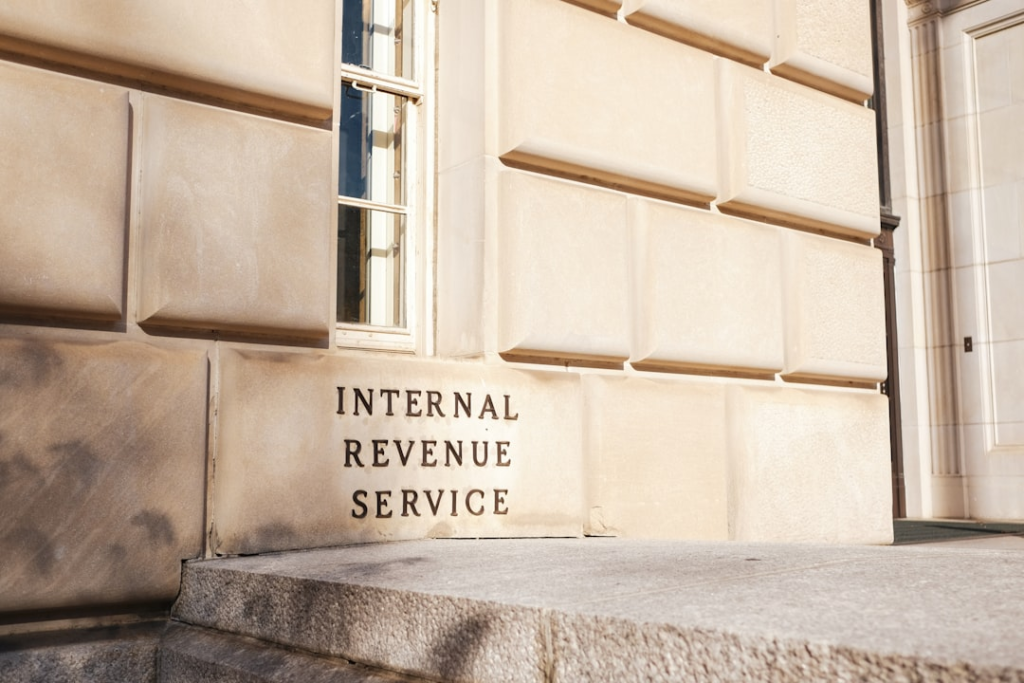
If you filed your taxes before May 16 and your earnings included investment income, you might want to take another look at your return.
The Internal Revenue Service announced on its website yesterday, May 16, that the 2018 Schedule D tax worksheet in that form's instructions contained an error.
"The tax calculation did not work correctly with the new TCJA [Tax Cuts and Jobs Act] regular tax rates and brackets for certain Schedule D filers who had 28% rate gain (taxed at a maximum rate of 28%) reported on line 18 of Schedule D or unrecaptured section 1250 gain (taxed at a maximum rate of 25%) reported on line 19 of Schedule D," according to the IRS statement.
As in all tax situations, your personal tax circumstances determine just what the wrong qualified dividends and capital gains worksheet means to your return and bottom line.
Pre-May 16 worksheet means more (or less) tax: The IRS notes that the correction produces a lower regular tax for most affected taxpayers and a higher regular tax for a small number of impacted filers.
The IRS has corrected the worksheet and it now is part of the online Schedule D instructions, specifically pages 16 and 17.
"If you downloaded those [Schedule D] instructions before May 16, 2019, you should download them again," advised the IRS.
Anyone filing a 2018 return after May 15, including those with extensions, is not affected by the error, according to the IRS.
As for the millions who use/used tax software instead of completing the worksheet by hand, the IRS says it has notified its tax preparation partners so if you use the program now (i.e., after May 15), your return should be OK.
However, if you filed earlier or aren't sure the software you used is one of the IRS-alerted partners, I suggest checking with that product's customer assistance department. Those folks should be able to reassure you that the correction has been integrated into the software and advise what to do if you filed when the wrong worksheet was part of the program.
Most still to be filed: In the grand scheme of the annual tax filing season, the IRS believes that not that many folks have been adversely affected by the incorrect Schedule D worksheet.
"Those taxpayers reporting these types of transactions typically file more complex returns and frequently obtain tax-filing extensions from the IRS," notes the tax agency. "For that reason, the IRS believes that many potentially-affected taxpayers are yet to file."
In addition, says the IRS, most taxpayers filing Schedule D do not have amounts on lines 18 and 19, check "Yes" on line 20 and do not use the Schedule D Tax Worksheet to figure their regular tax. That means the wrong worksheet didn't affect them.
However, if the above situation does not apply to you, you might want to review your return.
Worksheet corrections: The Schedule D tax worksheet was corrected by renumbering line 18 as line 18a, adding new lines 18b and 18c and updating the text on line 19 to reflect those changes.
The IRS says your regular tax calculation using the Schedule D worksheet is potentially impacted if:
- Form 1040, Schedule D, lines 15 and 16 are both more than zero;
- Schedule D, line 18 or line 19 is more than zero (or both are more than zero);
- Your taxable income is more than $38,600 if single or married filing separately, $51,700 if head of household or $77,200 if married filing jointly or a qualifying widow(er);
- Line 15 of the Schedule D Tax Worksheet is not more than line 14 of the Schedule D Tax Worksheet (those lines were not impacted); and
- Line 18 of the original Schedule D Tax Worksheet (line 18a of the corrected Schedule D Tax Worksheet) is not more than $157,500 or $315,000 if married filing jointly or as a qualifying widow(er).
If any of those apply, you recalculate your regular tax using the new worksheet.
Await further instructions: At this point, though, the IRS says there's no need to file a Form 1040X to amend your return, even if you find the corrected worksheet changes your originally filed return's numbers.
And please, says the IRS, don't call the agency about this issue.
The IRS says it is reviewing all potentially impacted filed returns. It promises it will provide more information this review process later.
You also might find these items of interest:
- Form 1040X lets you fix a wrong tax return
- Capital gains tax (and more) inflation adjustments for 2019 tax year
- Wolters Kluwer CCH clients get extra week to meet May tax-exempt filing deadline
Advertisements