Juneteenth is officially on the day that gives it its contraction name, June 19th. But since that was on Sunday, federal offices, the stock market, and some states observance Juneteenth on Monday, June 20.
It’s the second year of Juneteenth being celebrated as a federal holiday. Since today is Sunday, federal offices will observe it on Monday, June 20.
As a native Texan, I was aware of the date. It’s was the day in 1865 when recalcitrant (insert your own R word if you wish) early Lone Star Staters were forced to acknowledge — and let enslaved Texans know — that President Abraham Lincoln had signed the Emancipation Proclamation 2½ years earlier.
The handwritten order (pictured below) didn’t end slavery or erase its lingering consequences. However, as Shane Bolles Walsh, a lecturer with the University of Maryland’s African American Studies Department, told NPR, “It immediately changed the game for 250,000 people.”
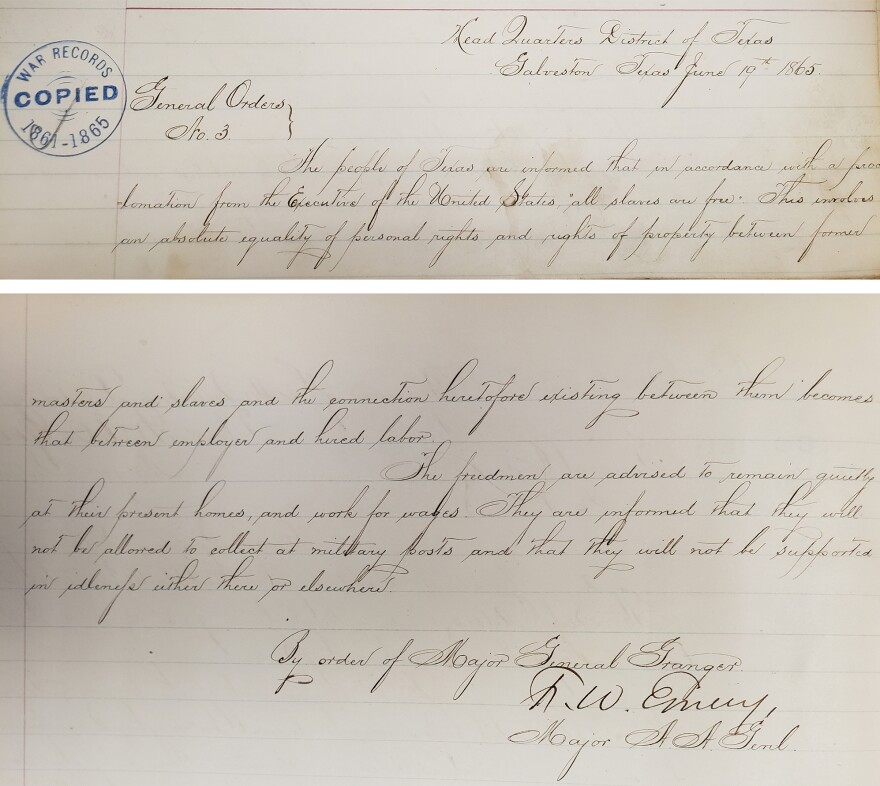
General Order 3, issued June 19, 1865, representing the Federal Government’s final execution and fulfillment of the terms of the Emancipation Proclamation. (National Archives)
…
Now national, but not recognized in all states: State While Texas’ continued enslavement of its Black residents was the awful reason for the order, at least my home state was the first to make Juneteenth an official state holiday. That happened in 1980.
However, federal June 19 action notwithstanding, today isn’t recognized as a legal holiday in most states.
The Pew Charitable Trusts story on Juneteenth and where it is and isn’t celebrated at the state level earns the ol’ blog’s first Sunday Shout Out.
Where we go from June 19, 2022: Today’s second shout out goes to my local NPR station KUT. The Austin public radio station has produced a one-hour Juneteenth special, Juneteenth: Are We Really Free?
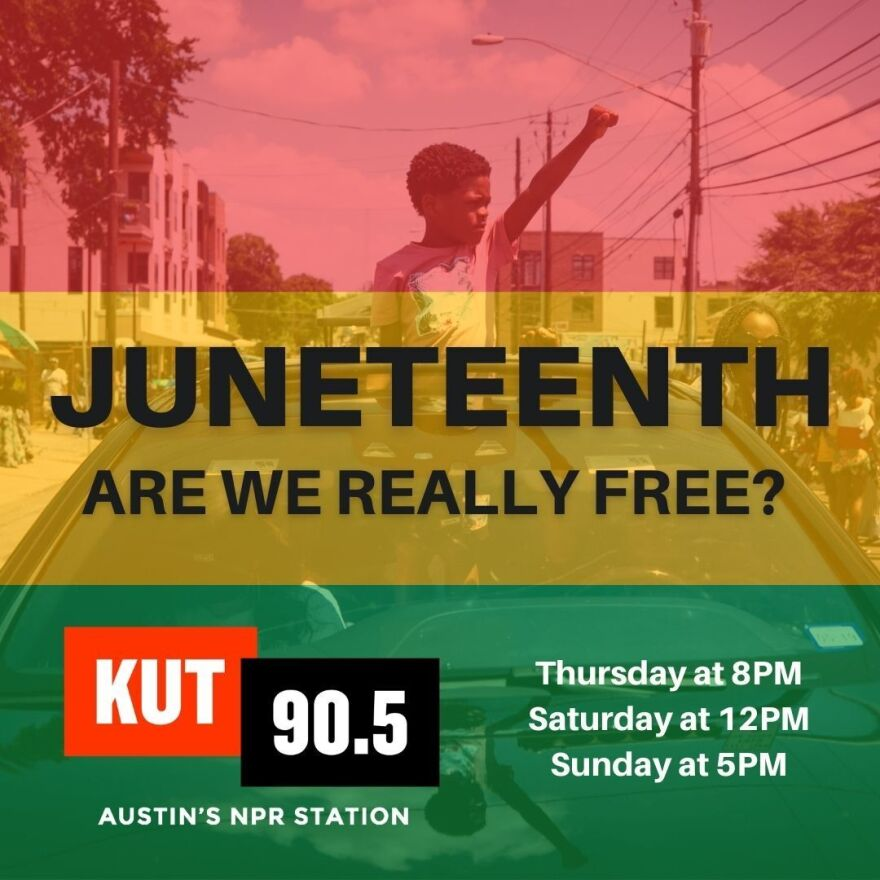
The above link takes you to KUT producer and host Miles Bloxson’s introduction. There you’ll find a link to the program if you can’t listen to it this afternoon (5 p.m. Central Daylight Time) because you’re out at a Juneteenth event.
Taxes and racial bias: Finally, since this is a tax blog, today’s third Juneteenth shout out goes to Brooklyn Law School professor Steven Dean‘s paper “Filing While Black: The Casual Racism of the Tax Law.”
The SSRN abstract of Dean’s work notes:
The tax law’s race-blind approach produces bad tax policy. This essay uses three very different examples to show how failing to openly and honestly address race generates bias, and how devastating the results can be. Ignoring race does not solve problems; it creates them. ProPublica has shown, for example, that because of the perils of filing income taxes while Black, the five most heavily audited counties in the United States are Black and poor.
Dean’s study also points to examples of how tax law racial bias has long been tolerated and exploited, sometimes with tragic, deadly ends.
A day to celebrate, move forward: The tax implications are important, but even as a tax blogger, I don’t want to end on a down note.
Juneteenth is a day of celebration in the Black community, as well as for us all. It’s also a reminder that 156 years later, there is still much to accomplish.
I’ll leave you in Galveston, Texas, the birthplace of Juneteenth. There obviously are several special events each June 19, but many of the day’s commemorations are year-round.
Juneteenth: The Galveston Story – Trailer 1 from Sam Addington Media Productions on Vimeo.
You also might find these items of interest:
- Juneteenth added to list of legal holidays, which sometimes affect taxes
- MLK Day: Make a difference in the world and possibly on your tax return
- Not yet independence, freedom or justice for all in America on this July 4th