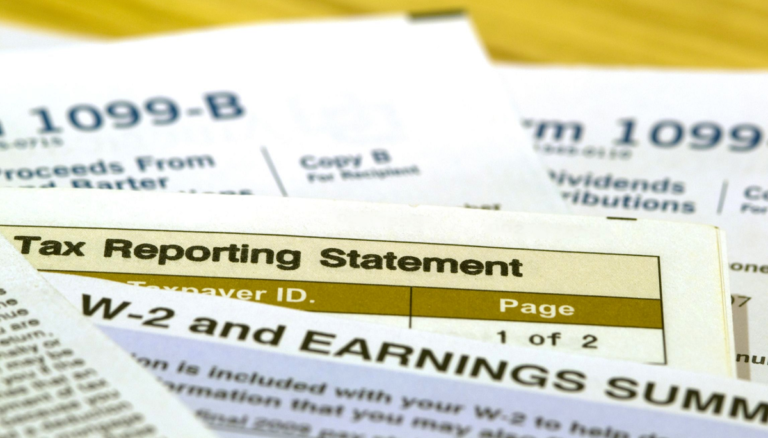
The Internal Revenue Service will start processing 2025 tax year returns on Jan. 26. Lots of taxpayers, however, have already submitted their 2025 Form 1040s, either using Free File, which opened for eligible taxpayers on Jan. 9, or on their own using other versions of tax software.
Quick note: Even if you send in your return early,
the IRS won’t process it
until the official tax season opens on Jan. 26.
All these early bird filers have one thing in common. They already have all the tax statements they need to accurately complete their returns. That’s generally income statements like W-2s and 1999s. But there are many other documents that have tax-filing relevance.
Most of those tax documents, which are copied to the IRS, aren’t require by law to be sent to you until the end of January. So, most of us are just going to have to be patient. So far, I’ve only received so three of a dozen 1099s I’m expecting.
Some taxpayers push the filing envelope by using other records, such as pay stubs or invoices sent to clients or investment statements, to get an idea of what our taxes this year will look like. But that can be dangerous.
As noted, Uncle Sam’s tax collector gets copies of these statements, and it uses them to double check entries. A mistake can mean a return gets slowed while the IRS confirms the correct amounts, or worse, is rejected.
Tax forms to expect
You can get an idea of what to expect, or what you’re still waiting on, by reviewing your copy of last year’s filing. Remember, though, that it’s just a guide. Your tax documentation could be different this filing season, especially if there’s been a change in your life that affects your taxes.
Those life situations mean that the tax-related documents differ from taxpayer to taxpayer. , but there are some common ones most people get every year. They are in the below list, which mostly is in numerical order.
That said, Form W-2 get top billing because, after all, the IRS collects income tax. Plus, most individual taxpayers are salaried workers who get these annual earnings statements from their employers.
Also, most of the form titles below link to the official IRS document. They should be the 2025 tax year versions, but a few might still be undergoing IRS review and updates. Yes, even with the official filing season start looming; remember, the IRS is operating under some added stress this year. So, if the form link isn’t the latest version, check back later.
Finally, one more time, most of these statements must be sent to taxpayers by Jan. 31. This year, that deadline slips to Feb. 2, since 1/31 is on Saturday.
Some, however, get a few more weeks. And some don’t show up until well after Tax Day. Where a later delivery is allowed, it’s noted in the brief discussions of the forms. It’s also a signal that you might need to get a tax filing extension.
Now, finally, to the forms.
W-2 — This is the tax form that most folks anxiously await. It’s the wage statement from your employer (or employers, if you hold more than one job) that details how much money you made, how much income tax was withheld, the amounts taken out for Social Security and Medicare, and contributions to workplace benefit programs, such as 401(k) and similar retirement plans, medical accounts, and child care reimbursement plans.
Some taxpayers, however, will need information not on their 2025 Form W-2.
The One Big Beautiful Bill Act (OBBBA) that became law last July 4 exempts some of last year’s tip and overtime income from federal tax. Changes coming to the 2026 W-2 will help here. That revised form will detail an employee’s qualified tips and qualified overtime compensation to help filers claim these tax breaks.
But for 2025 tax returns, taxpayers whose pay included tips or overtime must determine the eligible amount themselves. The IRS issued guidance on how to do this. Tax software should help. You also might want to talk with a tax pro about how to claim the correct amount.
W-2G — If you’re lucky, you’ll get this earnings statement. It’s specially designed to reported gambling winnings, hence the appended G. It’s sent to winners who get —
- $1,200 or more from bingo or slot machines,
- $1,500 or more in winnings (reduced by the wager) from keno,
- More than $5,000 in winnings (reduced by the wager or buy-in) from a poker tournament,
- $600 or more in gambling winnings (except winnings previously noted) and the payout is at least 300 times the amount of the wager, and
- Any other gambling winnings subject to federal income tax withholding.
1095 form series — This A, B, and C form series was created to report Affordable Care Act (ACA) data. Political battles over the health care coverage popularly known as Obamacare have changed some things (and the current tax subsidy fight could change things more).
But the law requiring statements about ACA coverage remains. That means you still might get at least one of the 1095 series insurance coverage tax statements listed below.
You’ll need the A version to reconcile or claim any ACA premium tax credit (PTC) you got in advance or are eligible to file for on your return. The B and C versions are informational and you can simply store them with your other tax records for the year.
- Form 1095-A, the Health Insurance Marketplace Statement, debuted for the 2015 tax year. Per its name, it is sent by the exchanges where individuals purchased their medical coverage. As noted, use its data in connection with PTC claims.
- Form 1095-B is issued by health care insurance issuers or some smaller companies that provide coverage for employees. It confirms that you had workplace-provided healthcare that met the ACA’s acceptable minimal health insurance coverage standard. It also shows how long you were covered and which family members also were on your policy.
- Form 1095-C is the same as B, but is issued by large employers.
1098 — This form lists how much mortgage interest a homeowner paid on the loan. In most cases, this amount is fully deductible for taxpayers who itemize. The IRS has an official 1098 form (that’s what the 1098 link will show you), but most lenders tend to use a substitute document that contains the same data.
This form also includes another key itemized tax deduction, the amount of real estate taxes on the property that the mortgage lender paid on your behalf the previous tax year. This is of crucial interest to some 2025 filers, since the OBBBA increased the state and local taxes (SALT) deduction for 2025. For this year’s returns, it is $40,000 instead of the $10,000 cap set by the Tax Cuts and Jobs Act of 2017.
1098-E — The interest paid on your student loan is reported on this form and is sent by your lender it the interest tally is at least $600. You may be able to deduct this interest and possibly other loan-related amounts, such as origination fees and capitalized interest.
1098-T — Universities issue this tuition statement to students. It shows the amount of qualified education expenses the college kid paid. The info is needed to help in the claiming of education-related tax benefits, such as the American Opportunity or Lifetime Learning tax credits.
1099-INT — You’ll get one of these forms for each savings, certificate of deposit (CD), or other investment account in which you earned more than $10 in interest. Even if you reinvested the interest instead of receiving it as a cash payment, it still counts as taxable income.
1099-DIV — Earnings from stocks and mutual funds are reported here, including dividends and capital gains distributed that are more than $10. As with reinvested interest, if you used the dividends or distributions to buy more shares, you still have to pay taxes. However, the distributions and certain, qualified dividends are taxed at the lower capital gains rates.
1099-B — If you sold stocks, bonds, or mutual funds, you will receive a 1099-B from your broker or mutual fund company. It will detail the number of shares sold, when sold and the amount of the sale. Since 2011, brokers also have been providing information on the basis (the cost of an asset plus some adjustments) of sold stock. This information, along with the date you bought the shares and the amount you paid for them, will help you figure your taxes on your profit. 1099-B forms are due to investors by Feb. 15.
1099-DA — This form, officially titled Digital Asset Proceeds From Broker Transactions, is new this year. It details digital asset transactions, including crypto, stablecoins, and non-fungible tokens (NFTs). You’ll receive a Form 1099-DA if you sold, exchanged, or redeemed digital assets or if you paid for goods or services where a broker is involved. You should get the form by Jan. 31 if there is no information reported in box 8 or 10, or by Feb. 15 if the form does have information in those boxes. Remember, even without a Form 1099-DA, you must report taxable crypto transactions.
1099-G — When you get a refund of state or local taxes, you’ll get this form. If you claimed those taxes as an itemized deduction on your previous year’s federal tax return, you must report the 1099-G amount as income in the year received. A 1099-G also goes out to anyone who receives unemployment benefits, which count as taxable income.
1099-K — With the group of gig jobs, creative entrepreneurial enterprises, and electronic payment options, Form 1099-K has becoming increasingly important. And confusing. 1099-K info covers payments you got via credit or debit cards or from third-party settlement organizations (TPSOs), such as Venmo, Zelle, Uber, Lyft, PayPal, Amazon, Etsy, eBay, and other marketplace facilitators.
The 1099-K reporting amount has been in flux for years, but the OBBBA put an end to the confusing amounts. The tax reform bill returned the Payment Card and Third Party Network Transactions issuance trigger to its original amounts. For payments received in 2025 (and future tax years), you’ll now get a Form 1099-K only if —
- You received more than $20,000 in gross payments and
- You conducted more than 200 transactions on a single platform within a year.
1099-MISC — In olden tax days (okay, back before 2020), taxpayers whose income included gig or contract work received this form with details on those earnings. Now, however, 1099-MISC is reports rent or royalty payments or prizes and awards, such as winnings from television or radio show contest.
Form 1099-MISC also goes to some other more esoteric payments, such as — and I’m quoting IRS.gov here — “cash payments for fish (or other aquatic life) you purchase from anyone engaged in the trade or business of catching fish;” as well as for payments to crew members by owners or operators of fishing boats, including payments of proceeds from the sale of catch; and crop insurance proceeds.
One thing stays the same, though. When a 1099-MISC is required, it will be issued when the payment amount is $10 or more in royalties or broker payments in lieu of dividends or tax-exempt interest, or $600 or more in other types of miscellaneous income during a calendar year.
The 2026 reporting documents in these cases will be issued for payments of $2,000 instead of the current $600 trigger.
Quick note: The earnings trigger
for Forms 1099-MISC and 1099-NEC
will increase in 2026 from $600 to $2,000.
1099-NEC — This form, which was an old one that was resurrected, now is what I and other freelancers and other types of self-employed individuals get instead of 1099-MISC. The IRS’ official name for these earnings is non-employee compensation, which explains the NEC acronym.
You should get one if you earned $600 or more last year from a job. You also should get a separate 1099-NEC from each client that paid you that much.
This roughly is the self-employed version of a W-2 without, of course, any taxes paid via withholding. These should have been paid via estimated taxes. And remember that even if you don’t get a Form 1099-NEC for a job because the remuneration was less than $600, that $1 to $599 payment still is taxable income.
1099-R — If you received a pension or a distribution from an individual retirement account or workplace retirement plan, you’ll get a Form 1099-R with those details. The form is issued by your broker, pension plan manager or mutual fund company. Even if you rolled the retirement money into another employer-provided 401(k) plan or an IRA, you’ll still get a 1099-R. The form has several boxes that differentiate any taxable amount from the gross (total) distribution amount. You’ll also get a 1099-R if you converted a traditional IRA to a Roth IRA. Again, a rollover usually is not a taxable event, but a pension payout may be.
The 1099 forms discussed above are the most commonly issued versions of this tax statement. However, there are other 1099s with other appended letters.
5498 — Any contributions you make during the tax year to any individual retirement account are reported on this form. It shows traditional IRA contributions that might be deductible on your tax return, as well as any rollovers, including a direct rollover to a traditional IRA, made during the last tax year. It also reports amounts that were recharacterized from one type of IRA to another.
You might get two 5498 forms, depending on when you made IRA contributions. The first one follows the Jan. 31 deadline, and reports retirement contributions from Jan. 1 to Dec. 31 of the previous year. The second mailing, due May 31 in the following year, covers all prior year contributions from Jan. 1 to April 15 (or the tax-filing deadline) of the current year.
However, the IRS does say that the Form 5498 issuer should make the retirement account’s fair market value (FMV) and, if applicable, required minimum distribution (RMD) information, available by Jan. 31.
5498-ESA — This account reporting form has details on contributions to Coverdell Education Savings Accounts, formerly known as Education IRAs. The youngster named as beneficiary of the Coverdell should get a copy of this document by April 30. This information is important is you went overboard last year in contributing to this educational savings vehicle. If your total contributions made to all your Coverdell ESAs for 2025 exceeded $2,000, you must withdraw the excess, plus earnings, by June 1, 2026, or you may owe a penalty.
Schedule K-1 — If you got money from an estate, trust, partnership, or S corporation last year, you should get a Schedule K-1. However, because of the complexity of many of these financial arrangements, account managers tend to send out K-1s later in the tax season, often not until well after the April tax return filing deadline.
That’s why filers who get K-1 forms usually file another popular piece of tax paperwork, Form 4868, Application for Automatic Extension of Time to File. This gets you six more months to get your K-1 and any other tax statements you need to fill out your Form 1040.
Documenting your generosity
Millions of folks donate to charity. That personal philanthropy can help taxpayers who itemize. You can claim qualified gifts on Schedule A.
Most charities automatically issue receipts, usually at the time the gift is made. Many also have their systems set up to also send out letters with that info at the start of the following year, like the one I mentioned at the start of this post.
One divergent donation area is when you give household goods and used clothing. In these cases, even when you get a receipt from Goodwill or the Salvation Army or your church’s thrift shop, you typically are expected to come up with the deductible value of the goods you donated.
In most cases, you don’t have to include donation receipts or other acknowledgments with your return. But you will need the verification if the IRS questions the deductibility of your gift(s). Plus, they’re good reminders of a potential tax break.
So keep those official acknowledgements you get from nonprofits (most are sent out this month, too) with the rest of your tax forms and documents. Also note those cases where you do need the extra documentation, such as appraisals for high-value donations like art works. Without it, you could lose the tax break.
OK, I know this is a long post covering a lot of tax statements. If I missed any, let me (and readers) know by leaving the info as a comment. Also, before you leave, check out these related tax form tips.
Check your email.
With most of us going digital, many tax statements are issued electronically. The forms themselves generally aren’t emailed. Rather, the payers send emails letting document recipients know their statements are ready. Then you just go to your account and download the tax document. So, if you’re getting antsy about a form, double check your email for a possible alert that it is ready.
Substitute forms are acceptable.
The tax docs cited in this post are, for the most part, the official IRS versions. However, you might get a slightly different looking document. That’s okay.
The IRS gives companies leeway to use statements that fit their software and system. For example, the hubby and I get a regular 8×10-inch page from our mortgage company every January with our home loan details instead of the IRS created Form 1098.
Just look for the notation on the reporting document of the form number you’re expecting, as well as its identification as a “substitute” tax statement.
Double check the data. Immediately.
Regardless of the statements’ format, and how you get them, definitely double check the entries as soon as you receive or download the documents.
If you find a discrepancy against your own records, call the payer and get an explanation. By catching any mistake early, you’ll be able to get the correct information in plenty of time to accurately file your tax return by the April deadline.
Although it’s information only, don’t ignore it.
A copy of the most widely delivered tax statement, Form W-2 with its salary information, must be included with your return.
But most of the other third-party tax documents in this list are for information only. So, hang on to these third-party statements (and donation receipts) as part of your regular tax filing record keeping. You’ll be glad you did if the IRS has questions.
And those potential IRS inquiries, based on its checking its copies against your tax return entries, are another reason why you shouldn’t even think about filing before you get all your official tax statements.
Yes, it’s frustrating, especially if you’re expecting a refund. But tax patience here is your best move. It can keep you from, at best, having to explain your filing to the IRS and delaying any refund or, at worst, having your return rejected outright.
Advertisements
🌟 Search Amazon Tax Products 🌟
The text link above is an affiliate ad. If you click through and then buy a product, I receive a commission.