

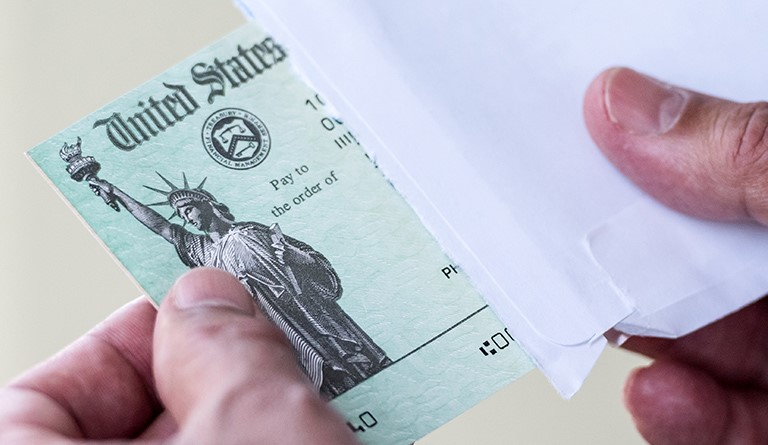
Getting a paper check from the U.S. Treasury is becoming a rarity, thanks in large part to an executive order mandating Uncle Sam primarily conduct financial transactions electronically. But the change has caused tax refund delays for more than 800,000 taxpayers (so far) this filing season.
The Internal Revenue Service had by the end of February issued more than 36.5 million tax refunds, which averaged more than $3,700.
That was good news for those taxpayers. Many of them, according to various surveys, are counting on the refund money to pay down debt or cover basic living expenses.
But around 830,000 filers are still waiting for their refunds, according to two members of the House tax-writing committee. And the delay isn’t because of a problem with the filings.
Rather, it’s due to a change in how tax refunds now are delivered.
No bank account = no refund + IRS notice: Most of the 800,000-plus individuals awaiting their tax refunds don’t have a bank or other financial account into which the IRS can directly deposit the money.
This so-called unbanked status has made them victims of the Trump administration’s Executive Order 14247, issued March 25, 2025, that called for the end of paper government payments, including tax refunds via U.S. Treasury checks.
That switch officially happened on Sept. 30, 2025.
So now, instead of a paper check, these taxpayers got IRS Notice CP53E.
This notice tells taxpayers they have 30 days to update existing bank information or add a new bank account. Once that’s accomplished, the IRS will send their refund amount directly to the account.
W&M Democrats want answers: Taxpayers awaiting refunds obviously have questions. So do two Democratic members of the House Ways and Means (W&M) Committee.
Reps. Danny Davis of Illinois, ranking member of the W&M Subcommittee on Worker and Family Support, and Terri A. Sewell of Alabama, ranking member of the W&M Subcommittee on Oversight, sent a letter this week to Treasury Secretary Scott Bessent wanting to know more about the tax refund delays.
Davis and Sewell noted that as of the March 9 date of their letter, the IRS has sent 530,000 CP53E notices, and is scheduled to send another 300,000 this week, bringing the total of taxpayers so far facing refund delays to 830,000.
The pair also pointed out that the delay is not mandated by the Internal Revenue Code.
Rather, they wrote, it was Donald Trump’s unilateral action that is effectively “causing undue hardship on millions of Americans by delaying their paper refunds for months.”
Reasons for no bank account: The affected taxpayers, wrote Davis and Sewell, are part of the more than 10 million individual taxpayers who, according to National Taxpayer Advocate data, received their tax refunds last year by paper U.S. Treasury check.
“These taxpayers may be unbanked, have impairments, or face systemic or geographic challenges that prevent them from being able to create IRS online accounts or receive electronic tax refunds,” the Representatives wrote.
They also told Bessent that, “Having reviewed the IRS notice and called the IRS phone lines, we learned that there is no simple process for these taxpayers to request an immediate release of their refund by paper check without waiting at least 10 weeks.”
The duo asked the Treasury Secretary to provide written answers to seven questions.
They include how many executive order exceptions have been granted, the number of tax refunds the IRS has mailed so far, and whether taxpayers facing paper refund delays will receive interest when they finally get their money.
The lawmakers asked for a response by March 23.
Taxpayers refund steps: If you got, or get, IRS Notice CP53E, note the 30-day time frame. The IRS says you should use this month to take steps to get your refund as soon as possible under the new delivery rules.
First, the IRS says you should establish a bank account. Check out these tips on this process.
Next, the IRS recommends that you create an online taxpayer account. With the IRS account, you can add or update your bank account information. When you do, you should receive a message indicating your bank account update was successful.
Then you can use IRS.gov’s Where’s My Refund? search tool to check your refund status.
Finally, if you don’t respond to the CP53E notice (and not responding, by the way, generally is NOT a good move), the IRS says it will issue a paper check after six weeks.
You also might find these items of interest:

