

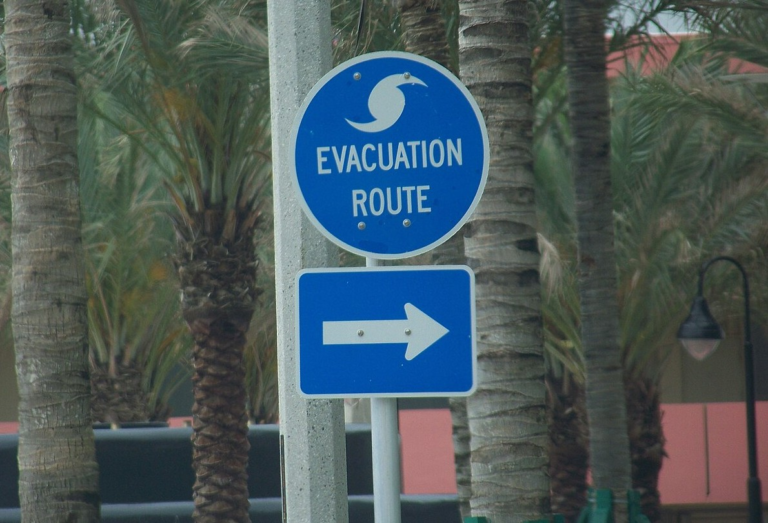
Hurricane evacuation route sign photo by Juliancolton via Wikimedia
…
Hurricane damage is a constant threat to U.S. coastal communities during the annual June 1 through Nov. 30 tropical storm season. But as the storms move inland, landlocked areas also face risks. Get ready before one strikes, or even forms in the Atlantic or Gulf of Mexico.
…
The Atlantic/Gulf of Mexico hurricane season is officially underway. The good news is that forecasters expect the 2026 season, which runs June 1 through Nov. 30, to be a calmer one.
The National Oceanic and Atmospheric Administration (NOAA) says the below-average season should produce just eight to 14 named storms. Those are systems where winds reach winds of 39 mph or higher. Of those, three to six are forecast to reach winds of at least 74 miles per hour, which would officially make them hurricanes. NOAA expects one to three will become major ‘canes, with winds of 111 mph or more.
Colorado State University’s Tropical Cyclones, Radar, Atmospheric Modeling, and Software Team within the Department of Atmospheric Science agree, also predicting a somewhat below-average Atlantic hurricane season.
The reason, say meteorologists, is an expected strong El Niño this summer. This weather pattern develops naturally when sea-surface temperatures in the eastern Pacific Ocean just north of the equator are warmer than average. That allows an El Niño’s increased upper-level wind shear to disrupt hurricane formation in the Caribbean Sea and tropical Atlantic Ocean.
But all meteorologists and amateur weather watchers (including this tax blogger, who’s been through tropical storms and hurricanes) know that it only takes one storm to produce widespread devastation.
Since we can’t control a mean Mother Nature, our only option is to prepare. So, before any storms pop up, here’s how you can get ready. Now.
Physical prep and precautions: Even when a tropical system is not that severe, it can take out utility infrastructures. That’s no fun, as all of us who have at some point endured life without the usual modern conveniences of electricity, water, and accessibility to provisions know.
Hurricanes typically mean you could be without these services for weeks. So, stock up your pantry and overall disaster kit now.
Each family or individual obviously will customize these suggestions to meet specific needs, but there are some basics that will help get you through a disastrous time:
- Water, one gallon of water per person per day, for drinking and sanitation;
TIP: You don’t necessarily have to buy all the water you might need. The hubby and I keep a couple of flats of bottled drinking water in our laundry room. But we also have a stash of empty plastic gallon milk jugs in our garage that, when storm season approaches (it’s spring/summer thunderstorms here in Central Texas), we fill with tap water to take care of non-potable water needs.
- Food, at least a three-day supply of non-perishable food (canned meat, protein bars, dry cereal, dry milk you can mix with water, energy drinks);
- Reusable ice packets or freeze as much ice as you can in advance to use in food storage containers;
- Matches and candles;
- Hand-powered can opener, paper plates, plastic utensils and cups, paper towels and garbage bags;
- Bleach and disinfectants;
- Battery-powered radio and a NOAA Weather Radio with tone alert and extra batteries for both;
- Flashlight and extra batteries;
- Cell phone charger, especially one that be used in an auto if house power is out;
- First Aid kit;
- Whistle to signal for help;
- Moist towelettes, garbage bags and plastic ties for personal sanitation;
- Blankets and pillows for protection during the storm and, if possible, to rest afterwards;
- Dust masks, such as face masks left from the COVID-19 pandemic, or makeshift coverage such as cotton bandanas or t-shirts to help filter the air;
- Plastic sheeting and duct tape to shelter-in-place; and
- Wrench or pliers to turn off utilities, and turn them on again when officials give you the all clear.
In addition to your general first aid kit, make sure you have enough prescription medications to get you through at least a couple of weeks. If there are widespread and prolonged power outages, your pharmacy may not be able to refill your medicine as quickly as you need it.
Preparations for special family members: If your family includes older loved ones or people with special needs, you need to take added steps to ensure you and they make it through the disaster safely.
And don’t forget about your furry family members. These 7 tips to ensure your pets’ safety during a disaster cover the items you need to have on hand and/or the alternative plans you need to make to ensure you and your animals make it through the event with the least possible adverse consequences.
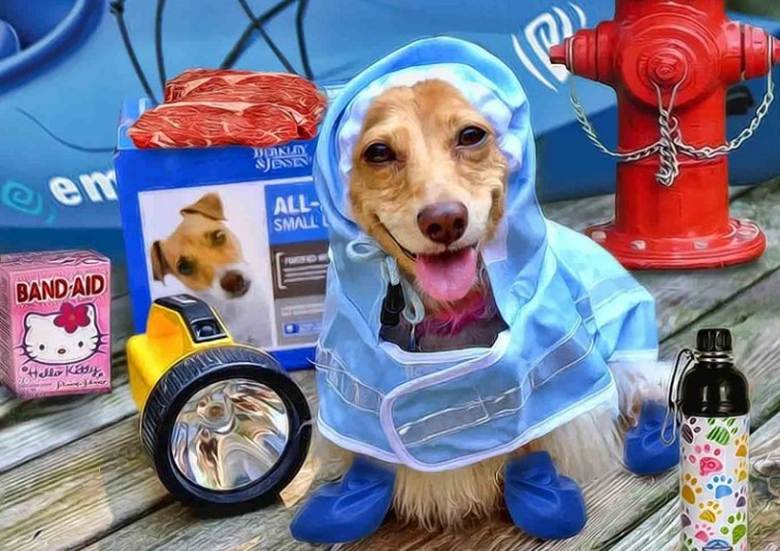
Other storm prep steps: Your main goal is to make sure you, your family, and if possible, your property, come through the storm in the best shape possible. Going beyond necessities is one way to accomplish that.
Start by packing some clean clothes. When you can’t use your washer and you’re sweating through days without air-conditioning, you’ll be glad you have a change of apparel.
Also make sure you have on hand, or more precisely on your feet, solid sneakers or other closed-toe footwear. Flip flops are great for the beach and lazy summer days around the house, but not for wading through debris-filled ponds and puddles left by tropical systems’ flooding rain. You don’t want to step on a piece of glass, metal, or shattered wood and add an injury to your already uncomfortable situation.
Finally, fill up your car’s tank well before any storm warnings are issued. When the hubby and I lived in South Florida, we went through several tropical systems, including two hurricanes that made landfall in our area within three weeks of each other in 2004 (now you know why we came back to a noncoastal part of Texas!), and we saw plenty of long lines as gas stations as storms neared.
Financial storm prep kit components: You also need to make financial preparations, too. This includes gathering in a stormproof container the following:
- A pre-storm inventory of your property, just in case you need the information to file an insurance claim;
- Medical records of everyone in the family;
- Other important financial documents, such as bank and other financial account numbers;
- Latest filed tax return and material needed to file your current taxes;
- A credit card with enough available credit to cover any post-storm needs;
- Cash in case power outages make using a credit card or accessing an ATM impossible.
Preemptively collecting your personal and financial documents is much easier than trying to reconstruct them after a disaster.
Most of us have shifted to digital storage, so you probably already have most if not all of this financial data on a mobile device, portable drive, or stored in the cloud.
Remember, though, that a lack of power could limit your access, especially immediately after the storm. So have a paper copy of, for example, your insurance policy and contact information handy so you can reach out for that help as soon as it’s safe to do so.
And if you own a business, you need to make sure it is secured, physically and financially, for any approaching storm, too. You’ll find some advice in this regard in my separate post noting 6 hurricane prep tips for businesses.
Storm names: When this year’s storms do form and meet the wind-speed criteria, they’ll be dubbed based using the alphabetical list of 21 names below, chosen and updated by the World Meteorological Organization.
Each of the 21 names alternate from female to male. 2026’s first name is masculine. And there are no names for Q, U, X, Y and Z.

If you’re reading this on a small device, or simply want text, those 2026 tropical storm and hurricane names are:
| Arthur | Hanna | Omar |
| Bertha | Isaias | Paulette |
| Cristobal | Josephine | Rene |
| Dolly | Kyle | Sally |
| Edouard | Leah | Teddy |
| Fay | Marco | Vicky |
| Gonzalo | Nana | Wilfred |
If some of the names sound familiar, it’s because the scientific group uses a group of six lists that are rotated and re-cycled every six years. For example, the 2026 list will be used again in 2032.
The only time that there is a change in the list is if a storm is so deadly or costly that the future use of its name for a different storm would be inappropriate for reasons of sensitivity. When that happens, the WMO naming committee strikes the name from the list and adds a replacement.
And while forecasters say it’s unlikely, if there are more than 21 named storms in 2026, WMO initiated a supplemental name list. It was created in 2021 to replace the Greek alphabet naming convention for an extreme number of storms.
The 2026 supplemental storm names are Adria, Braylen, Caridad, Deshawn, Emery, Foster, Gemma, Heath, Isla, Jacobus, Kenzie, Lucio, Makayla, Nolan, Orlanda, Pax, Ronin, Sophie, Tayshaun, Viviana, and Will.
Pay attention to warnings: Regardless of when a storm forms or what it is named, if you’re in its path, you need to be ready.
First and foremost, stay informed. And when weather and government officials say to evacuate, do so.
If you refuse to leave, you’re putting not only your and your family’s lives in danger, but also the lives of first responders. Don’t. Grab your storm prep kit and go.
It’s also worth noting again that you need to be hurricane ready even if you don’t live on the United States’ East or Gulf coasts. Tropical systems, even those that don’t make it to official storm status, move inland, dropping prodigious amounts of rain that too often turns into deadly floods.
My special Storm Warnings pages are a collection of preparing for, recovering from, helping with, and more when it comes to coping with a Mother Nature who morphs into Mommy Dearest. One of those storm tips explores resources, including those provided by federal agencies, that could help you deal with and recover from disasters.
Check them out, before you need the help and definitely if you are hit by a hurricane — or tornado or blizzard or whatever is your location’s most common threat — and need help getting your life back to normal.
…?
Advertisements
🌟 Search Amazon Tax Products 🌟
The text link above is an affiliate ad. If you click through and then buy a product, I receive a commission.

