

Some victims report losing more than $10,000 to more sophisticated tax cons.
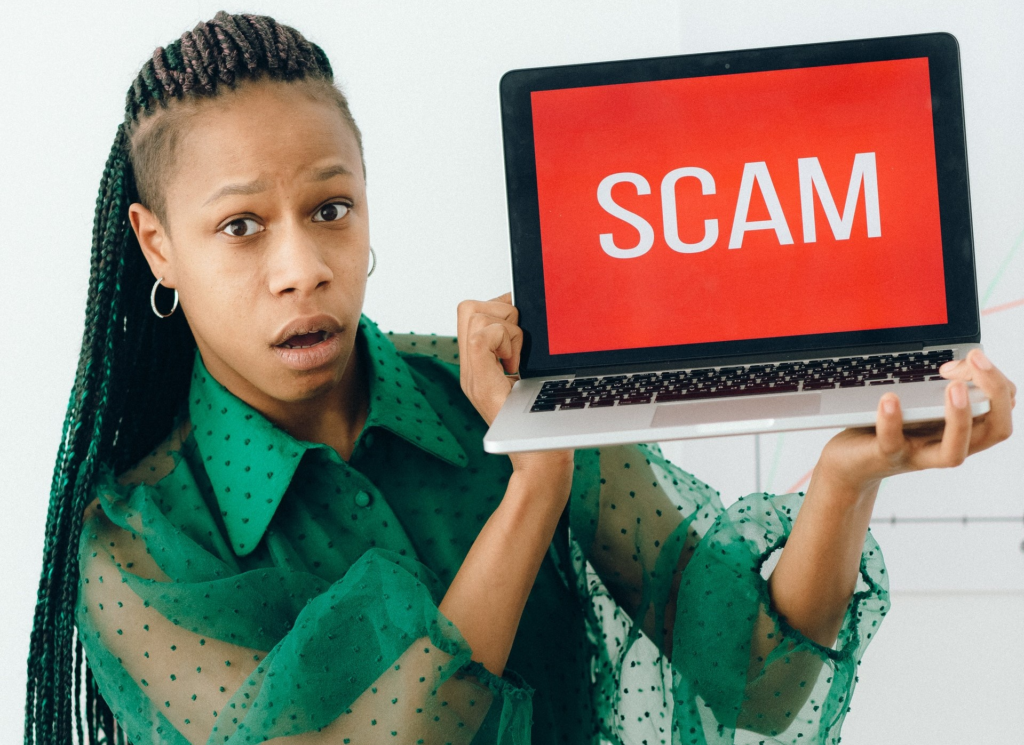
Photo by Nataliya Vaitkevich
…
With Tax Day less than a month away, taxpayers are getting busy.
So are the scammers who are hoping that they can intercept some of the money or personal data that filers meant to send to the Internal Revenue Service.
Such deceptive activity isn’t anything new.
What is different this tax season is that tax crooks are taking advantage of artificial intelligence (AI) to create even more convincing schemes.
AI upping tax scammers’ games: Sure, some tax crooks on a budget still send out error-ridden phishing emails or leave tinny messages from fake IRS agents on voicemail. But now, a growing number of scam attempts are much more criminally professional.
In this new and new-fangled tax scam era, deepfake audio lets scammers sound more like human IRS agents. In many cases, notes the online consumer security firm McAfee, AI-assisted fake calls use local accents to make them appear more realistic.
Some really ambitious tax schemers use AI to craft video messages or chatbots that impersonate trusted entities like the IRS or tax preparers.
Similarly, AI-generated phishing emails more closely replicate official communications from reputable tax preparation services.
In a survey conducted in February of 3,000 adults across the United States, McAfee found that more than half (55 percent) of the respondents had noticed tax scam attempts becoming more realistic than in previous years.
Even more, 87 percent, worry that AI is making the schemes even harder to detect.
Scam demographic differences: Tax scammers go after everyone, regardless of age, location, earnings level, or gender.
But, says McAfee, they do tend to tailor their schemes based on particular taxpayer traits. Such fine-tuning of scheme tactics helps maximize the crooks’ success rate.
McAfee’s survey found the following differences in tax scam used based on the victims’ ages.
- Young adults (18-24) are the most likely to be asked for information that could fuel identity theft, with 29 percent saying they’ve been asked for their birth date and 23 percent for bank account numbers. These Gen Z scam target rates are higher than with older targets.
- Older adults (65-74) are the most likely to be asked for information that could be used to carry out payment scams, with 37 percent reporting they’ve received demands for immediate back tax payments and 45 percent receiving fake tax refund scams requesting banking details.
- Middle-aged adults (35-54) are a tax scam sweet spot. These individuals face a mix of requests for information that could lead to identity and payment scams. Forty-four percent in the younger half of this group, those ages 35-to-44, reported having been asked for their Social Security or tax identification number. Thirty-six percent of 45-54-year-olds said they received back-tax payment demands.
McAfee also reports that tax crooks tweak their ploys depending on whether they were seeking to dupe men or women.
The survey found that men are three times as likely to be receive cryptocurrency scam messages as women. Women are more likely to receive tax debt threats, with 31 percent being told they owed back taxes and needed to pay immediately, compared to 24 percent of men.
Some scam victims lost five figures: Demographics also affected the dollar amounts scammed.
While Gen Z adults were tax scammers’ primary target, older adults are still at greater risk of large financial losses.
Among men ages 65 to 74 who lost money to a tax scam, 40 percent reported losing between $751 and $1,000. Half of the women in this age group lost between $2,501 and $5,000.
But it was that aforementioned tax scammers’ sweet spot, middle-aged adults between ages 35 and 54, who suffered the steepest overall financial losses. And 10 percent of those in the older part of that group, ages 45 to 54, reported losing more than $10,000 to a tax scam.
Same, but enhanced, scams: While the schemes to steal taxpayers’ money and/or personal financial information have become more sophisticated, some things remain the same.
Email inboxes are still a favorite spot to send “urgent” tax-related messages. McAfee found 48 percent of Americans have received a fraudulent tax-related message pressuring them to act fast or face penalties.
Fake tax refunds are still attractive scam bait. Thirty-five percent of people surveyed said they or someone they know received a scam email or text about a “tax refund” or “tax refund e-statement.” Those messages contained a malicious link.
And while impersonating the IRS is still around, this pervasive scam has expanded. Thirty-three percent of those surveyed by McAfee said they or someone they know received a fake email or text from a fraudulent tax preparation service, such as TurboTax or H&R Block. Those messages urged the recipients to click a link and log in to get help filing their returns.
Same scam precautions apply: Regardless of how amateurish or realistic the tax-related calls or emails seem, if you’re a target you should take the same steps to avoid becoming a victim.
Ignore unexpected communication that appears to come from the IRS. The tax agency typically makes first contact with taxpayers by sending a written letter or tax notice via the U.S. Postal Service.
So, if you get a tax-related message demanding immediate payment or asking for personal information by text, email, social media, or phone, it’s probably a scam.
Don’t give in to fear and panic. No one wants to hear from the IRS, so even when it’s fake outreach, it’s upsetting. That’s the reaction scammers seek. Fear and urgency work in the crooks’ favor.
So, if a message, regardless of how delivered, demands you take quick action, take a breath. Don’t give the caller what is asked. Don’t click on the electronic link. Instead, call the IRS or go to IRS.gov to find out if you really do have a tax problem. And if you use a tax preparer or tax software, personally contact them, too, for clarification before taking any action.
Make your electronic life more difficult for unwanted visitors. Yes, scammers are using AI to craft convincing tax fraud schemes, but you can filter out many attempts before they reach you by using reputable anti-virus programs and firewalls. Also use two-factor authentication, a trusted password manager and/or unique passwords for every website, and never share your login details with anyone else.
Know what schemes are popular. In addition to the con attempts mentioned in this post, you also should be aware of the tax schemes that are appearing most often across the United States. The IRS tracks them and lists the 12 worst in its annual Dirty Dozen list.
You also might find these tax scam and identity theft blog posts of interest:
- Getting an IP PIN is a smart taxpayer security move
- IRS makes progress in cutting tax ID theft victims’ wait times
- What do online holiday shopping and taxes share? Identity theft threats
- IRS implements filing season changes to detect tax scams and return fraud
Advertisements
🌟 Search Amazon Tax Products 🌟
The text link above is an affiliate ad. If you click through and then buy a product, I receive a commission.
