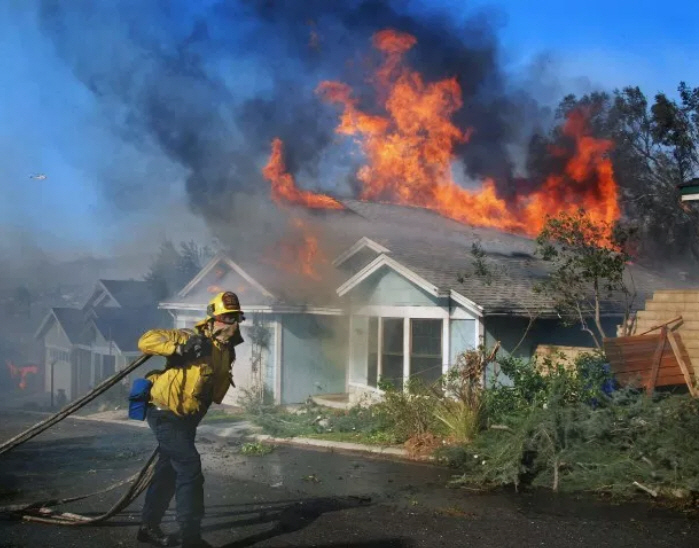
What’s worse than losing your home to a disaster? Having to pay taxes on the destroyed property.
That’s what a Southwestern Pennsylvania family is dealing with now. After losing their home and all its contents to a fire last November, Rich and Catherine Hooks recently learned that they are responsible for the 2019 property taxes due on their no long in existence Westmoreland County home.
“The taxes should be lower because the house isn’t there,” Mrs. Hooks told TribLive.com.
But the county tax assessor didn’t know that. So the prior tax valuation stood.
When a significant change occurs on a property, such as renovation or a fire that destroys the home, homeowners must report the change to the Pennsylvania county assessor by the end of the year or within six months, whichever is longer.
“It’s always the homeowners’ responsibility to notify us if something is removed from the property,” the Westmoreland County deputy chief assessor told the online news service.
Property tax lesson for all disaster victims: This is a lesson that folks who’ve sustained real property damage due to Hurricane Dorian need to heed.
If your home was seriously damaged or destroyed, let your local tax officials know.
They likely have in place regulations to deal with tax assessments in such dramatic instances.
In many situations, even if a property already has been assessed for the tax year, disaster damage could spur a re-evaluation of the real estate as long as the owners take the proper steps.
Texas and property taxes after disasters: Here in Texas, when property is damaged, you need to ask your county tax appraiser to reappraise it to determine its current, post-disaster taxable value.
Do this before you make any repairs or rebuild, recommends TexasLawHelp.com. That way, your taxes can be prorated to show the lower reappraised value.
Different rules apply to new houses built here in the Lone Star State to replace a homestead rendered uninhabitable due to disaster.
The Texas Comptroller’s office has a special website with information on property taxes in disaster areas and during droughts.
Note, though, that even if your home is damaged in a disaster, you are still expected to pay your Texas county property taxes on time. So contact your tax office ASAP and, if necessary, look into working out a payment plan.
Automatic relief potential: In addition, Texans this November will get a chance to vote on making disaster reappraisals easier.
A constitutional amendment on the ballot, if approved, would automatically grant property tax exemptions to a portion of the appraised value of certain property damaged by a disaster.
The exemption would temporarily apply to properties occupying a region declared by the governor to be a disaster area following a disaster. Presently, the only option for tax exemption post-disaster is reappraisal.
Tax situations elsewhere: I suspect that most states and counties, especially those in hurricane prone regions, have similar laws and regs in place.
While you’ve got a lot to deal with after a tropical storm or any disaster, be sure to add checking with your local property tax office to that list.
If you have last year’s tax bill, find the office contact info there. If not, you can do an online search.
You also can check out Nationwide Environmental Title Research’s interactive Web page with data on tax assessors’ and recorders’ offices.
Then let the appropriate officials know of your property’s change in status and tax value as soon as you can. It could help save you some hassle and money in the long recovery run.
You also might find these items of interest: