

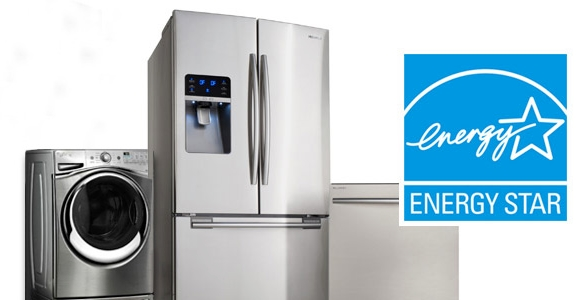
UPDATE, Feb. 3, 2026: Congress rejected the Trump administration’s effort to end Energy Star. Capitol Hill’s budget bill, that was signed into law, includes funding of just more than $33 million dedicated to the Energy Star program. Since the money is specifically allocated to Energy Star, it can’t be used for anything else.
Some of my fellow Texans every Memorial Day weekend head to appliance stores instead of the beach. They are taking advantage of the Lone Star State’s annual Energy Star Sales Tax Holiday.
It runs from the long holiday’s Saturday through Memorial Day Monday, exempting certain energy saving products from the state’s 6.25 percent sales tax, as well as the added 2 percent most cities also tack on to purchases.
But this might be the last such sales tax holiday for Texans and shoppers in three other states. Energy Star tax breaks also are the hook for sales tax holidays in Maryland each February, Missouri every April, and Virginia in early August.
The states aren’t planning to end the customer-popular events. The Trump administration wants to eliminate the Energy Star program.
Opposition to the energy efficiency program: The Energy Star program, a widely recognized symbol of energy efficiency, is facing potential elimination under a proposed reorganization of the Environmental Protection Agency (EPA).
Energy Star was established in 1992 as a public-private partnership. Since then, its distinctive blue logo on certified products has come to be an easy, consumer-trusted way to identify large (and small) appliances that can help buyers reduce their utility costs.
And yes, for shoppers worried about the environment, an Energy Star product helps there, too.
It’s a simplification to say that the Energy Star program is threatened by climate change denying policies, mostly espoused (and acted upon) by Republicans. Trump officials say the propose program change is just part of its the broader focus on “organizational improvements” that will reduce federal spending.
But we all know that any and every thing even remotely associated with ways to lessen the human impact on our heating planet has become political.
Note the recent House-approved version of the One Big Beautiful Bill (OBBB) tax and more bill. Biden-era energy policies were a big target. Energy Star is the same, albeit at a lower level.
And like the larger-scale energy programs taking hits in the OBBB, eliminating Energy Star certifications crosses political lines.
Of the four states with sales tax holidays pegged to energy saving products, Texas and Missouri are reliably red, Virginia frequently flips policy colors, and Maryland tends to be blue.
Performative policy move: From an economic standpoint, eliminating the program probably won’t make much difference.
Manufacturers already have production facilities that are designed to meet the Energy Star energy efficiency guidelines. There’s no reason for them to go to the expense of tweaking or dismantling them, especially because most consumers like the option to buy a refrigerator or other appliance that uses less power.
And those buyers’ reasons in looking for the Energy Star label aren’t necessarily for environmental reasons. Budget-crunched families want lower utility bills. If that dollar saving help comes from a planet-positive product, they don’t really care.
Even the current official U.S. government Energy Star website highlights how the program helps Americans save money, not the environmental impacts of its certified products.
The site notes that since its inception just more than three decades ago, the program and its partners have helped American families and businesses:
- Save 5 trillion kilowatt-hours of electricity.
- Avoid more than $500 billion in energy costs.
- Achieve 4 billion metric tons of greenhouse gas emissions reductions.
That middle bullet point, $500 billion in energy costs that consumers didn’t have to pay thanks to using Energy Star products, earns this weekend’s By the Numbers figure.
So, it seems that the move to eliminate the Energy Star program is, like much talk and action nowadays, mostly performative politics.
Ending Energy Star effects, alternatives: If the Energy Star program is 86ed, shoppers seeking energy efficient products, whether for environmental or money saving reasons, will have to do much more homework.
Rather than having a consolidated, reliable measurement already determined by Uncle Sam’s experts, consumers will have to individually check each manufacturer’s product claims.
They also must trust that the companies are being honest in promoting their products as better economic and environmental choices.
If they find a truly Energy Star comparable product after the search, good. If not, then they likely will face increased energy costs. That’s not going to be good for consumers, companies, and the politicians who ended a trusted, easy-to-use system.
That’s why industry groups, environmental advocates, and consumers have joined in protesting the proposed end to Energy Star.
It is possible that the Trump Energy Department could take over administering the program from the EPA. But unless it simply moves everything and everyone involved to another agency, which isn’t likely given how this administration works, much of Energy Star’s value will be lost in the transition.
You also might find these items of interest:
- Tax holidays: bonanzas or bogus?
- City and other local taxes add to overall sales tax takes
- ‘We’re #47!’ That’s Austin’s ranking in U.S. city sales tax rates
- Taking environmental care of our personal homes and home planet on Earth Day
Advertisements
🌟 Search Amazon Tax Products 🌟
The text link above is an affiliate ad. If you click through and then buy a product, I receive a commission.

