

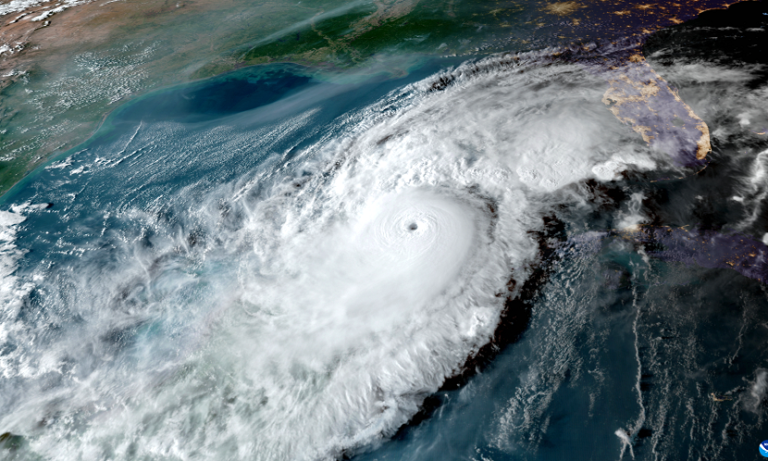
Hurricane Milton seen from the International Space Station on Oct. 8 as it approached the Big Bend of Florida. Milton made landfall as a Category 3 near Siesta Key late Oct. 9. (Photo by NASA/Michael Barratt, Public Domain)
…
It’s been a horrific hurricane season. More than 300 people have lost their lives due to storms in the United States, Mexico, and the Caribbean.
Millions in the United States alone have lost at least some property. Some have lost everything.
Federal officials are offering assistance to hurricane victims, but misinformation has created problems in delivering that help. The Federal Emergency Management Agency (FEMA) has created a rumor response website, but some residents in hard-hit areas still are resisting Uncle Sam’s help.
So the assistance from nonprofit relief organizations, important after every disaster, is even more crucial now.
Con artists use disasters to steal: These charitable efforts, however, also face their own set of problems. Crooks and con artists impersonate relief groups, cheating donors and unserved storm victims alike.
The Internal Revenue Service is well aware of this disturbing activity, and today reminded people who want to help to be sure that their gifts go to legitimate groups.
“Many people want to help survivors and their families by donating to charities,” said IRS Commissioner Danny Werfel. “Too often, criminals take advantage of would-be donors’ kindness by stealing money and personal information from well-meaning taxpayers. You should never feel pressured by solicitors to immediately give to a charity. It’s important to do the research to verify if they’re authentic first.”
General disaster scam warnings: Disaster-related scammers use the same methods that they employ in non-disastrous times.
These typical ploys to reach potential victims and steal their money and personal information come by phone, mail, email, text, or even in person.
You would think by now, with all the disasters, we’d all be wise to the tricks. But the frequency of natural catastrophes across the entire country can work in the crooks’ favor.
Since disasters strike across the country year-round, criminals have plenty of opportunities to try out and refine their schemes.
I’ve posted before about charity scammers, for example, in Don’t fall for disaster charity scams, but some of that older post’s advice is worth highlighting again. Here are six tips to help you avoid disaster-related scams.
1. Don’t immediately donate. Yes, time is of the essence in getting help to those in need. So well-meaning individuals want to help as quickly as possible. But don’t be in too much of a hurry. Acting on the first donation options you see could send your money to crooks, rather than to those in need.
Also remember that the needs created by disasters will continue long after the event. So, giving later still can help. A lot. Legitimate charities are happy to get donations at any time.
Taking your time will let you follow the next scam-avoidance tip.
2. Check out the charities. As the IRS commish noted, the agency can help donors do charity research. The IRS’ online Tax Exempt Organization Search (TEOS) tool will let you know whether the group soliciting your help has met federal tax law requirements to be registered as a 501(c)(3) public charity.
The TEOS tool can help you can —
* Verify the legitimacy of a charity,
* Check its eligibility to receive tax-deductible charitable contributions, and
* Search for information about an organization’s tax exempt status and filings.
The IRS authorization cited in the second bullet point above is required if you plan to claim your gift as an itemized tax deduction.
It’s also important even if you don’t take a tax break, which most donors don’t since most claim the standard deduction. Knowing that the group to which you donate is on the up-and-up means it will get your donation to those who need it.
Private groups also vet charities. They include Charity Navigator; Candid, which is the combined effort of GuideStar and Foundation Center; the Better Business Bureau’s Wise Giving Alliance; and Charity Watch.
3. Pay attention to the purported charity’s name. Verification of a charity by the IRS.gov tool or private charity oversight groups can help weed out look-alike cons. Scammers frequently use names that sound like well-known charities to confuse people.
Fake charity promoters may use emails, fake websites, or alter or spoof their caller ID to make it look like a real charity is calling to solicit donations.
Potential donors should ask the fundraiser for the charity’s name, website, and mailing address so they can independently confirm the information.
4. Note how donations are sought. The ways a fake charity asks for your money can be a red flag. The IRS warns to never work with charities that ask for donations by giving numbers from a gift card or by wiring money. That’s a scam.
The safest way to donate to any philanthropic groups is by credit card or check. Again, after you confirm the charity is real.
Personally, I have one credit card I use for donations. It has a low credit limit so if it is compromised, the crooks can’t use it to do much damage. And since it’s a credit card, I can report the misuse and not be responsible for fraudulent charges.
5. Don’t overshare. Crooks operating a charity scam often try to ingratiate themselves. It’s a way to make the scam mark feel more comfortable giving.
But it’s also usually an attempt to get even more of your personal and financial information. With that, they can steal more than just your one time charitable gift to disaster victims. Never disclose Social Security numbers or personal or bank identification numbers. No charity needs that. And only give out your credit card number after you’re sure the charity is legitimate.
6. Be cautious of crowdfunding. With the growth of social media, crowdfunding has become a popular way to raise money for good causes. Even some government agencies use this option. But the distant, online nature of crowdfunding makes it easy for crooks to steal your money using the guise of a good cause.
Report fraud: If a con artist catches you in a moment of weakness, don’t beat yourself up. But do report the scam. That will help officials alert others, and investigate the scam.
Report scams to the Federal Trade Commission (FTC) at ReportFraud.ftc.gov. Find your state charity regulator at the National Association of State Charity Officials, or nasconet.org, and report it to them, too. Share any information you have, such as the name of the organization or fundraiser, phone number, and what the fake fundraiser said.
Report the fraud to federal officials, too, including the Federal Bureau of Investigation (FBI) at tips.fbi.gov. Report online fraud to the FBI’s Internet Crime Complaint Center (IC3).
You also might find these items of interest:
- Bogus charities again make the IRS Dirty Dozen list, 2024 version
- IRS and other government resources can help you deal with a natural disaster
- Avoiding disaster scams, whether you’re a storm victim or someone trying to help
- Don’t Mess With Taxes’ Storm Warnings collection of disaster tax relief pages, including donation tips
Advertisements
🌟 Explore Prime for Young Adults 🌟
The text link above is an affiliate ad. If you click through and then buy a product, I receive a commission.

