

Photo by stuartmiles99 via iStock
As Tax Day nears, scammers are in high gear. Crooks are using fake tax-related email, texts, and phone calls to try to steal your tax and financial data. Don’t fall for any of these schemes!
How many tax scammers have tried to trap you this filing season? The criminal efforts to steal your tax refund and identity are in overdrive right now, with the April 15 return filing deadline just days away.
Don’t fall for them in your hurry to finish your return by this coming Wednesday.
Personally, I’ve gotten several emails every week since mid-March from people pretending to be my clients. The problem, for the senders, is that I’m a tax journalist/blogger, not a tax preparer.
So, as soon as I see the subject line about enclosed/attached/links to their data I need so I can file their tax return for them, the emails are automatically blocked and deleted.
Tax smishing, too: Then this morning, I got a text about my own personal filing.
The problem here is that the message, shown below, was from a crook looking to get hold of my personal data.
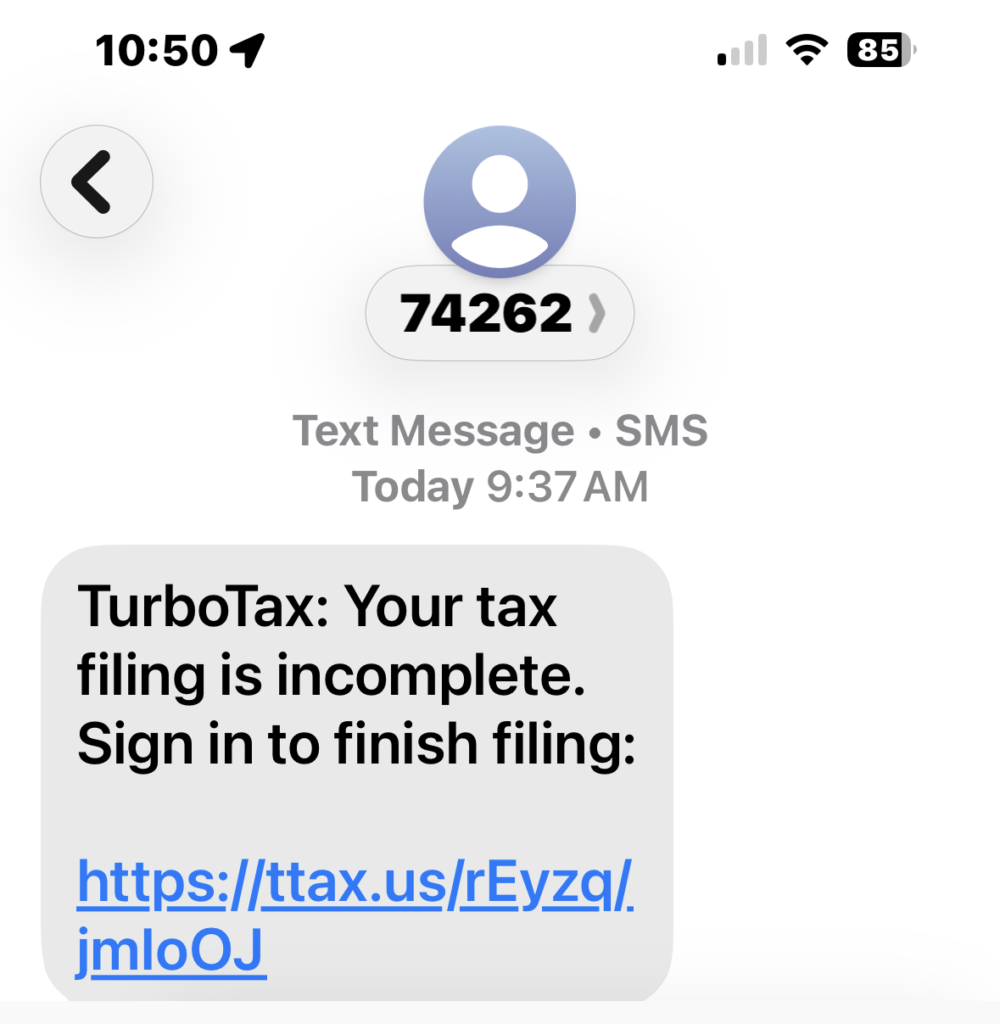
In addition to not being correct about how I do our taxes or where I am in that process, the URL was an automatic tip off that this is a scam.
Sure, they got the https preface right, but c’mon. The ttax.us followed by gibberish?
Like the emails, the text got an immediate block and delete response.
Tax scams continue because they work: I’m not being judgmental or smug. It’s just that I’ve been writing about and doing my own taxes for a long time. Plus, I’m basically a skeptical person.
Other people, however, are more trusting. And they are less confident about their annual submissions to the Internal Revenue Service.
Unfortunately, they also are among the too many taxpayers who fall for phishing, smishing, and phone scams each tax season.
Every fraudster’s goal is to get our tax and personal information. They use (or sell) it to file false returns claiming fraudulent refunds during tax season.
Not only do the illegal Form 1040 filings cheat Uncle Sam, they prevent the legitimate taxpayers from getting their refunds or correctly meeting their filing responsibilities. And it costs the scammed taxpayers, who must pay penalties associated with fraudulent returns.
The damage doesn’t stop after tax season. Later, crooks can use the data to wreak all sorts of other financial havoc in victims’ lives.
So, as we head into the final few days of high tax season, be on the lookout for scams.
Some of the schemes offer to help you finish your return. Or they say they can get you a bigger refund.
Other scammers tell folks who’ve already filed that there’s an issue with the real refund they are awaiting.
These and other such tax-related promises, or threats, are lies.
A dozen+ tax schemes: The fraudulent electronic outreach that I and millions of other taxpayers have encountered this filing season is the type that the IRS details in its annual Dirty Dozen list.
This year, the bipartisan leaders of Congress’ Joint Economic Committee (JEC) also issued a warning about tax scams that are popping up as filing season winds down.
Tax schemes have become increasingly common, notes the JEC, with nearly one in four Americans reporting being victimized by a crook using taxes as a hook.
The JEC warning also cites some alarming scam stats.
- A scam call blocking company identified a 400 percent increase in fraudulent calls impersonating the IRS between January and late February 2026.
- A security firm found an average of 43 fake tax websites every day from September 2025 to mid-February 2026.
- The IRS reported more than 600 social media impersonators of the agency during fiscal year 2025.
Crooks’ use of artificial intelligence (AI) is helping accelerate and expand these tax scams.
Sophisticated AI technologies can make fraudulent communications and websites appear credible, luring in usually savvy taxpayers.
Signs it’s a tax scam: So, take extra care as you finish up your tax return.
Familiarize yourself with the known tax scams highlighted in the aforementioned IRS’ annual list. Some of those also are featured in the JEC’s tax season scams alert.
Both the IRS and JEC offer tips on signs a message is from a crook. They include subtle misspellings and extra letters or words in the purported tax site’s URL. My scam text image is a good example.
Most telling, however, is the delivery method.
The IRS will never message you on social media. It will only email or text taxpayers in limited circumstances. And the tax agency never asks for immediate payment in unorthodox ways such as gift cards or crypto currency.
The bottom tax-scam protection line is to vigilant. Be wary of any tax-related message you get. And when they do show up in your email or on your phone, don’t act on them immediately.
If something, like a promise of a larger refund, seems too good to be true, it probably is a scam.
Similarly, unexpected tax-related threats to suspend your driver’s license or send law enforcement to your house, also are scare tactics to get you to react before thinking through the situation.
Go to the tax source, or a tax pro: If you do have any concerns about your tax return and you’ve yet to file, your best move is to get an extension to file so you can resolve the issue.
It also will give you time to find a reputable tax professional who can help if you just can’t handle it yourself.
And if you have filed and now think there’s an issue that needs to be addressed, contact the IRS yourself directly. You can call the agency’s tollfree help line at (800) 829-1040, or create an IRS online account to get up-to-date information on your tax records.
You also might find these items of interest:
- IRS launches new consolidated tax fraud web page
- Tax filing tips for January, February, March, and April
- April 15 is more than just the individual tax return deadline
- 5 free tax prep and filing options, and a move to restore a sixth
Advertisements
🌟 Search Amazon Tax Products 🌟
The text link above is an affiliate ad. If you click through and then buy a product, I receive a commission.

