


U.S. service members posted abroad, as well as civilian taxpayers living and working overseas, didn’t have to rush to file their tax returns this week. Their Tax Day is automatically delayed until June 15. Other filers who live in places deemed major disaster areas also generally get more time to file when the destruction is near the April 15 filing deadline. Here’s the scoop on Tax Day delays in 2026.
Some people watched April 15 come and go without a tax worry in the world.
Taxpayers who got a six-month extension to file their returns are a big part of this group. But they are not alone.
The Internal Revenue Service grants the millions of Americans who live and work abroad an automatic two-month filing delay. That makes June 15 their annual Tax Day.
That foreign-based filer extension also applies to military personnel posted outside the United States or Puerto Rico. Some members of the armed forces who are in combat zones get even later filing deadlines based on their service.
Residents of major natural disaster areas also get more time to file, and in some cases pay what they owe.
Here’s a look at the special situations, and tax deadlines, for affected U.S. taxpayers in 2026.
International, including military, taxpayers: When it comes to individual taxes, the tax code doesn’t care where you live. If you’re a U.S. citizen or resident alien, including those with dual citizenship, you must pay tax to Uncle Sam even if you’re living and working in another country.
That rule also applies to members of the U.S. military who are posted at facilities outside the United States or Puerto Rico.
These internationally based taxpayers, however, get extra time to file their tax returns. Their 1040 forms are not due until June 15.
This two-month extension from the regular April tax deadline is automatic, so U.S. taxpayers abroad don’t have to mess with filing for an extension by sending the IRS Form 4868.
However, they do need to attach a statement to their returns explaining their international residency and that they conduct business in that country or, in the case of military filers, are posted abroad by Uncle Sam.
This notification will alert the IRS to apply the June deadline to internationally-based filers’ returns. And that means they won’t be assessed late-filing penalties for missing the domestic April due date.
But this automatic extension to June 15 for U.S. taxpayers abroad does share one thing with the extension filed by their fellow Americans still in the country. Non-payment of any tax you owe will cost you.
In the case of taxpayers living and working overseas, civilian or military, interest charges will start accruing after the April 15 deadline on their unpaid tax amounts. If this applies to you, the sooner you can pay what you owe, the sooner these added interest charges will end.
And if you find that you won’t be able to meet your June 15 return filing deadline, you then can file Form 4868 to get the Oct. 15 due date.
Combat zone considerations: U.S. military members whose deployment abroad is more dangerous also get extra time.
In general, the deadlines for fulfilling tax obligations are extended for a service member’s period of service in an officially declared combat zone, plus 180 days after the military taxpayer’s last day in the combat zone.
During a qualifying combat zone tax extension period, the IRS will not levy the standard interest or penalties charges attributable to that time frame.
You can read more on military tax considerations in my post on tax filing resources for U.S. service members, as well as in the IRS’ Armed Forces’ Tax Guide, officially known as IRS Publication 3.
Disaster area delays: Then there are the taxpayers who don’t have to file by April 15, but for reasons none of us would want to face. They get the extra time because they went through major natural disasters.
And this year, man-made (or more specifically, Congressional) upheaval also prompted a tax deadline delay for some taxpayers nationwide.
The longest-ever government shutdown mainly affected Department of Homeland Security (DHS) agencies, including airport security boarding check staff. To help the federal workers who did their jobs without pay, the IRS pushed Tax Day for DHS employees from April 15 to May 15.
We’re also looking at a couple of instances where violent outbursts from Mother Nature created tax compliance issues.
When Federal Emergency Management Agency (FEMA) deems locations have sustained extraordinary damages from severe storms et al, the White House usually follows with a major disaster declaration.
The IRS then gives these individuals and businesses more time to meet possibly affected tax responsibilities.
Taxpayers in Montana and Tennessee got special tax considerations, and later filing (and paying) deadlines this year.
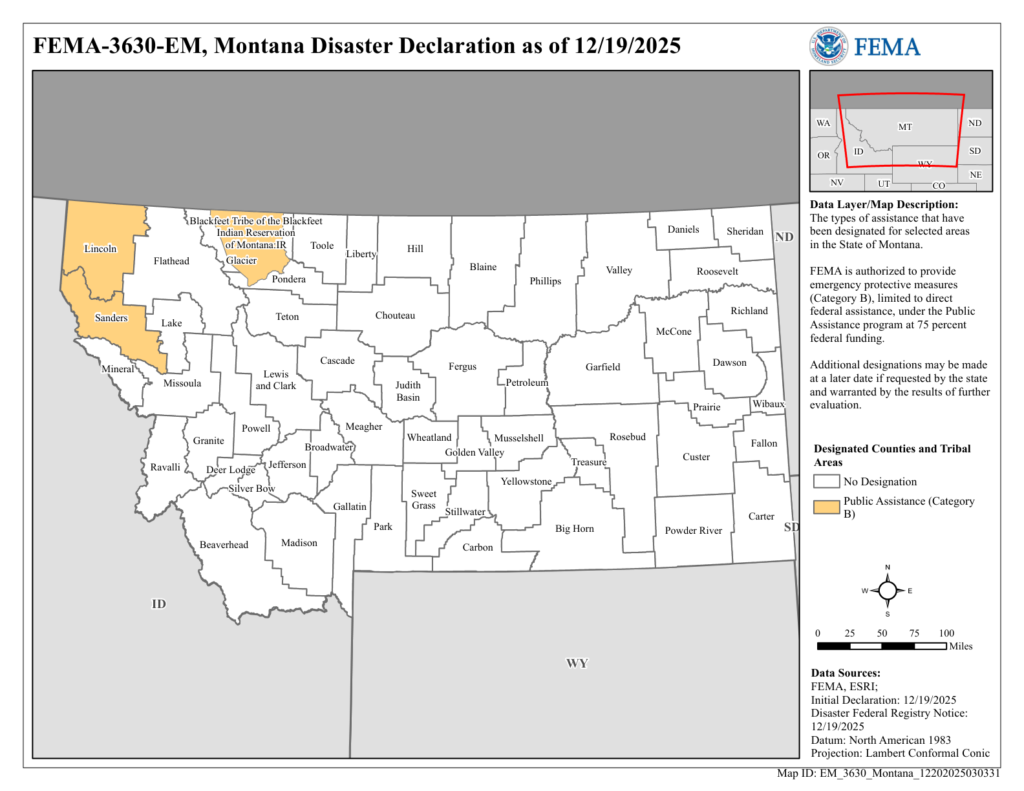
Parts of Montana were struck by severe storms and subsequent flooding that began on Dec. 10, 2025. Taxpayers in the Blackfeet Indian Reservation and Lincoln and Sanders counties qualify for a May 1, 2026, deadline to file various federal individual and business tax returns and make associated tax payments.
Tennessee was hard hit by Winter Storm Fern, which in late January produced heavy snow, sleet, freezing rain, and extreme cold temperatures. The IRS announced on April 14 that tax relief in connection with the storm’s damages was available to all individuals and businesses taxpayers in the Volunteer State’s 95 counties.
That includes a June 8 deadline to file various tax returns and make tax payments related to certain tax deadlines on or after Jan. 22 and on or before the extension date.
No need to contact IRS: If you’re in the Montana or Tennessee disaster areas, you don’t have to worry about asking for or confirming the IRS tax relief. The agency automatically provides filing and penalty relief to any taxpayer whose address of record in the IRS system is located in the disaster area.
That said, mistakes sometimes happen. If a taxpayer in an area with later disaster-area due date receives a late-filing or late-payment penalty notice from the IRS, the agency says that person (or business representative) should call the number on the notice to have the penalty abated.
Also, the IRS might not have the correct disaster area address for some taxpayers. This could be the case where taxpayers moved into the area now declared a major disaster after they filed their last tax return. These individuals should contact the IRS at the penalty notice phone number to clarify their disaster-area eligibility.
In addition, the IRS will work with any taxpayer who lives outside the disaster area, but whose records necessary to meet a deadline occurring during the postponement period are located in the affected area. Taxpayers qualifying for relief who live outside the disaster area need to contact the IRS toll-free at (866) 562-5227. This also includes workers assisting with relief activities who are affiliated with a recognized government or philanthropic organization.
Deducting uninsured disaster losses: Finally, a quick reminder that when disaster-affected taxpayers do get their lives back in some order and start thinking about taxes, they may be able to deduct some disaster losses. This itemized claim is available for damaged or destroyed property not covered by insurance or other reimbursement.

Photo by Chandler Cruttenden on Unsplash
Claiming the loss can result in a larger refund. And that option can be maximized by the tax law that allows affected taxpayers to choose the tax year in which they want to make the disaster casualty tax loss claim.
You can choose to claim it on either the return for the year the loss occurred, or on the return for the prior year.
Plus, special disaster area considerations also provide taxpayers more time — up to six months after the due date of the taxpayer’s federal income tax return for the disaster year (without regard to any extension of time to file) — to decide the tax year they wish to make the claim. For individual taxpayers, this means Oct. 15, 2026.
Regardless of when you make the claim, arriving at the decision is not one to be taken lightly. You need to run the numbers for each potential tax year filing to see which produces the more favorable tax result.
My post on considerations in making a major disaster tax claim has more. So does IRS Publication 547, Casualties, Disasters, and Thefts.
Taxpayers with disaster-related tax questions also can call the agency’s toll-free disaster hotline at (866) 562-5227. And, of course, you can talk with a tax professional for help in making this decision and filing.
Advertisements
🌟 Search Amazon Tax Products 🌟
The text link above is an affiliate ad. If you click through and then buy a product, I receive a commission.

