

One regular piece of advice to taxpayers, including repeatedly here on the ol’ blog, is to make sure your payroll withholding is correct.
When you have a more precise amount of federal income tax taken from each paycheck, you ensure that when you file your tax return you won’t get a surprisingly large refund or, worse, owe Uncle Sam a whole lot of money.
The Internal Revenue Service usually helps taxpayers here, too, by adjusting income-tax withholding levels when new tax laws take effect.
But that’s not happening for the One Big Beautiful Bill (OBBB) Act’s tax law changes.
No withholding adjustments this year: The IRS announced on Aug. 7 that, as part of its phased implementation of the OBBB provisions, it won’t be making any immediate revisions to certain information returns or withholding tables in connection with tax changes that are effective for tax year 2025.
Those new tax laws include increases in the standard deduction amounts, exemptions for tipped and overtime income, and the senior bonus for filers age 65 and older.
The IRS said that the following forms will not be changed to reflect OBBB changes for this tax year —
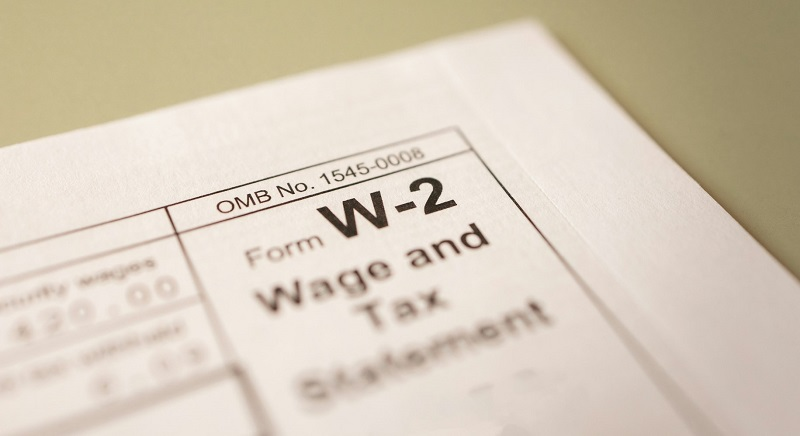
- Form W-2,
- existing 1099 forms, and
- Form 941 and other payroll return forms.
These forms are this weekend’s By the Numbers collective selection.
In addition, the IRS said it will not update income tax withholding tables for the new tax provisions for the current tax year. Instead, the tax agency has instructed employers and payroll providers to continue using current procedures for reporting and withholding.
“These decisions are intended to avoid disruptions during the tax filing season and to give the IRS, business and tax professionals enough time to implement the changes effectively,” according to the IRS statement.
Tax change benefits won’t show up until 2026: It also will mean that rather than receiving any benefits of the new laws in the rest of their 2025 paychecks, taxpayers will collect them when they file their tax returns in 2026.
That means a lot of folks could be getting refunds (or bigger ones) next year, which just happens to also be midterm elections year.
It’s not surprising that in writing the OBBB the Republican Congress opted to make these particular tax breaks, some of which were touted by Donald Trump on the presidential campaign trail, effective earlier.
But there was surprise in the tax community that the IRS, even with the challenges it’s facing due to personnel losses and leadership changes, decided to delay guidance here, especially since the OBBB became law on July 4.
Some cynical political observers (yeah, I’m one of them) might even go as far as to wonder if the IRS was pressured to delay action to offset the general unpopularity right now of the OBBB. Taxpayers might think more favorably of the bill, and vote accordingly, if they get a tax refund next year.
As for that filing, the IRS says it will issue more information “in the coming months about how taxpayers can claim OBBBA-related tax benefits when they file their returns.”
What now with withholding: So, what does this IRS inaction mean for taxpayers as far as the conventional tax advice to review and adjust payroll withholding?
If you’ve encountered some changes in your life that could affect your taxes, such as getting married or divorced or having a child, it might be worthwhile to reset your withholding even using the old 2025 calculations.
It won’t be as precise as you might want given the law changes, but it could help get you closer to the withholding goal of prepaying the IRS only as much as your eventual, actual tax liability comes to at filing time.
Or, you could just continue at your current level. This would mean that taxpayers for whom the new OBBB tax laws apply to you will likely get a refund (or a larger one) next year when they file their returns.
Either way, next filing season is going to be tricky, and messy, as the IRS and taxpayers deal with the OBBB’s changes. You might want to keep that in mind, too, on Nov. 3, 2026.
You also might find these items of interest:
- New OBBB tax breaks taking effect in 2025
- 6 major life events that could affect your taxes
- 2026 filing season could be problematic due to cuts in IRS funding and staff
Advertisements
🌟 Search Amazon Tax Products 🌟
The text link above is an affiliate ad. If you click through and then buy a product, I receive a commission.
