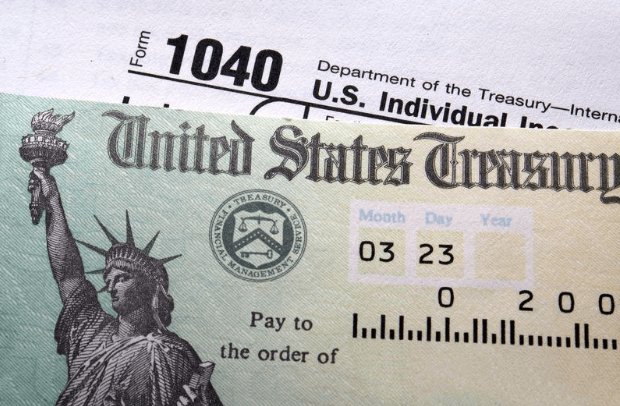
Tax law change confusion and paycheck withholding miscalculations have led to a lot of grumbling by many filers about the size of their tax refund checks. But there are other reasons why refunds sometimes are not what filers expect. Here’s what to do if you think your tax refund is wrong.
The many changes of the Tax Cuts and Jobs Act (TCJA) have thrown a wrench into the 2019 tax filing season. Many folks who were expecting refunds are finding they are smaller than they anticipated or nonexistent.
In a lot of cases, that’s because of changes in withholding by employers, based on Internal Revenue Service revisions, as well as miscalculations by workers as to how much in taxes should be taken out of their paychecks.
Sometimes, though, even when you’ve carefully calibrated your withholding, your eventual refund arrives with what you believe is a wrong amount.
It happens. It’s happened to me.
If it happens to you, here are some steps you should take.
Question all unusual refund amounts: It’s human nature to react when we thing we’ve been wronged. That’s certainly the correct reaction if you believe the Internal Revenue Service has shorted you of some refund money.
But you also should look a gift horse in the mouth and follow up with Uncle Sam if he sands you a refund that’s much larger than what you entered on your tax return.
Ramon Christopher Blanchett of Tampa, Florida, encountered that seemingly good result. He got a $980,000 refund in connection with his 2017 tax filing. Just one problem. Blanchett’s income that year was only $18,497.
Eventually, as you’ve already surmised, the IRS caught up with Blanchett and is in the process of trying to recover what it says was an erroneous refund.
Why refunds are wrong: In the Tampa almost-million-dollar refund case, the problem reportedly was with a wrong W-2.
That’s why it’s critical to double check your annual tax earnings statement as well as all other tax-related documents as soon as you receive them. If you something seems out of whack, you can contact the sender and get things cleared up in plenty of time to file your return by the April deadline.
Other common reasons why your refund amount might be different than what you expected include:
- Math errors were made in computing your tax bill.
- Incorrect credit or deductions were claimed.
- Estimated tax payments were not credited properly.
- Other federal debts, such as a student loan, were collected.
Math and other numerical mistakes: Math errors are the most common mistakes folks make on their returns every single tax season.
Even if you use tax software, the old adage garbage in, garbage out applies. And when it comes to taxes, numerical errors often are compounded as wrong amounts are transferred from one form to another.
So if your refund amount is not what you expected, pull out your copy of your return and double check your entries and math. Better yet, double check the entries on your 1040 before you drop it in the snail mail box or hit send if you e-file.
Other numbers that can cause refund problems are those nine Social Security digits. When any of those are wrong (such as transposed numbers, or they don’t match other records, perhaps involving name changes after marriage or adoption), problems with your tax return — and refund — appear.
Refund issues also crop up when names of dependents don’t match Social Security numbers. Husbands and wives have different names, as do their children.
Estimated tax payments also are a common culprit in divergent refund amounts. The amount of tax on the return is calculated correctly, but the filer and IRS come up with a difference on the amount of tax paid.
Other debts collected from refunds: Your tax refund also might be a direct path to other money you owe.
Government agencies, at both federal and state levels, can use offsets to get money they say you owe from your federal tax refund.
The most common cases involve court-ordered financial payments associated with a former marriage (e.g., delinquent child or spousal support payments) or unpaid student loans.
And, of course, the IRS will even make sure it gets prior federal tax debts that you didn’t clear.
Even taxpayers who have a payment arrangement in place with the IRS could encounter refund issues. The installment agreement with the IRS says it can apply any refund you have against what you owe.
Explanation forthcoming: Whatever the reason your refund is different from what you entered on your tax return, the IRS should let you know.
Be on the lookout for an explanation via U.S. Postal Service mailed notice from the IRS as to why there’s a difference in your calculated refund amount.
The big problem here is that the notice typically comes separately from the check or direct deposit amount, so you have to wait.
If you don’t want to wait for the written explanation, you can always call the IRS with questions about your refund amount. The main IRS toll-free number is (800) 829-1040 or (800) 829-4059 (TDD) for the hearing impaired. Note, however, that at this time of year, you could be on hold for a while.
A better help option might be a call or visit to your local Taxpayer Assistance Center.
What to do with a wrong refund: If you discover that the IRS is correct and your refund is not what you expected, your initial reaction — OK, your second reaction after “Yeeeessss!” or “WTF” — is “What should I do?”
If the amount is less than you expected, it’s usually OK to go ahead and cash the check or spend the direct deposit.
If you disagree with the IRS rationale for the reduction and can show that you deserved the larger expected amount, the agency will make up the difference. It will come in a separate refund, so you can spend or save the one you already have in hand.
However, if the IRS’ math was right, then you’ve got all you’re getting. It’s up to you to tell the family that the planned vacation is on hold.
When a tax refund is larger than you expected — yes, it happens; that was the case in an unexpected $4,000+ refund the hubby and I got one filing season because of an error on my part — you might want to hold off spending the money until you get a satisfactory explanation.
That way if the IRS was too generous and you do happen to have to pay some or all of it back (like the IRS wants that Florida man to do), then you’ve got that cash in hand.
The IRS’ has a special online page detailing the steps you must take to return an erroneous refund. It covers what to do if the wrong refund was directly deposited or snail mailed as a paper check and how to handle the situation when you’ve spent the wrong refund amount.
Whatever the reason, if the refund was wrong, take care of the matter as soon as possible, since you could, by law, end up owing interest on any mistaken tax payment overage you received.
You also might find these items of interest:
- Reasons to file your taxes early or to wait a while to file