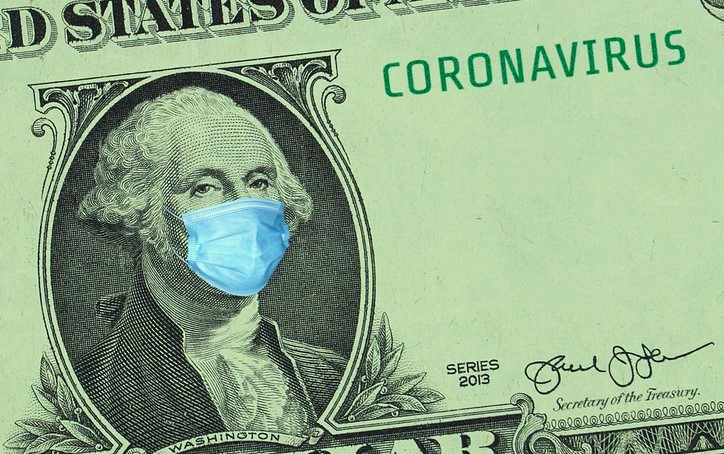
COVID was a major disruption in many parts of our lives, including taxes. Many Americans paid Internal Revenue Service penalties or interest during the 3½-year pandemic period. But a federal court ruling could let millions get back those improper charges, as long as they file by July 10.
…
Apparently, we’re never going to be done with the coronavirus.
The deadly hantavirus outbreak on the MV Hondius cruise ship has lots of us flashing back to 2020. The COVID-19 cases five years ago among Diamond Princess passengers was the high-profile introduction for most of us to COVID-19.
U.S. and world health officials say that unlike COVID, the hantavirus isn’t as easily transmissible so a global pandemic repeat isn’t likely. Still, many are thinking again about the coronavirus pandemic that killed more than a million in the United States and 7 million worldwide.
And COVID-19 is back in the news for tax reasons, too.
Tens of millions of taxpayers may be able to claim tax refunds, some of them sizable, because of the Internal Revenue Service’s collection of penalties and interest on delayed payments during the pandemic.
That’s the good news for taxpayers who faced the charges. The not so good news is that the IRS is not going to automatically send eligible taxpayers the amount they now are due.
They’ll have to file a claim for the COVID refunds. And they must do so by July 10. If they miss the deadline, they could lose the money permanently.
Federal court ruling reverses charges: The U.S. Court of Federal Claims’ ruling last November in Kwong v. United States suggests that some of those IRS assessments during the nearly three-and-a-half COVID-19 federal disaster period may have been improper.
The court looked at an Internal Revenue Code Section 7508A(d), which governs disaster-related filing and payment deadline postponements.
That tax law in effect when the COVID-19 federal disaster was declared provided for automatic postponement of filing and payment deadlines during the period a federal disaster declaration is in effect, plus 60 days.
The COVID federal disaster declaration was in place from Jan. 20, 2020, through May 11, 2023. Then added 60 days cited in the tax code extended the period to July 10, 2023, for tax purposes.
The court’s interpretation is that the IRS should not have charged and/or collected penalties and interest during that pandemic period.
More legal maneuvering expected: Not surprisingly, the IRS disagrees.
As Kwong progressed through the legal system, Uncle Sam’s attorneys presented arguments to support the IRS’ narrower take on the penalties and interest postponement statute.
Most tax and legal observers expect the Justice Department will appeal the decision. Final adjudication of the charges and claims to recover them could take years.
Still, since taxpayers must generally file claims within three years from the date they filed their tax return or two years from the date they paid their tax, that means July 10, 2026, is the key date. Meeting that deadline will protect the possibility of affected taxpayers recovering their COVID-related penalties and interest.
That approaching filing deadline also is why, to answer the question I know some of you are asking, a Nov. 25, 2025, court tax ruling is just now getting so much attention.
Confusing claim process: However, just what and how to file this summer can be confusing.
National Taxpayer Advocate Erin M. Collins has posted a three-part series on the Kwong decision and potential refunds.
In the first Kwong post, Collins says the refund or abatement of certain amounts assessed during the COVID period could include —
- Penalties assessed for failure to timely file returns, failure to pay taxes, or failure to make estimated tax payments;
- Interest that began accruing earlier than it should have, or not at all; and
- Overpayment interest for the 2020–2023 disaster period.
In the most recent Part 3 blog entry, Collins notes that refund claims are traditionally filed using Form 1040 if you have not yet filed your return.
If you have already filed your individual income tax return and you need to change things like filing status, income, deductions, credits, dependents, or tax liability, you would file an amended individual tax return using IRS Form 1040-X.
But if you are claiming Kwong-related refunds for interest and penalties and are not revising your underlying tax liability, Collins says you should generally File a Form 843, Claim for Refund and Request for Abatement.
My advice? Talk to/hire a reputable tax professional as soon as possible. You have lots of tax pro options. A good adviser can help you sort out your COVID penalties and interest and how the Kwong case applies to you.
Background information: In the meantime, you also can read Collin’s posts on the NTA Blog. They are this weekend’s Saturday Shout Outs and can be found at —
- Tens of Millions of Taxpayers May Be Eligible for Significant Tax Refunds – If They Act by July 10 (Part I);
- How to Use IRS Tax Account Transcripts to Identify Potential COVID-19 Disaster Relief Refunds (Part II); and
- Protect Your Potential COVID-19 Disaster Relief Refunds By Filing Formal or Protective Claims for Refund (Part III).
“This situation highlights a core concern I have raised repeatedly,” Collins added. “When relief exists but is difficult to access, taxpayers — especially those without representation — are at risk of losing benefits. That outcome undermines fundamental taxpayer rights, including the rights to be informed, pay no more than the correct amount of tax, and to a fair and just tax system.”
You also might find these items of interest:
- Tax Policy in a Disaster
- IRS-CI continues pursuit of COVID-connected tax criminals
- Coronavirus (COVID-19) and Taxes: It is 2025 and, yes, it’s still an issue
…
Advertisements
🌟 Search Amazon Tax Products 🌟
The text link above is an affiliate ad. If you click through and then buy a product, I receive a commission.