
I love music. I just ordered two CDs last week. That last retail admission should tip you off that my prime concert-going days are behind me.
In one way, I’m glad. The cost to see my favorite musicians perform back in my day was reasonable, even then.
Today’s more youthful fans, however, are shelling out big bucks to attend concerts. Marketplace economics are part of the calculation. And emotion is part of the market.
So scalpers, whose targets are desperate Taylor Swift and Beyoncé fans, are getting, to my mind, egregious amounts from eager Swifties and BeyHive members who just have to see their musical icons in person, whatever the price. Ditto for soccer fans who want to see Lionel Messi — who has lots of nicknames, but I haven’t found one for his fans…yet — live on U.S. pitches.
Now, the Internal Revenue Service is looking to collect from the resellers.
Lower reporting level: The U.S. Treasury’s collection efforts should be helped by a revision of a reporting law.
Starting in 2024, third-party payment processors such as PayPal, Amazon, eBay, Facebook Marketplace, rideshare companies, and yes, Ticketmaster and StubHub, must report to their users/clients the money they got during the year.
That will be done via a Form 1099-K, which will go out to those who pocketed more than $600.
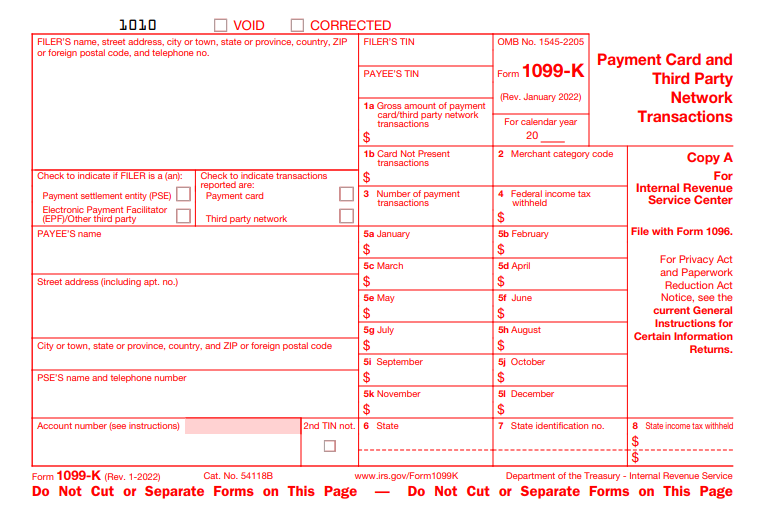
See more tax forms and more about them at Tax Forms 2023.
And like all other third-party information forms, typically in the agency’s 1099 series, a copy also is sent to the IRS.
The reporting process is not new. Taxpayers have been getting 1099-K forms since 2012. But the trigger amount is.
Previously, 1099-Ks were sent only when gross payments during the year were more than $20,000 and more than 200 such transactions were involved. These parameters changed in 2021.
That year, spurred in part by the explosion of gig jobs during the COVID-19 pandemic, a provision in the American Rescue Plan Act (ARPA) reduced the issuance requirement to just $600 in earnings. Period. For any number of transactions.
Delay is almost over: The lower reporting requirement was supposed to take effect this year. However, in the wake of protests by payment processors and concerns of the tax community that the public wasn’t sufficiently aware of the change, the IRS delayed the reporting requirement for a year.
Serendipitously, the lower reporting level is coming into play for 2023, a tax year that saw two of the hottest musical performers launch extensive and expensive tours, as well as a soccer superstar’s arrival in the United States. Right when folks are getting out and about again post peak coronavirus.
And you doubted the existence of tax gods.
The tax fun that awaits folks getting 1099-Ks early next year is this weekend’s Saturday Shout Out subject. Here are three stories that delve deeper into the upcoming $600 reporting requirement.
- The IRS Is Going to Know if You Sold Taylor Swift ‘Eras’ Tickets (nonsubscriber link) by Anne Steele and Ashlea Ebeling for The Wall Street Journal;
- The next big Taylor Swift concert may be way more affordable, thanks to the IRS by Tony Owusu for The Street; and
- If You Resold Taylor Swift Eras Tour Tickets, the IRS Is Watching by Kevin Hurler for Gizmodo.
Not just for big resellers: As noted, the $600 earnings trigger applies to a lot of situations handled by payment processors.
So don’t be surprised if your relatively minimal Etsy earnings this year get you a 1099-K next January.
If you’re unsure what it means to you, talk with a tax professional now. They can help you prepare for the potential tax consequences.
You also might find these items of interest:
- 1099-K reporting delay yays and nays
- House, Senate bills look to increase 1099-K reporting level
- Dealing with a 1099-K for tax-free residential rental income
- Personal cash app transfers are NOT part of new IRS reporting rule
Advertisements
🌟 Search Amazon Business and Money Books 🌟
The text link above and image links below are affiliate ads. If you click through and then buy a product, I receive a commission.