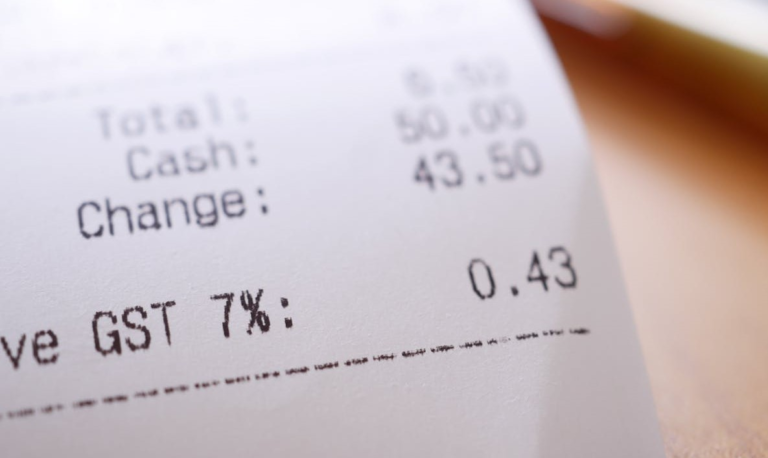
Photo by Towfiqu barbhuiya
…
State sales tax rates hit a new national average high this summer. Consumer spending fell. Coincidence? Probably. But the convergence also underscored the pressures on U.S. consumers…and political candidates as we head into November’s elections.
…
It’s a federal election year, so a lot of attention is being paid — by voters and the candidates who want their support — to Americans’ personal finances.
The outlook is grim, or at least dim, for both groups.
Money spent by U.S. shoppers account for about two-thirds of the nation’s economic growth. And in July, U.S. consumers unexpectedly cut their spending in July.
Meanwhile, the combined average U.S. sales tax rate rose to its highest level in a decade, according to a recent report.
Plenty of reasons for less spending: While the state tax levies no doubt added to budget stress for some, there are plenty of other reasons why U.S. shoppers’ purchases fell in July by the biggest margin in more than a year.
More people are out of work, or have quit looking for employment, according to the latest U.S. Department of Labor report. Inflation just refuses to ease by any substantial amount. Grocery and gas prices remain high due to tariffs and supply issues created by the U.S.-Iran war.
And, oh yeah, federal tax refunds that covered Americans discretionary spending in April and May were spent by the time July rolled around.
All these factors likely contributed to the discouraging findings of another economic survey, this one from the University of Michigan measuring consumer attitudes. It showed the overall public view of how things are going economically declined about 8 percent in early August. That shift ended a two-month streak of rising consumer sentiment.
So, a few pennies (or dollars) tacked on to the register or online receipt for increased state and local sales taxes probably wasn’t a notable reason why shopping showed this summer.
Still, any added cost didn’t help when shoppers were thinking about what to buy. Or not.
New national high sales tax total: The combined average U.S. sales tax rate rose for the first time in four years to a 10-year high of 10.1881 percent, according to tax technology provider Vertex.
The company’s midyear 2026 report says there were 463 rate changes and new rates for the thirst half of this year, up from 408 a year ago. County-level rate changes have already surpassed the total number of annual county rate changes in each of the past five years.
Below are some specific high tax points from Vertex’s report.
| Puerto Rico currently has the highest state/territory sales tax rate at 10.500%. |
| Indiana, Mississippi, Rhode Island, and Tennessee have the second-highest state sales tax rates at 7.000%. |
| Alaska is one of five states without a statewide sales tax. However, The Last Frontier allows its municipalities to enact sales tax is they wish, and some have with a vengeance. Three of the four highest city sales tax rates are in the Alaskan communities of Cordova, Kodiak, and Wrangell. Winter Park, Colorado, rounds out that group, each of which levies a city sales tax rate of 7.000%. Three other Alaskan towns — Hoonah, Klawock, and Selawik — have the second-highest city sales tax rate at 6.500%. |
| Redwood Valley, Mendocino County with the Mendocino County Transaction and Use Districts and Coyote Valley Band of Pomo Indians Reservation in California has the highest combined sales tax rate of 16.750%. |
| Sterlington, Ouachita Parish with the Sterlington Economic Development District No. 1 in Louisiana has the highest combined sales tax rate of 13.500%. |
…
Types of taxes expanding: Not surprisingly, local governments appear to be turning to sales tax increases, broader tax bases, excise taxes, and new fees to counter their growing budget pressures.
More services and digital transactions are part of the expanding tax bases. Vertex notes this is an expected tax reaction as consumer and business spending continues to move from goods toward services and digital experiences. Reflecting such changes, the report points out that —
- Texas expanded the range of data processing services subject to sales tax,
- Washington widened its retail sales tax to cover many business, personal and professional services, and
- States including Nebraska and Maryland have explored broader service tax changes.
Business tax changes increasing, too: In addition to putting fiscal pressure on the e-buying public, the new levies also are posing new challenges for businesses as to what is taxable and how to collect and remit them, notes the King of Prussia, Pennsylvania-based company.
“Businesses can no longer treat sales tax changes as routine compliance updates,” said Chris Hall, Senior Tax Officer at Vertex. “Rate and rule changes are happening with greater frequency at a local level across more categories of goods and services.”
Global taxes regimes also are evolving: While Vertex’s midyear 2026 report mainly focuses on the United States, the company says it sees similar forces reshaping tax regimes abroad. Multinational firms now face a more dynamic, interconnected regulatory environment, with some notable characteristics.
Tax authorities worldwide are increasing their use of advanced technology. Global tax administrations are piloting and expanding tools to detect anomalies, errors and fraud, while also enhancing customer service and workflow efficiency.
Such technology, however, faces challenges. Vertex notes that global electronic invoicing mandates are accelerating unevenly. As more international markets move at different speeds and under different requirements, multinational tax teams face increased complexity in managing compliance across regions.
Temporary tax relief could create future revenue pressure. Value added tax (VAT) reductions, exemptions, sales tax holidays, and excise tax cuts can offer short-term relief. Such moves, however, can also reduce overall government revenues and increase pressure to raise indirect tax rates or expand the tax base later.
Perpetual politics and taxes: The bottom line for both businesses and individuals is that taxes, within the United States and globally, will continue to evolve.
And while, as the old saying correctly notes, correlation does not imply causation, from a practical standpoint, taxes can affect spending.
That’s something lawmakers much consider as they look for more and more types of taxes (or fees instituted in place of politically unpalatable taxes) to keep governments operating.
You also might find these items of interest:
- Directory of state tax departments
- New Year 2026 brings tax changes in 43 states
- What a $100,000 salary comes to after taxes in your state
…
Advertisements
🌟 Search Amazon Tax Products 🌟
The text link above is an affiliate ad. If you click through and then buy a product, I receive a commission.