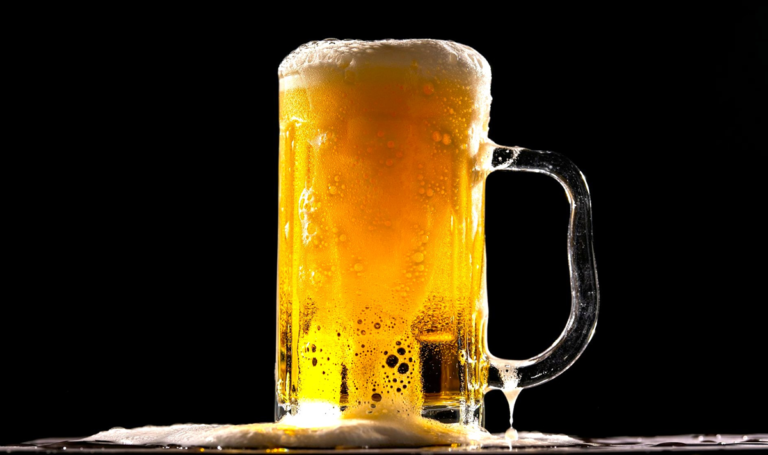
Photo by engin akyurt on Unsplash
…
State and federal taxes account for a large part of the price of beer. Will the levies impact your beverage enjoyment at Oktoberfests across the United States this fall? Read on to learn more about your state’s beer tax.
…
October arrives this week. You know what that means. It’s almost Oktoberfest!
While the Munich Oktoberfest, the original and largest festival, is winding down, here in the United States many of the celebrations of America’s German heritage are a little later.
In Central Texas, where German roots run deep, Oktoberfests in October let us enjoy beer, schnitzel, polka bands, and a stray Dachshund race (a loose connection, but fun, since the dogs were originally bred in Germany to hunt badgers) in mid-90-degree temperatures instead of triple digits.
Of course, beer vendors don’t mind the heat, be it from Mother Nature or the Texas tweak of a little jalapeño pepper in festival sausages. It helps sell a few more brews.
Tax collectors are all for that, too.
The high tax price of beer: Taxes are the are the single most expensive ingredient in beer in the United States, according to the Beer Institute, the national trade association for the American brewing industry.
Its report “The Economic and Societal Impacts of State and Federal Taxes on Beer” cites an economic analysis that found “if all the taxes levied on the production, distribution and retailing of beer are added up, they amount to more than 40% of the retail price” of the popular adult beverage. That accounts for more of the final price of beer than labor and materials combined.
The Tax Foundation notes that the combined beer taxes come from many different layers of applicable taxes.
The Washington, D.C.-based tax policy think tank points out that they include ad quantum excise taxes (fixed fees charged as a specific amount), retail sales taxes specifically levied on alcohol, case and bottle fees, and ad valorem taxes (levies based on the monetary or fair market value of a product or asset) on producers or wholesalers where applicable.
Federal and state rates: At the federal level, Uncle Sam collects an excise tax on beer that ranges from $0.113 per gallon for the first 60,000 barrels produced by small domestic brewers to $0.581 per gallon for imports.
Then there are the state assessments. Each of the 50 states and the District of Columbia levy their own excise tax on beer. Most states, and many of their local taxing jurisdictions, also have sales taxes.
The Tax Foundation’s analysis of beer taxes by state in 2026 found that Tennessee has the highest levy at $1.287 per gallon. That’s not really a surprise since the Volunteer State is famous worldwide for its whiskey, which is taxed at lower per-gallon rates relative to the national average.
Alaska is second in the beer tax tally, with a rate of $1.07 per gallon, followed by Hawaii at $0.93 per gallon.
Wyoming beer lovers pay the lowest tax on their brews, just $0.019 per gallon. The Cowboy State is followed by Missouri at $0.06 per gallon and Wisconsin at $0.065 per gallon.
If you don’t live or drink in one of those states, what do all the possible taxes mean to your Oktoberfest (and year-round) beer budget? You can find out thanks to the Tax Foundation’s interactive beer tax map, embedded below.
…
…
The Tax Foundation’s beer taxes 2026 page also has the info in table format, going back to 2015, if you prefer. And it highlights notable changes this year in some states’ taxation of the alcoholic beverage.
Celebrate wisely: Folks heading to next weekend’s Oktoberfest in Fredericksburg, about an hour and a half due west of Austin, or other Lone Star State German-themed events won’t have to worry much about beer taxes.
My native state’s beer tax is just 19 cents per gallon.
Of course, I’ve not seen many folks refuse another round because of taxes! However, don’t let low taxes tempt you to over-imbibe.
If you do drink, at an Oktoberfest celebration or any other time, please do so responsibly. If need be, use a designated driver.
We all — family, friends, and tax collectors 😉 — want y’all to be around for more celebrations!
…
You also might find these items of interest:
- State tax collectors join in Cinco de Mayo margarita toasts
- Alcohol taxes would fund $10 million Ohio music incubator
- Japanese tax officials holding contest to encourage drinking…and alcohol tax collection
Advertisements
🌟 Search Amazon Tax Products 🌟
The text link above is an affiliate ad. If you click through and then buy a product, I receive a commission.