
You and your local property appraiser probably have different views of your home. You can appeal a real estate appraisal you believe is incorrect. Doing so could help lower your final property tax bill.
…
A house is most people’s largest investment. That’s why homeowners hope their residence’s value grows every year. Except when property taxes are due.
Most tax jurisdictions across the country allow homeowners to appeal an official valuation they believe is incorrect or too high. Officials will lower your property’s taxable value if they are swayed by the evidence you present.
That, in turn, should reduce your final tax bill.
Since residential property taxes are assessed at local levels — here in Texas, counties are in charge, with portions of the eventual tax going to school districts and in some cases special, ostensibly temporary, tax jurisdictions — millions of homeowners across the United States take advantage of the appeals process each year.
Despite their geographic differences, the appeals do share some common features. Here’s a quick, and general, overview of the usual method to contest property tax appraisals.
Formal appraisal is the first step: Your ultimate residential property tax starts with a formal governmental appraisal.
Tax assessors typically determine the value of a property by estimating its fair market value (FMV). Assessors calculations involve the property’s size, features, condition, and comparable sales in the area.
In usual sale situations, a FMV is what a willing buyer would pay a willing seller. But, as noted earlier, the owner/eventual seller is looking for a lower price at tax appraisal time.
And homeowners actually do usually get a lower appraisal amount than what an actual sale would bring. In most jurisdictions, the assessed value that’s the basis for the annual tax bill is a percentage of the home’s market value.
Timing also is a factor. Property appraisals can be annual or every few years. So, depending on the real estate market when your property is appraised, your home’s value could be higher or lower when you get your annual tax bill.
Appealing the government’s findings: Once all those factors are, well factored, you’ll get your appraisal. If you’re a typical homeowner, you’ll think it’s too big.
Instead of just commiserating with your neighbors about the amount, you need to officially complain to the people who can do something about it. Here in Texas, the State Comptroller’s website spells out the process.
The upshot is that as each property-owning Texas taxpayer has the right to protest to their local appraisal review board (ARB). You may protest if you disagree with the appraisal district’s value or any of the appraisal district’s actions concerning your property.
If you the ARB’s findings aren’t to your liking, you then have the right to appeal the ARB’s decision to the state district court in the county in which the property is located. Depending on the facts and the property type, you may be able to appeal to the State Office of Administrative Hearings (SOAH) or to regular binding arbitration (RBA).
You can protest the valuation yourself. If there’s a mistake in your property’s key features, for example, a wrong larger square footage or newer age of your home, then your appeal is likely to quickly go your way.
Successful property value appeals rely, in most cases, on local market data, such as comparable sales or cost to prove a lower amount should have been assessed. Here in Texas, an unequal appraisal, where there’s a large discrepancy in the appraisal of two homes in a similar neighborhood with similar characteristics, is one of the most common and most successful types of property tax protests.
Note, too, that the burden of proof is on you.
The initial property value assessment is assumed to be correct, meaning protesting property owners must prove it is unreasonable. You’re going to have to do the research to find the documentation that counters the assessment. And yes, my tax savvy readers, that is the same burden of proof standard used by the Internal Revenue Service in its audit process.
DIY or hire a pro: As with income tax filings, you have the choice of doing it yourself or hiring a pro to protest your property tax appraisal.
This year, the Austin American-Statesman and Houston Chronicle (both are Hearst-owned newspapers) offer subscribers a detailed TX TAX online tool to help them maneuver the process.
Or you can hire a company that specializes in filing property tax appeals. Full disclosure, the hubby and I have used such a firm for almost a decade. We’ve saved enough, even after paying the company’s fee, to make it worthwhile in all but one year.
Again, the key here is finding a reputable tax appraisal protest company. Our mailboxes, both the curbside one and email, were jammed earlier this year with companies promising to save us thousands of dollars.
Some were legitimate. Others seemed a bit iffy. As with income tax filings, do your homework before hiring a pro to help lower your property tax appraisal.
Meet the deadlines: Finally, all tax systems have deadlines and are serious about you meeting them. That applies to both paying tax due and protesting any tax you’re charged.
When you get your appraisal notice, it should include the dates and windows for appeals. They typically are not long periods, so if you’re handling your appeal yourself, pay attention.
If you miss the deadline, you are stuck with the valuation for the year.
Here, today (May 15) is the deadline. And yes, the firm we hired took care of filing our appeal earlier this month.
Other ways to lower property taxes: In addition to staying on top of your property’s appraised amount, there are other ways to reduce your annual real estate tax bill.
The easiest is to take all the exemptions for which you qualify. These remove a portion of your home’s market value from taxation.
The most common exemption nationwide is the residential homestead exemption. It generally is available to all homeowners who occupy the property as their primary residence. In most cases, a homestead exemption caps how much your appraised value can grow year over year.
Other common real estate tax exemptions are those for older owners (usually age 65 or older), people with disabilities, surviving spouses, and veterans.
Here in Texas, once homeowners have applied for and been granted applicable exemptions, they don’t have to reapply unless circumstances change. Events triggering the need to re-apply include divorce, death of a spouse, or the transfer of a home into a trust.
Check with your local property tax officials about exemptions, as well as the process to protest your home’s assessment. A good place to start is with your state’s chief financial officer.
Many state tax departments have information on or links to this position, which is known by many titles, including here in the Lone Star State (and cited earlier in this post) as comptroller. For my fellow Texans, the state comptroller has put together this directory of local property appraisal and tax information.
Property taxes across the country: Regardless of whether you are satisfied or sparring with officials over your property’s latest appraisal, it’s always fun to see how your locale compares to the rest of the county.
The Tax Foundation map (reproduced below) lets you do just that. Yep, I’m in a greener area in Central Texas. So, my home’s annual property tax bill offsets some of the benefit of living in a no-income-tax state.
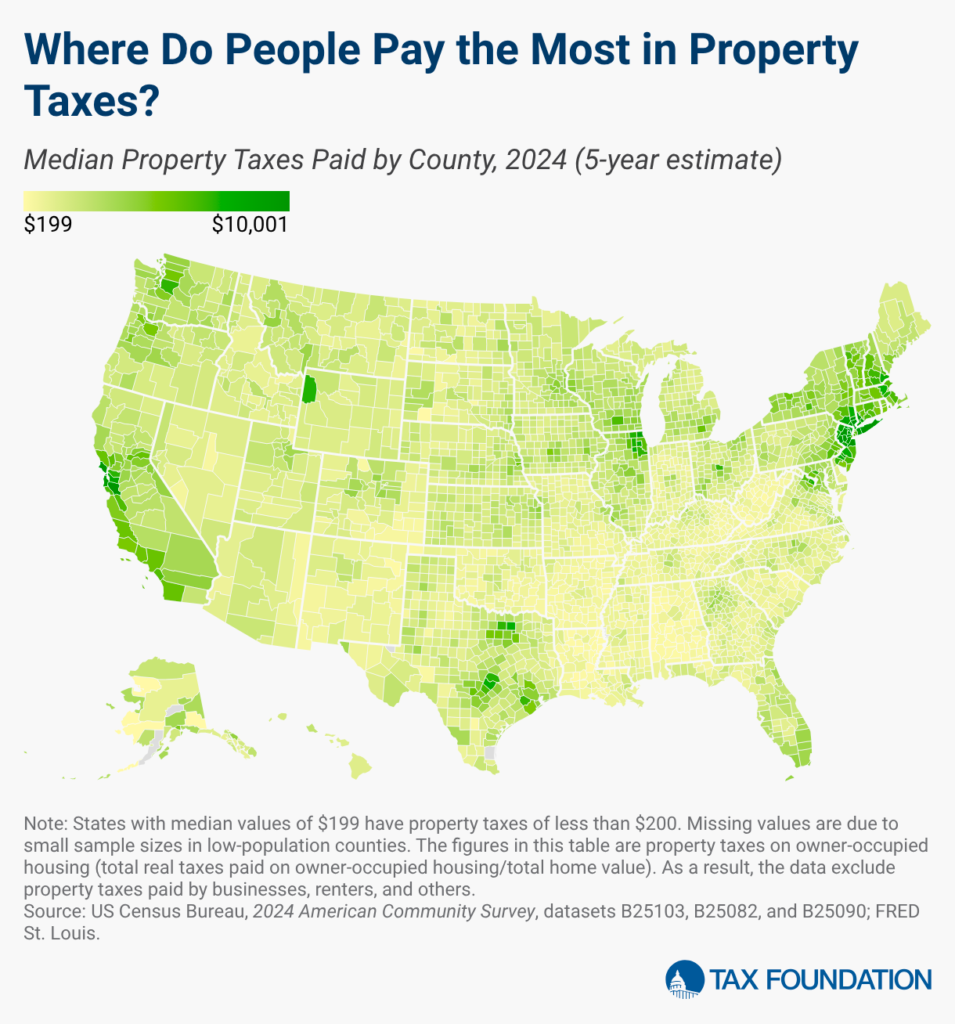
If you click over to the Washington, D.C.-based tax policy organization’s website, the interactive property tax map there gives you details on your location.
You also might find these items of interest:
- Making sure your property tax bill is correct
- Protest, but pay, your property tax bill or risk losing your house…and more money
- Alert property assessors of disaster damage ASAP to avoid wrong real estate tax bill
…
Advertisements
🌟 Search Amazon Tax Products 🌟
The text link above is an affiliate ad. If you click through and then buy a product, I receive a commission.