
Photo confession: These colorful autumn leaves in our backyard stream are from a couple of years ago, and deeper into the fall season. But I love this picture, and it gives me hope for cooler days as Central Texas thermometers are still hitting triple digits. (Photo by Kay Bell)
…
Autumn’s welcome chill is still a bit away, but these cool September tax moves could save you some cold tax cash.
…
So how was your summer?
I know. Much of the United States is still dealing with extremely hot temperatures. And the autumnal equinox doesn’t arrive until Sept. 22. But today, Sept. 1, is the start of meteorological fall, which runs through Nov. 30.
This arcane weather tidbit is courtesy official weather watchers, who divide the year’s calendar seasons a bit differently. By grouping the 12 months into four three-month blocks tied to the annual temperature cycle (They might want to recheck their thermometers!), climatologists have comparable data windows that always start on the first of a month.
And this divergent way of divvying up the usual calendar actually ties in nicely with estimated tax payments, the first of the ol’ blog’s five tax moves to make this September.
1. Pay your third 1040-ES amount. Millions of us make estimated tax payments four times a year. And like official weather watchers, the Internal Revenue Service has its own calendar when it comes to these added tax due dates.
The designation as quarterly tax payments is simply because there are four of them, not because they cover time frames we usually think of when we divide the calendar into quarters. The table below shows the IRS tax periods and due dates.
| Payment # | Due Date* | For income received |
| 1 | April 15 | Jan. 1 through March 31 |
| 2 | June 15 | April 1 through May 31 |
| 3 | Sept. 15 | June 1 through Aug. 31 |
| 4 | Jan. 15 of the next year | Sept. 1 through Dec. 31 |
| *If the 15th is on a weekend or federal holiday, the estimated payment is due the next business day. | ||
As the table shows, our (since I also pay them) third quarter estimated tax payment, either made electronically or by mailing your due tax along with paper Form 1040-ES, is due on Sept. 15.
These added filings cover tax due on income that’s not subject to payroll withholding. This includes amounts such as investment earnings, pay from gig work or other self-employment income, and those random wagers that occasionally pay off. Even some Social Security recipients need to pay estimated taxes since a portion of their federal retirement payments are taxable.
Don’t miss it, or be late by even a little, or you could face penalty and interest charges.
2. File your 2025 return. If you, like me, are in the estimated tax filing mode this month, consider keeping it going. Finish up your 2025 Form 1040 that you extended back in the spring by sending the IRS Form 4868.
You might be able to complete it for free. The IRS’ Free File option is still available to taxpayers whose modified adjusted gross income is $89,000 or less, regardless of your filing status. The free services of the eight tax software companies participating this year will remain accessible through Oct. 15.
If you earned too much to use a Free File software offering, the IRS still has you covered. You can use Free File Fillable Forms. As the name indicates, there’s no cost to fill in these available IRS forms via your computer (or other device) yourself. But note that there’s no software component, so you’ll have to do the math yourself and transfer data where required to other forms.
Getting your extended taxes out of the way now means that you’ll avoid the fall rush. If you discover that you do owe more than your sent with your extension request, you’ll have more time to come up with the money or make payment arrangements.
Then, when cooler weather finally does arrive, you can enjoy it without worrying about the October final tax filing deadline sneaking up on you.
3. Get disaster ready. September is National Preparedness Month. That’s fitting, since it’s the peak of the annual Atlantic/Gulf of Mexico hurricane season.
My fellow Texans and neighboring Louisiana residents along the Gulf Coast are already dealing with Tropical Storm Edouard. The fifth named storm of 2026 made windy landfall near those states’ border this afternoon, inundating residents with flooding rain. Flooding and tornado risks in parts of eastern Texas and southwestern Louisiana are expected to continue into midweek as Edouard and his remnants move inland.
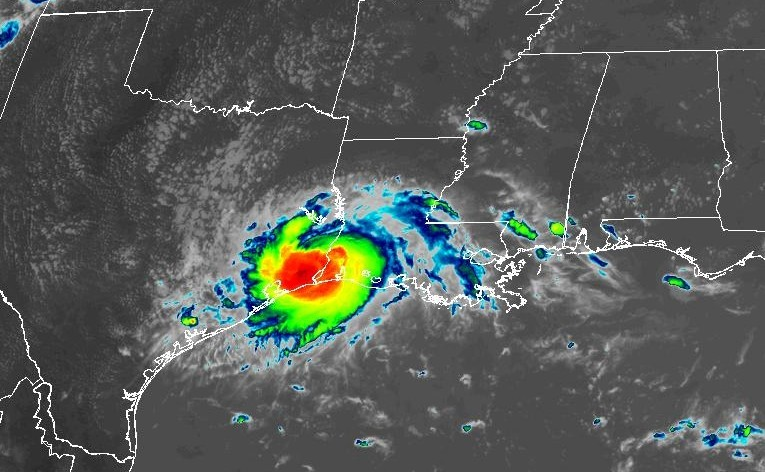
Like Tropical Storm Arthur earlier this year, Edouard formed quickly. That’s why all of us need to be ready for disastrous weather of all types before it strikes. You can find tips to do just that in my Hurricane season 2026 preparation and tax tips post.
Although that blog item is pegged to the annual tropical storm season, the advice applies to whatever dangerous weather is common where you live.
4. Boost your retirement savings. While we prepare for what Mother Nature may bring us now, remember that Father Time has his own plans and he always wins.
The data proves it. The global population is aging faster than ever before. Between 2020 and 2025, the proportion of the world population age 65 and older exceeded the population age 5 and younger for the first time in recorded history, according to according to the U.S. Census Bureau’s new report An Aging World: 2025.
Here in the United States y’all can use the report’s data to bolster or refute arguments over what needs to be done to save, salvage, or whatever you want to do for or to the Social Security program. There’s plenty to discuss.
But one thing is for sure. Regardless of age, all of us need to take some responsibility for funding our older years. Adding to a tax-favored retirement plan is a good way to do that.
The tax code provides myriad options. There are workplace retirement plans, known in the private sector as 401(k) accounts. Employers typically match a portion of workers’ contributions.
You also can contribute to an individual retirement account, either traditional or Roth. Sure, you have until next year’s Tax Day to make your 2026 contributions. That’s up to $7,500 to either type of IRA; $8,600 if you’re 50 or older. But by adding the money now, you give the power compounding more time to work in your favor.
Workplace and/or IRA contributions in 2026 also might qualify you for the Saver’s Credit. This tax break, which will become the new Saver’s Match effective Jan. 1, 2027, can provide eligible retirement savers who are single a tax credit of up to $1,000; the credit is twice that for eligible jointly filing married couples. The credit also available to for contributions to Achieving a Better Life Experience (ABLE) accounts.
In all eligible retirement savings situations, the credit could provide a potential one-grand dollar-for-dollar offset of any tax owed.
And young savers, or actually their parents, should explore whether a Trump Account works for them. This is a new tax-advantaged retirement savings option — essentially a starter IRA with special rules — for U.S. citizens age 17 and younger.
5. Review, and adjust if necessary, your paycheck withholding. Long-time readers know I slip this tax tip in every chance I get. That’s because I don’t believe in supporting the Bank of IRS, which doesn’t pay any interest on your over-withholding amounts.
Adjusting your withholding will help you get that money in your hands throughout the year instead of having to wait for it as a refund when you file your taxes.
You might need to tweak your paycheck withholding if you find you are in the opposite tax situation and will owe a lot when you file. You can reduce that bill by having more go to the IRS for the rest of this year.
Regardless of which way you need to shift your paycheck withholding, it’s easy to do. You can find your proper withholding amount by using the IRS’ online tax withholding estimator. Then use the data to complete a new Form W-4 for your payroll administrator to implement.
Submitting a new W-4 early this month will mean any changes are spread over the last four months of the year, making any impact less noticeable.
Best of all, your withholding will come as close as possible to your eventual tax bill. And that’s a good reward in this month that’s home to Labor Day, the annual celebration of workers.